



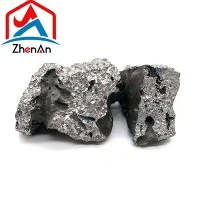
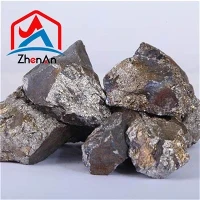
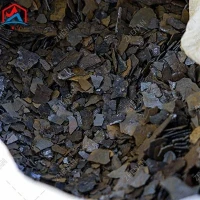



Graphitized Petroleum Coke GPC 98-99%
Graphitized Petroleum Coke Grades 98–99%
We supply Graphitized Petroleum Coke (GPC) in three fixed-carbon grades: 98%, 98.5% and 99%. These grades are designed for industrial buyers who need to select carbon additives according to fixed carbon content, sulfur, nitrogen and other impurity requirements.
The available grades are GF-GPC-98, GF-GPC-98.5 and GF-GPC-99. Their main differences are the guaranteed minimum fixed carbon and the specified maximum levels of sulfur, ash, volatile matter, moisture and nitrogen. A higher carbon grade does not automatically provide better value for every process; the appropriate selection depends on your chemical requirements, operating conditions and purchasing costs.
Our listed GPC particle sizes include 0.2–1 mm, 1–3 mm, 1–5 mm, 5–10 mm, 5–15 mm and 5–20 mm. Size availability and chemical specifications should be confirmed together when selecting a grade.
For bulk purchasing, compare the grade specifications below, confirm your required particle-size distribution and request the applicable product specification and batch Certificate of Analysis (COA) before shipment.

Graphitized Petroleum Coke (GPC) Carbon Additive
GPC Chemical Specifications by Grade
The following table compares the listed chemical specifications of three Graphitized Petroleum Coke grades. Fixed carbon is expressed as a minimum value, while sulfur, ash, volatile matter, moisture and nitrogen are expressed as maximum limits.
| Parameter | GF-GPC-99 | GF-GPC-98.5 | GF-GPC-98 |
|---|---|---|---|
| Fixed Carbon (FC) | ≥99.0% | ≥98.5% | ≥98.0% |
| Sulfur (S) | ≤0.03% | ≤0.05% | ≤0.20% |
| Ash | ≤0.50% | ≤0.60% | ≤0.70% |
| Volatile Matter (VM) | ≤0.50% | ≤0.70% | ≤0.70% |
| Moisture | ≤0.20% | ≤0.30% | ≤0.50% |
| Nitrogen (N) | ≤200 ppm | ≤300 ppm | ≤500 ppm |
Specification note: The values above are the listed technical limits for the three GPC grades. Confirm the applicable specifications, test methods and batch results before order approval. Particle size and packaging should be specified separately in the purchase requirements.
How to Interpret GPC Specifications
Fixed Carbon (FC): Indicates the specified carbon content of the material. For example, GF-GPC-99 has a listed minimum fixed carbon content of 99.0%, while GF-GPC-98 has a minimum of 98.0%. Fixed carbon is an important purchasing parameter, but it does not directly represent the percentage of carbon recovered by molten metal.
Sulfur (S): Determines the maximum sulfur content permitted in the carbon additive. The listed sulfur limits range from 0.03% to 0.20%. Buyers should select a grade according to the sulfur contribution their process can accept.
Nitrogen (N): Is specified separately from sulfur. The three grades have listed maximum nitrogen limits of 200 ppm, 300 ppm and 500 ppm. The required nitrogen limit should be established according to the intended metallurgical process.
Ash and Volatile Matter: Describe other components of the material that should be considered when comparing grades. These values need to be evaluated together with fixed carbon, moisture and the applicable testing basis.
Moisture: Should be checked against the agreed acceptance limit, particularly where storage conditions, material handling or incoming-material consistency are important.
For a more detailed review of chemical analysis, testing documents and product consistency, read our GPC quality evaluation and COA verification guide.
How to Choose 98%, 98.5% or 99% GPC
The choice between GF-GPC-98, GF-GPC-98.5 and GF-GPC-99 should start with your required chemical composition rather than the fixed-carbon percentage alone.
Although the three grades are all classified as Graphitized Petroleum Coke, their sulfur and nitrogen limits differ significantly. Buyers should first determine the maximum impurity levels permitted by their process, then compare the grades that meet those requirements.
| Purchasing Requirement | Suggested Grade | Selection Basis |
|---|---|---|
| Strict sulfur and nitrogen limits | GF-GPC-99 | Listed sulfur ≤0.03% and nitrogen ≤200 ppm. |
| Intermediate impurity requirements | GF-GPC-98.5 | Listed fixed carbon ≥98.5%, sulfur ≤0.05% and nitrogen ≤300 ppm. |
| Applications allowing higher impurity limits | GF-GPC-98 | Listed fixed carbon ≥98.0%, sulfur ≤0.20% and nitrogen ≤500 ppm. |
| Comparing qualified grades by cost | Compare available grades | Evaluate delivered price, fixed carbon, impurity limits and actual carbon recovery under your operating conditions. |
When Should You Choose GF-GPC-99?
GF-GPC-99 has the highest listed fixed carbon content and the lowest sulfur and nitrogen limits among the three GPC grades.
It is a candidate when your purchasing specification requires fixed carbon of at least 99.0%, sulfur no higher than 0.03% or nitrogen no higher than 200 ppm. The complete chemical specification, particle size and actual availability still need to be checked before approval.
When Is GF-GPC-98.5 Suitable?
GF-GPC-98.5 provides an intermediate specification with fixed carbon of at least 98.5%, sulfur no higher than 0.05% and nitrogen no higher than 300 ppm.
It may be considered when these impurity limits satisfy your process requirements. Buyers should also review ash, moisture, volatile matter and the required particle-size distribution.
If you specifically need a low-sulfur 1–5 mm grade for steel recarburizing, you can also review our 1–5 mm low-sulfur GPC for steel recarburizing and compare the applicable specifications.
When Can GF-GPC-98 Be Considered?
GF-GPC-98 has a listed minimum fixed carbon content of 98.0%, with higher permitted sulfur and nitrogen levels than the other two grades.
It may be considered when your process allows these impurity limits and when the material satisfies all other purchasing requirements. A lower fixed-carbon grade should not be selected solely on an assumed price advantage; compare actual quotations and operating results.
Comparing Fixed Carbon and Impurity Limits
For industrial purchasing, two GPC grades with similar fixed-carbon values can have substantially different impurity limits. Comparing the potential impurity contribution helps buyers evaluate grades against their process requirements.
Sulfur Limits Across the Three GPC Grades
The listed maximum sulfur contents are:
- GF-GPC-99: ≤0.03% sulfur, equivalent to 300 ppm by mass.
- GF-GPC-98.5: ≤0.05% sulfur, equivalent to 500 ppm by mass.
- GF-GPC-98: ≤0.20% sulfur, equivalent to 2,000 ppm by mass.
For example, if a purchasing specification requires sulfur no higher than 0.05%, both GF-GPC-99 and GF-GPC-98.5 meet that particular listed limit, while GF-GPC-98 does not. However, the final grade selection must also satisfy the required fixed carbon, nitrogen, ash, moisture, volatile matter and particle-size specifications.
The sulfur content of GPC should not be confused with the final sulfur content of molten metal. The final result depends on the total charge composition and metallurgical process.
Nitrogen Limits Across the Three GPC Grades
The listed maximum nitrogen contents are 200 ppm for GF-GPC-99, 300 ppm for GF-GPC-98.5 and 500 ppm for GF-GPC-98.
If your purchase requires nitrogen no higher than 200 ppm, GF-GPC-99 is the only one of these three listed grades that meets that particular limit. If a higher nitrogen limit is acceptable, the other grades may also be evaluated against the complete specification.
Evaluating the Cost of Carbon Addition
Fixed carbon percentage affects the theoretical amount of carbon supplied by a material. For example, based on the listed minimum fixed-carbon values, one metric tonne of GF-GPC-99 contains at least 990 kg of fixed carbon, compared with at least 985 kg for GF-GPC-98.5 and 980 kg for GF-GPC-98.
These figures describe the carbon contained in the material, not the amount ultimately recovered in the melt.
Actual carbon recovery depends on the furnace, charging method, melt conditions and operating practice. When comparing different grades, evaluate the cost of carbon effectively added to the melt rather than purchase price alone.
GPC Particle Sizes and Screening Requirements
Graphitized Petroleum Coke is supplied in different particle-size ranges to match material handling, feeding and carbon-addition requirements. The listed size options are shown below.
| Particle Size | Selection Consideration |
|---|---|
| 0.2–1 mm | Fine particle range; confirm dust control, feeding method and allowable fines. |
| 1–3 mm | Confirm compatibility with feeding equipment and the required dissolution conditions. |
| 1–5 mm | Check the nominal size range, feeding method and acceptable undersize fraction. |
| 5–10 mm | Check the charging method and available time for carbon addition. |
| 5–15 mm | Confirm whether the larger particle range is suitable for the intended charging practice. |
| 5–20 mm | Confirm the equipment requirements, allowable oversize and process suitability. |
The listed product information specifies a minimum of 90% of particles within the nominal size range, or a different distribution according to the agreed purchase specification. Confirm that this criterion applies to the selected grade and particle size before ordering.
What Should Buyers Check in a Sieve Analysis?
A nominal particle-size range does not fully describe the material's actual size distribution. When screening consistency is important, the purchasing specification should define:
- Nominal particle size: the required minimum and maximum particle dimensions.
- In-range percentage: the minimum acceptable proportion within the specified size range.
- Undersize fraction: the maximum proportion below the specified lower limit.
- Oversize fraction: the maximum proportion above the specified upper limit.
- Testing method: the agreed sampling and screening procedure.
Particle-size availability may vary by GPC grade. Confirm the chemical composition and size distribution together rather than assuming every grade is available in every listed size.
GPC Packing Options
The product information lists several packaging options for Graphitized Petroleum Coke. Buyers should confirm the available packing format, net weight, marking and moisture-protection requirements when requesting a quotation.
| Packing Type | Listed Net Weight | Order Consideration |
|---|---|---|
| Small Bag | 15 kg | Confirm bag material, marking and handling requirements. |
| Small Bag | 20 kg | Confirm availability for the selected grade and order quantity. |
| Small Bag | 25 kg | Confirm bag material and any additional outer packing requirements. |
| Jumbo Bag | Ton Bag | Confirm the net weight, bag construction and unloading requirements. |
If you require a particular inner liner, pallet arrangement, moisture barrier or export marking, include it in your purchasing inquiry. Final packing arrangements should be confirmed according to the product grade, quantity and shipment conditions.
GPC Factory and Supply
We support industrial buyers with carbon material sourcing, specification confirmation, quality documentation, packaging and export arrangements.
For GPC orders, the first step is to establish the required fixed-carbon grade, sulfur and nitrogen limits, particle size and quantity. These details allow us to review material availability and confirm whether the offered product matches your purchasing specification.
Product qualification should be based on the agreed technical requirements and applicable batch documentation. Where independent inspection is required, the sampling procedure, test scope and acceptance criteria should be established before shipment.

Industrial Material Supply and Quality Coordination
Customer Visits
Supplier evaluation for industrial carbon materials may include discussions about product specifications, quality requirements, sample approval, inspection procedures and shipping arrangements.
Before placing a bulk GPC order, buyers should confirm that the offered grade, particle size and applicable testing documents correspond to their intended production requirements.

Customer Visit and Supplier Evaluation
What to Include in Your GPC RFQ
To obtain an accurate Graphitized Petroleum Coke quotation, provide your technical and commercial requirements together. This reduces the risk of receiving a quotation for a grade or particle size that does not match your intended application.
| RFQ Item | Information to Provide |
|---|---|
| GPC Grade | GF-GPC-98, GF-GPC-98.5 or GF-GPC-99. |
| Fixed Carbon | Required minimum fixed carbon content. |
| Sulfur and Nitrogen | Maximum permitted sulfur and nitrogen levels. |
| Other Impurities | Required ash, volatile matter and moisture limits. |
| Particle Size | Nominal size and acceptable sieve distribution. |
| Quantity | Required order quantity in metric tonnes. |
| Packaging | Bag size, net weight, lining and marking requirements. |
| Destination | Delivery location or destination port and preferred Incoterm. |
| Quality Documents | COA, sampling requirements and any third-party inspection conditions. |
We recommend confirming all critical chemical and particle-size requirements before finalizing the purchase order. If more than one GPC grade meets your technical requirements, the qualified options can then be compared based on the actual quotation and operating conditions.
Graphitized Petroleum Coke Grades FAQ
What Is the Difference Between 98%, 98.5% and 99% GPC?
The three grades differ in minimum fixed carbon and maximum impurity limits. GF-GPC-99 has fixed carbon ≥99.0%, sulfur ≤0.03% and nitrogen ≤200 ppm. GF-GPC-98.5 has fixed carbon ≥98.5%, sulfur ≤0.05% and nitrogen ≤300 ppm. GF-GPC-98 has fixed carbon ≥98.0%, sulfur ≤0.20% and nitrogen ≤500 ppm.
Which GPC Grade Has the Lowest Sulfur and Nitrogen Limits?
GF-GPC-99 has the lowest listed sulfur and nitrogen limits among these three grades, at ≤0.03% sulfur and ≤200 ppm nitrogen. Buyers should also verify the complete specification and applicable batch results before selecting it.
Is 99% GPC Always Better Than 98.5% GPC?
Not necessarily. GF-GPC-99 has higher minimum fixed carbon and stricter listed impurity limits, but those differences may not be necessary for every process. If GF-GPC-98.5 meets all technical requirements, buyers can compare the qualified grades using actual pricing and operating data.
How Should I Choose a GPC Grade for Carbon Addition?
Start with the required carbon content and the maximum acceptable sulfur, nitrogen and other impurities. Then confirm the particle size, charging method and operating requirements. If multiple grades meet your specification, compare delivered cost and actual performance under your production conditions.
What GPC Particle Sizes Are Listed?
The listed particle sizes are 0.2–1 mm, 1–3 mm, 1–5 mm, 5–10 mm, 5–15 mm and 5–20 mm. Availability may vary by grade. Confirm the required size distribution and acceptable fines or oversize content before ordering.
What Does 90% Within the Nominal Size Range Mean?
It means at least 90% of the material, by mass, should fall within the agreed particle-size range if that condition is part of the applicable specification. The remaining material may include particles outside the specified range, subject to agreed screening tolerances. This percentage describes particle-size distribution, not carbon recovery.
Can I Request a Batch Certificate of Analysis?
Include the required chemical tests and particle-size checks in your inquiry. Confirm that the available COA corresponds to the ordered product grade and batch. Any independent inspection and sampling requirements should be agreed before shipment.
What Packaging Options Are Available?
The current product information lists 15 kg, 20 kg and 25 kg bags, as well as ton bags. Confirm packaging availability, net weight, lining and marking requirements for your specific order.
Can I Request a Sample Before a Bulk Order?
Sample availability, quantity and freight arrangements can be discussed according to the selected GPC grade and particle size. Confirm how the sample relates to the proposed bulk material when evaluating its suitability.
What Information Is Needed for a GPC Quotation?
Provide your required GPC grade, fixed carbon, sulfur and nitrogen limits, particle size, order quantity, packaging, destination port and quality-document requirements. These details help us prepare a quotation aligned with your purchasing specification.
Our Qualifications
Quality & Company Qualifications
Company-level qualifications and inspection documents can support supplier evaluation. Their scope and validity should be checked separately from the technical acceptance requirements of an individual GPC shipment.
For Graphitized Petroleum Coke, product acceptance should be based on the agreed grade specifications, applicable sampling and testing methods, particle-size requirements and batch-specific quality documentation.

CE

ISO 9001

ISO 14001

ISO 45001

SGS
For GPC purchasing, please confirm your required fixed-carbon grade, sulfur and nitrogen limits, particle size, order quantity, packaging and quality-document requirements. We can review the available product specifications and commercial arrangements according to your inquiry.
Hot Tags: Graphitized Petroleum Coke GPC 98-99%, China Graphitized Petroleum Coke GPC 98-99% manufacturers, suppliers, factory, carbon raiser for training, carbon raiser for drilling, carbon raiser for labeling, carbon raiser for grinding, carbon raiser for inventory management, carbon raiser for assembling
You Might Also Like


Send Inquiry