



Silicon Carbide
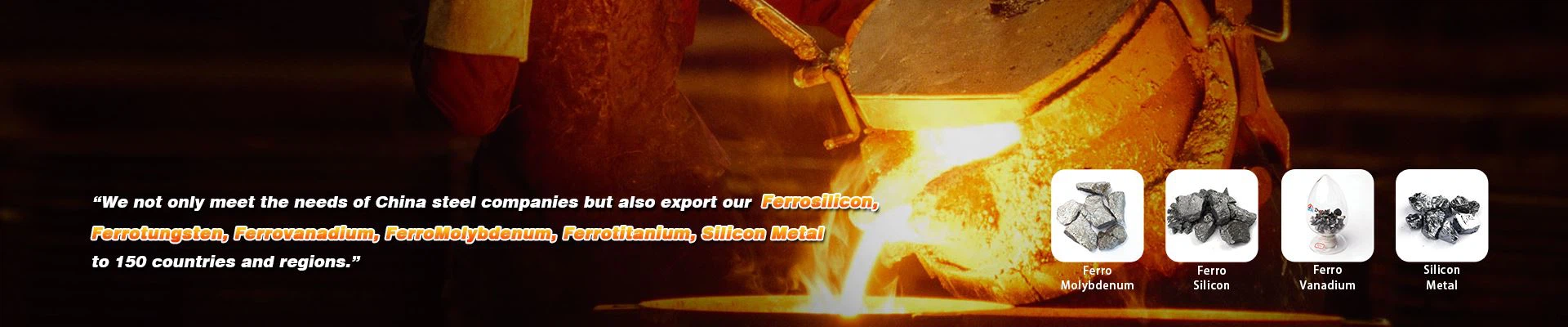
ZhenAn is a corporation that integrates production, processing, sales, import and export operations. Covering 30,000 square meter footprint, it produces and sells more than 150,000 tonnes of goods annually, and is equipped with all the latest production tools. With thirty years of expertise, we are a top producer and supplier of metallurgical raw materials, dedicated to providing high-quality Ferro Alloys, Silicon Metal and Silicon Metal Powders, Ferro Silicon, Ferro Vanadium, Ferro Titanium, and other items. We always provide products with good quality and low price.
Why Choose Us
Professional Team
We have 26 senior technical engineers who have many years of experience in metallurgy production and application and can provide customized solutions for different customer needs. Our sales team is familiar with industry dynamics and market trends and can provide customers with professional advice and support.
High Quality
With a deep understanding of the metallurgical sector, our team is adept at handling every aspect of production and quality control. Our quality inspectors strictly control the quality of each link to ensure that each batch of products meets international standards.
Advanced Equipment
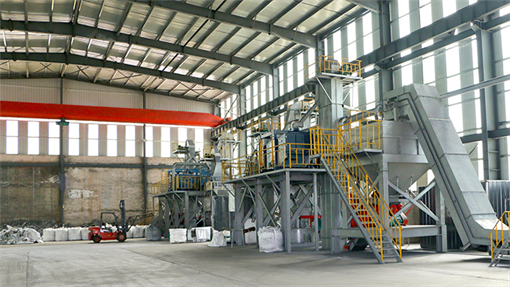
Equipped with all the latest production tools, the company has 2 production plants, 8 12500KW submerged arc furnaces and multiple crushing equipment production lines.
Wide Market
We not only meet the needs of China steel companies but also export our products to 150 countries and regions including Japan, South Korea, India, Europe, and the United States.
Perfect Service
All after-sale requests will be responded to in 24 hours. Close follow-up of all orders by special person and keep customers informed timely. We provide you with quick and warm service throughout the whole process.
Fast Delivery
We have a dedicated and efficient export department that specializes in documentation, packaging and shipping services to provide reliable services to customers around the world, ensuring timely delivery and on-time shipping to the destination.




What Is Silicon Carbide?
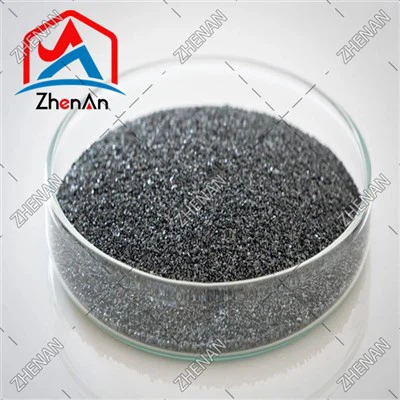
Silicon carbide, also known as SiC, is a semiconductor base material that consists of pure silicon and pure carbon. You can dope SiC with nitrogen or phosphorus to form an n-type semiconductor or dope it with beryllium, boron, aluminum, or gallium to form a p-type semiconductor. Darker, more common versions of silicon carbide often include iron and carbon impurities, but pure SiC crystals are colorless and form when silicon carbide sublimes at 2700 degrees Celsius.
How Is Silicon Carbide Made?
Lely Method
The simplest silicon carbide manufacturing method involves melting silica sand and carbon, such as coal, at high temperatures―up to 2500 degrees Celsius. During this process, a granite crucible heats to a very high temperature, usually by way of induction, to sublimate silicon carbide powder. A graphite rod with lower temperature suspends in the gaseous mixture, which inherently allows the pure silicon carbide to deposit and form crystals.
Chemical Vapor Deposition
Alternatively, manufacturers grow cubic SiC using chemical vapor deposition, which is commonly used in carbon-based synthesis processes and used in the semiconductor industry. In this method, a specialized chemical blend of gases enters a vacuum environment and combines before depositing onto a substrate.
Higher Breakdown Voltage
SiC has a higher breakdown voltage compared to silicon, which allows for the design of higher voltage power devices. SiC operates at above 10kV, significantly above what can currently be used. SiC devices rated at 1,200V and 1,700V are available.
Higher Thermal Conductivity
SiC has a higher thermal conductivity compared to silicon, which leads to improved thermal management and reduced power losses. The performance of silicon worsens over higher temperatures, whereas SiC is much more stable.
Higher Operating Temperature
SiC can operate at higher temperatures compared to silicon, which results in improved reliability and longer device lifetimes. A silicon device is usually over-specified at room temperature to maintain specification at higher temperatures. Typically, an SiC device with half the current rating will perform the same job as a silicon IGBT because SiC is much more stable over higher temperatures and doesn’t need significant derating.
Higher Switching Frequency
Higher frequencies mean reduced size and weight of the magnetics because the values of components in the transformer LC filter become significantly lower. SiC can switch on and off much faster compared to silicon, which results in improved power density and efficiency in power electronics applications.
Lower Forward Voltage Drop
SiC has a lower forward voltage drop compared to silicon, the virtual absence of a tail current allows a faster turn‑off and dramatically lower losses. Since there is less energy to dissipate, an SiC device can switch at higher frequencies and improve efficiency.
Some Common Types of Silicon Carbide Products
Silicon Carbide Powder
Silicon carbide powder is a commonly used abrasive material. Silicon carbide powder can be produced by reacting and pyrolyzing vaporized polysiloxanes in a single heating step, which produces silicon carbide powder. This process is straightforward and inexpensive. This method basically involves introducing a vaporized polysiloxane into a reaction chamber. The polysiloxane vapor is then made to react at a temperature of about 2900°F for a period of time sufficient to convert the polysiloxane vapor into silicon carbide powder, which is then collected. Silicon carbide powders serve as grinding powders for fine grinding or rough polishing semiconductors, ceramics, and ferrous materials. It can also be used for shaping, honing, and polishing other materials.
Silicon Carbide Sharpening Stone
A common application of silicon carbide sharpening stone is for the sharpening of knives made from hard stainless steel. Silicon carbide sharpening stone cuts aggressively. Usually, silicon carbide stones do come in a coarser grit and are suitable for the initial coarse sharpening. Silicon carbide stones have been shown to have a Mohs Hardness of 9-10. Silicon carbide sharpening stones can be used with either water or oil. Oil stones, for instance, can be made from different types of materials, which are novaculite, aluminum oxide, and silicon carbide, but the fastest cutting oil stones are silicon carbide stones. When using water with the stones, it helps to have some dish soap mixed with it, so it doesn’t just soak into the pores immediately.
Silicon Carbide Grit
Silicon Carbide Grit is the hardest blasting media available. This high-quality product is manufactured as a hard, blocky, angular grain shape. This media will break down continuously resulting in sharp, cutting edges. The hardness of Silicon Carbide Grit allows for shorter blast times relative to softer medias. Silicon Carbide Grit can be used many times over in applications utilizing tumblers (such as rock tumbling). As the media slowly breaks down, adding additional ‘fresh’ media will create a blend of particle sizes for extremely efficient cleaning and polishing.
What are the Uses of Silicon Carbide?


Silicon Carbide Used in Military Bulletproof Armor
Silicon carbide is used to manufacture bulletproof armor. The property of this compound that makes it to be applied for such a purpose is its hardness. Bullets and other harmful objects will have to contend with the hard ceramic blocks that silicon carbide forms. Bullets can't penetrate the ceramic blocks.
Silicon Carbide Used in Semiconductors
Silicon carbide becomes a semiconductor when dopants are added to it. Dopants like boron and aluminum added to silicon carbide make it become a p-type semiconductor. On the other hand, dopants such as nitrogen and phosphorus added to silicon carbide make it become an n-type semiconductor. You can read this post for more information about the differences between p-type semiconductors & n-type semiconductors.
Silicon Carbide Used in Abrasives
Silicon carbide is commonly used as an abrasive because of how hard it is. It is used in the manufacture of grinding wheels, cutting tools, and sandpaper. Silicon carbide abrasives are usually cheaper than other abrasives of similar quality. The abrasives are used to grind materials such as steel, aluminum, cast iron, and rubber.
Silicon Carbide Used in Electric Vehicles
Silicon carbide is a better choice over silicon for powering electric vehicles. Electric vehicles powered by silicon carbide are highly efficient and cost-effective. At present, many well-known companies have used silicon carbide to improve efficiency and range when manufacturing electric vehicles, such as Tesla.
Silicon Carbide Used in Jewelry
Structurally similar to diamond, yet more lustrous, cheaper, more durable, and lighter than diamond, silicon carbide is a well-deserved alternative to diamond in the jewelry industry.
Silicon Carbide Used in Fuel
In addition to its other uses, silicon carbide is used as fuel. It is used as a fuel in steel manufacture and produces purer steel than most other fuels. It is also a cheaper and more environmentally-friendly fuel.
Silicon Carbide Used in LEDs
The first set of light-emitting diodes (LEDs) to be produced made use of silicon carbide technology. It was used to manufacture blue, red, and yellow LEDs. LEDs are used in televisions, display boards, and computers.
Silicon carbide (SiC) is a chemical compound composed of carbon and silicon. It is known for its excellent abrasive properties and has been used to manufacture grinding wheels and other abrasive products for over a century. However, it has also been developed into a high-quality technical grade ceramic with a wide range of applications.
One of the key chemical properties of silicon carbide is its resistance to acids and bases. It does not dissolve in acids or bases but can be attacked by alkaline melts and some metal and metal oxide melts. It can withstand temperatures up to 1,500 °C in an inert gas or reducing atmosphere.
In terms of physical properties, silicon carbide has a low density, high strength, and low thermal expansion. It also has high thermal conductivity, high hardness, and a high elastic modulus. These properties make it suitable for various applications, such as abrasives, refractories, ceramics, and high-performance components.
Silicon carbide is highly inert and is not attacked by acids, alkalis, or molten salts up to 800°C. In air, it forms a protective silicon oxide coating at 1200°C, allowing it to be used at temperatures up to 1600°C. Its high thermal conductivity and low thermal expansion, combined with its high strength, give it exceptional thermal shock resistance.
The material is also an electrical conductor and finds applications in resistance heating, flame igniters, and electronic components. Its chemical purity and resistance to chemical attack at high temperatures make it popular for use in semiconductor furnaces as wafer tray supports and paddles. Additionally, it is used in resistance heating elements for electric furnaces and as a key component in thermistors and varistors.
In terms of thermal properties, silicon carbide has a relatively high thermal conductivity and a low coefficient of thermal expansion compared to other ceramic materials. This results in favorable thermal shock resistance, making it suitable for applications where rapid temperature changes occur.
Physical and Mechanical Properties
Density
The particle density of various silicon carbide crystalline forms is very close, generally considered to be 3.20 g/m³, and the natural bulk density of its silicon carbide abrasives is between 1.2 – 1.6 g/m³, the height of which depends on the particle size number, particle size composition and particle shape.
Hardness
The Mohs hardness of silicon carbide is 9.2, the Weiss microdensity hardness is 3000–3300 kg/m³, the Nuptial hardness is 2670-2815 kg/mm, which is higher than corundum and second only to diamond, cubic boron nitride and boron carbide in abrasives, and its wear resistance is more than ten times that of alloy just and wear-resistant cast iron.
Thermal Conductivity
the thermal conductivity of silicon carbide products is very high, the thermal conductivity of more than 12, the coefficient of thermal expansion is small, high thermal shock resistance, is a high-quality refractory materials.
- Orderly storage, the same batch number as far as possible in rows, to avoid mistakes in the process of taking materials.
- Silicon carbide micro powder has a strong moisture absorption, try to avoid removing the moisture-proof film storage; this can avoid moisture agglomeration, shorten the drying time.
- As far as possible to use the principle of first-in first-out material, to avoid clumping of raw materials due to excessive storage time.
- If the ultra-fine silicon carbide powder in transit broken packaging, try to store separately to avoid dust pollution.
- It is recommended that the warehouse as far as possible closed, stored separately, and pay attention to moisture, wind and rain.

What are Silicon and Silicon Carbide Made Of?
When synthesized in its purest form, silicon forms a crystalline structure where a single silicon atom forms a bond with four other adjacent silicon atoms. This silicon base substrate can then be doped with various other elements to form semiconductor junctions on a wafer of the silicon substrate.
Silicon carbide, on the other hand, is a blend of silicon and carbon atoms that forms a variety of crystalline structures. The most widely adopted structures for semiconductor use are 3C, 4C, and 6H silicon carbide, all of which have different electrical properties and advantages when doped with various elements. Silicon wafers grow up to 8-12 inches and form from a molten phase of pure silicon. Silicon carbide, however, generally synthesizes from the vapor phase and can grow up to six inches.
Silicon & Silicon Carbide Properties: Power and Speed
Given its ability to withstand higher electric fields, silicon carbide substrate materials can withstand higher voltages before breaking down. Silicon has a breakdown voltage of around 600V, while silicon carbide can withstand voltages 5-10 times higher. What this means in practice is that high-power applications will be able to utilize semiconductor technology, or that a device of the same voltage difference can get nearly ten times smaller. Silicon carbide can switch at nearly ten times the rate of silicon, which results in smaller control circuitry.
Silicon & Silicon Carbide Applications in the Real World
One great industry example of implementing silicon carbide over silicon is in the electric vehicle industry. When driving an EV, the electronics system is designed to support the full load of the vehicle's power capability, which is achievable in both silicon and silicon carbide-based designs. Silicon IGBTs are commonly utilized in EV inverters, where they drive battery-powered motors. However, given a car's normal drive cycle of a car (i.e., not utilizing a full load), silicon's high resistivity makes it rather inefficient. Since silicon carbide can handle the same load design requirements at a much smaller size, silicon carbide becomes significantly more efficient and can subsequently increase the entire inverter system's efficiency by nearly 80%.
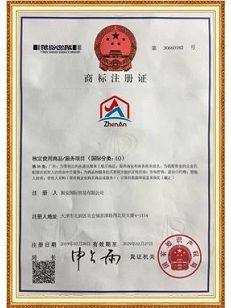
Certifications



Our Factory
Below is our factory:



Ultimate Guide
Q: What are the key uses of silicon carbide?
Q: What are the properties of silicon carbide?
High strength.
Good high temperature strength (reaction bonded)
Oxidation resistance (reaction bonded)
Excellent thermal shock resistance.
High hardness and wear resistance.
Excellent chemical resistance.
Low thermal expansion and high thermal conductivity.
Q: Is silicon carbide soluble in water?
Q: Which are the applications of SiC in electronic devices?
Q: Is silicon carbide bad for the environment?
Q: Why can SiC handle so high voltages?
Q: Which impurities are used to dope silicon carbide material?
Q: What color is silicon carbide?
Q: What is the difference between green and black silicon carbide?
Q: How can SiC semiconductors achieve better thermal management than silicon?
Q: Is silicon carbide stable?
Q: What are the challenges of silicon carbide production?
Q: What are the hazards of silicon carbide?
Q: Is silicon carbide breakable?
Q: What is black silicon carbide?
Q: What makes silicon carbide an extremely strong material?
Q: What is the weakness of silicon carbide?
Q: Why is silicon carbide so expensive?