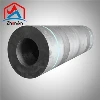

We look at how graphitic the material is. A good graphite recarburiser contains over 95% graphite carbon. If the processing temperature is over 2700 degrees, the sulfur content is 0.02-0.05%, the nitrogen content is 100-200ppm, and the price is 7000-9000 yuan per ton. A graphite recarburiser with a calcination temperature of 2000-2700 degrees is also called a semi-graphitised recarburiser. It contains 0.1-0.5% sulfur, 300-800ppm nitrogen, and costs 3000-4000 yuan.
The quality of the graphite recarburizer for casting is important for melting gray iron in an electric furnace. Many factories use cheap graphite recarburizer for casting, but sometimes find quality problems with pore defects. Pore defects are more obvious in high-quality grey cast iron with low carbon and silicon content.
Ductile iron castings have little porosity. Magnesium and rare earths should reduce porosity, but it still occurs. Low-grade graphite recarburizer affects ductile iron by causing sulfur and other impurities to affect the shape of graphite balls and the appearance of the matrix. These plants are using a low-grade graphite recarburiser for casting because it is cheaper. This is unprofitable.
The main way to judge a graphitised recarburiser is by the nitrogen content. Good and bad graphitisation are different. The temperature and time of calcination affect how graphitised the material is. An incomplete graphitized carburizing machine has a high sulfur and nitrogen content. It is sometimes called a semi-graphitized recarburizer. It costs less than a fully graphite recarburizer, which costs 7,000 or 8,000 yuan.