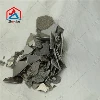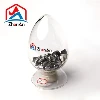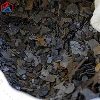

The core conclusion is that Silicon Carbide (SiC) is the superior metallurgical tool in 2026, offering a 10-20% cost reduction over Ferrosilicon (FeSi). SiC 88/90 provides a dual-action benefit of simultaneous deoxidation and recarburization while contributing significant exothermic energy to the melt, making it the most cost-effective replacement for traditional FeSi in modern EAF and converter steelmaking.
1. Silicon Carbide: The Multi-Functional Powerhouse
While Ferrosilicon is a single-purpose alloy, Silicon Carbide (SiC) is a multi-functional reagent. In the 2026 energy-conscious market, the ability of SiC 88 and SIC90 to perform three tasks simultaneously has made it the primary choice for ZhenAn's global clients.
- Efficient Deoxidation: SiC reacts aggressively with dissolved oxygen, producing a cleaner steel chemistry than traditional methods.
- Integrated Recarburization: Each ton of SiC 90 provides approximately 270kg of active carbon, eliminating the need for separate, expensive recarburizers.
- Thermal Energy Injection: The reaction of SiC is strongly exothermic, effectively raising the temperature of the molten steel.
2. Technical Comparison: Why SiC Outperforms Traditional Alloys
The superiority of Silicon Carbide over Ferrosilicon is rooted in its chemical efficiency and thermodynamic properties.
Table 1: Performance Matrix (SiC vs. FeSi)
| Key Metric | Silicon Carbide 90 | Ferrosilicon 75 | Industrial Impact |
| Primary Function | Deoxidation + Recarburization | Deoxidation only | SiC saves 20% on additives |
| Thermodynamic Value | Exothermic (+Heat) | Neutral/Cooling (-Heat) | SiC reduces electricity use |
| Slag Management | Clean & Fluid Slag | Heavy, Sticky Slag | SiC extends refractory life |
| Nucleation Power | High (Strong Inoculant) | Moderate | SiC improves casting strength |
| Price Stability | High (Stable Supply) | Volatile (Energy Dependent) | SiC offers better budget control |
3.Cost-Saving Dynamics: The Economic Case for SiC 88/90
In modern foundries, the transition to Silicon Carbide is driven by the bottom line. By replacing a portion of Ferrosilicon with ZhenAn's SiC 88 or 90, plants can achieve a "Triple-Saving" effect.
- Lower Unit Price: SiC 88/90 consistently maintains a more competitive price point compared to high-grade FeSi 75.
- Reduced Recarburizer Costs: The carbon recovery from SiC is exceptionally high (often >90%), significantly cutting the budget for anthracite or synthetic graphite.
- Electricity Savings: The exothermic energy released by SiC can reduce furnace "power-on" time by several minutes per heat, translating into massive annual energy savings.
4. Strategic FAQ: The Switch-Over Guide
Q1: Why does Silicon Carbide 90 perform better than Ferrosilicon in Electric Arc Furnaces (EAF)?
A1: The core reason is "Chemical Energy Compensation." SiC 90 generates an exothermic reaction during deoxidation, providing extra heat to the melt and shortening the power-on time. Ferrosilicon, by contrast, provides negligible thermal contribution. Furthermore, SiC 90 provides a highly active carbon source, integrating deoxidation and recarburization into one step.
Q2: Is the recovery rate of Silicon Carbide 88 stable? How should I calculate the dosage?
A2: Under standard operations, the Silicon recovery rate of SiC 88 is typically 80-85%, while the Carbon recovery rate exceeds 90%. Because it has slightly higher impurities than Grade 90, we recommend a "small-dose, multiple-addition" approach initially to determine the optimal ratio for your specific furnace.
Q3: Will your SiC Briquettes break during transport or storage?
A3: No. ZhenAn uses high-pressure bonding technology. Our briquettes have extremely high cold crushing strength (CCS ≥ 1500N per ball), ensuring they can withstand multiple loading and unloading cycles without pulverizing. This ensures precise charging and minimal dust pollution.
Q4: How does particle size affect deoxidation performance?
A4: Size matters significantly. For induction furnaces, we recommend 0-10mm or 1-5mm grains for rapid dissolution. For converter operations, 50mm briquettes are superior as their weight allows them to penetrate the slag layer and react directly with the molten steel.
Q5: What if metallurgical grade SiC 88 gets damp? Does it affect performance?
A5: High moisture can lead to hydrogen pickup in the steel. While SiC itself is non-absorbent, moisture can hide between particles. ZhenAn uses waterproof jumbo bags with plastic inner liners to ensure the material stays dry even during transoceanic shipping.
Q6: Are your current SiC 88/90 quotes valid for CIF/CFR?
A6: Our standard quotes are FOB Tianjin or Huangpu. However, due to fluctuating sea freight in 2026, we provide real-time CIF quotes. Our logistics team can calculate the latest freight to major global ports to help you determine your exact landed cost.
5. Why Choose ZhenAn as Your Partner?
Don't let outdated Ferrosilicon usage drain your profits. Upgrade your process with high-purity Silicon Carbide from ZhenAn.
Switch to ZhenAn Silicon Carbide 90 today and slash your total alloy costs by up to 15%. Click "Send Inquiry" to receive our latest SiC vs. FeSi Recovery Efficiency Report and get a customized quote for March 2026.
E-mail:sale@zanewmetal.com