

Quick Answer: Steel mills use FeV50 ferrovanadium in HRB400 rebar because vanadium microalloying can help achieve the required strength through precipitation strengthening and grain refinement without relying only on higher carbon content. FeV50 provides a practical vanadium source for producing rebar that needs a balance of strength, ductility and weldability.
FeV50 ferrovanadium is commonly used in microalloyed construction steel. For HRB400 rebar production, its value is not simply the addition of vanadium itself, but how vanadium interacts with carbon and nitrogen during rolling and cooling to strengthen the final steel microstructure.

What Is FeV50 Ferrovanadium?
FeV50 ferrovanadium is an iron-vanadium alloy containing approximately 50% vanadium. Our FeV50 specification typically falls within a vanadium range of about 45–55% V.
In steelmaking, FeV50 is used as a vanadium source during alloying. After it enters the molten steel, vanadium can combine with carbon and nitrogen to form fine vanadium carbide and carbonitride precipitates, commonly described as V(C,N).
These fine precipitates are important because they influence grain structure and strengthening behavior during subsequent rolling and cooling.
Why Is FeV50 Used in HRB400 Rebar?
HRB400 reinforcement steel has a nominal minimum yield strength of 400 MPa. Steel mills therefore need a production route that can achieve the required mechanical strength while maintaining the ductility and weldability expected from construction reinforcement steel.
Increasing carbon content can increase strength, but excessive carbon can negatively affect weldability and toughness. Vanadium microalloying provides another strengthening route.
By using FeV50, the steelmaker introduces vanadium that contributes to precipitation strengthening and grain refinement. This helps the steel reach the required mechanical properties without depending only on higher carbon levels.
How Does FeV50 Strengthen HRB400 Rebar Steel?
1. Precipitation Strengthening
Vanadium reacts with carbon and nitrogen to form fine V(C,N) precipitates. These particles hinder dislocation movement within the steel matrix, contributing to higher yield strength.
For the steel mill, this means vanadium can provide additional strengthening during controlled rolling and cooling rather than simply increasing the carbon content of the steel.
2. Grain Refinement
Fine vanadium-containing precipitates can help control grain growth during thermal processing. A finer grain structure contributes to the combination of strength and toughness required in structural steel.
3. Microstructure Control
The final effect of vanadium depends on steel chemistry, nitrogen content, rolling temperature and cooling conditions. FeV50 therefore needs to be used as part of the complete alloy and process design rather than treated as an isolated additive.

What Benefits Does FeV50 Provide in Rebar Production?
Higher Strength Without Relying Only on Carbon
Vanadium precipitation strengthening helps increase yield strength while allowing the steelmaker to control carbon according to the required steel specification.
Balance of Strength and Ductility
HRB400 rebar must not only carry structural loads but also retain sufficient deformation capability. Grain refinement and precipitation strengthening can help steel mills achieve this balance when the alloy chemistry and rolling process are properly controlled.
Support for Weldability Requirements
Because vanadium provides a strengthening mechanism other than simply increasing carbon, it can support the production of high-strength reinforcement steel where weldability is also important.
Efficient Alloy Addition
FeV50 provides a direct ferroalloy route for introducing vanadium into molten steel. The required addition should be calculated according to the target vanadium level, steel chemistry and expected recovery rate of the individual production process.
Why Choose FeV50 Instead of a Higher-Vanadium Grade?
A higher vanadium percentage is not automatically better for every steelmaking process. FeV50, FeV60 and FeV80 contain different amounts of vanadium, so the appropriate grade depends on your alloying practice, target chemistry, addition calculation and production conditions.
If your process is already designed around FeV50, changing to a higher-vanadium ferrovanadium grade may require adjustments to the addition quantity and alloying control. The practical choice should therefore be based on your steel specification and production route rather than vanadium content alone.
FeV50 Specification Details to Confirm Before Ordering
For HRB400 rebar production, it is useful to confirm more than just the ferrovanadium grade name. Your purchasing and technical teams should compare the actual batch specification with the steel plant's internal raw-material requirements.
| Item | Available Information |
| Grade | FeV50 |
| Vanadium Content | Approximately 45–55% V |
| Standard Sizes | 3–20 mm / 10–50 mm |
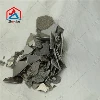
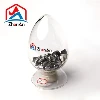
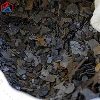
| Appearance | Silver-gray or gray metallic lumps |
| Quality Document | COA available for batch chemical composition |
| MOQ | 1 metric ton |
If your internal specification controls Al, Si, C, P, S or other elements, send us the required limits so we can compare them with the available FeV50 specification before quotation.
FeV50 Demand in Construction Steel Production
Vanadium microalloying is widely used in major steel-producing and construction markets where high-strength reinforcement steel is required.
Demand for FeV50 is closely connected with rebar production, infrastructure activity, steel output and the choice of microalloying technology used by individual mills.
For procurement, this means FeV50 availability and price should be evaluated together with your production schedule, required quantity and target delivery date rather than relying only on general market trends.
What Should You Provide When Requesting an FeV50 Quote?
To receive a more relevant FeV50 quotation for your steelmaking operation, please provide:
- Required ferrovanadium grade
- Required vanadium content or impurity limits
- Required particle size
- Order quantity
- Packing requirement
- Destination port
- Expected delivery schedule
Ferrovanadium prices change with market conditions, so quotations should be confirmed according to your actual order requirements.
FeV50 Ferrovanadium FAQ
Request FeV50 Specification or Quote
If you are sourcing FeV50 ferrovanadium for HRB400 rebar or other microalloyed steel production, send us your target specification, required size, quantity and destination port. We can provide the available chemical specification, COA information and current quotation for your order.
Request FeV50 Specification & Quote
E-mail: sale@zanewmetal.com