

Quick Answer: Ferrovanadium (FeV) is mainly used to introduce vanadium into molten steel. In vanadium-microalloyed steels, vanadium can form fine VC, VN and V(C,N) precipitates that contribute to precipitation strengthening and, depending on steel chemistry and thermomechanical processing, can also support grain refinement and microstructure control. Ferrovanadium is commonly used in HSLA, structural, rebar, pipeline, engineering and tool steels. The required FeV grade should be selected from the target vanadium addition, impurity limits, particle size and expected recovery rather than from V content alone.
What Is the Main Function of Ferrovanadium in Steel?
The direct purpose of ferrovanadium is to act as a vanadium-bearing alloy addition. FeV is added to the molten steel so that the required amount of vanadium can be introduced and controlled during steelmaking.
Once vanadium is present in the steel, its effect depends on the steel composition and processing route. In many vanadium-microalloyed steels, vanadium combines with carbon and nitrogen to form fine vanadium carbides, nitrides or carbonitrides.
These fine precipitates can increase yield strength by precipitation strengthening. Vanadium-containing precipitates and the associated thermomechanical process can also contribute to grain-size and transformation control in suitable steel systems.
The result is not simply "more vanadium = stronger steel." Vanadium content, C and N levels, rolling temperature, cooling route and subsequent heat treatment all influence the final response.
For available FeV grades and chemistry, see our ferrovanadium specifications.
Where Is Ferrovanadium Used in Steelmaking?
The final use of ferrovanadium depends on what the steelmaker needs vanadium to achieve. Common examples include:
| Steel Type | Why Vanadium Is Added | What the Process Must Control |
|---|---|---|
| HSLA / Structural Steel | Precipitation strengthening and microstructure control | V addition, C/N balance, rolling and cooling conditions |
| Rebar and Long Products | Achieve required strength through vanadium microalloying | Target V level and processing route |
| Pipeline / Engineering Steel | Support required strength and controlled microstructure | Chemistry, thermomechanical processing and toughness requirements |
| Tool and Wear-Resistant Steel | Introduce vanadium for carbide formation and wear-related properties | V level, carbon level and heat-treatment route |
These are steelmaking functions rather than direct end uses of ferrovanadium. For example, FeV is not an "automotive material" by itself; vanadium-alloyed steel produced with FeV may later be used in automotive, construction, pipeline or engineering components.
How Vanadium Strengthens Steel
Vanadium does not strengthen every steel through one identical mechanism. Three effects are commonly discussed, but their relative importance depends on the alloy system and processing conditions.
Precipitation Strengthening
Fine VC, VN or V(C,N) precipitates can obstruct dislocation movement and increase yield strength. In many ferritic vanadium-microalloyed steels, this is one of the most important contributions from vanadium.
Grain and Transformation Control
Vanadium-containing precipitates can influence ferrite nucleation, grain development and transformation behavior under suitable thermomechanical conditions. The result depends strongly on temperature history, cooling rate and the C/N balance of the steel.
Carbide Formation in Higher-Carbon Steels
In tool and wear-resistant steels, vanadium can participate in the formation of hard vanadium-rich carbides. The final carbide population depends on the overall steel chemistry and heat treatment rather than on FeV grade alone.
Therefore, ferrovanadium should be viewed as the carrier used to introduce controlled V units; the final metallurgical effect is created by the combination of vanadium, steel chemistry and processing.
FeV50 vs FeV60 vs FeV80: How Much Alloy Is Required?
FeV50, FeV60 and FeV80 contain different amounts of vanadium, so they require different addition quantities to supply the same amount of V.
Before considering recovery, the theoretical calculation is:
Ferrovanadium required = Required V ÷ V fraction
For example, to supply 10 kg of elemental vanadium:
| Nominal Grade Basis | V Fraction Used | Theoretical FeV Addition |
|---|---|---|
| FeV50 | 50% | 20.0 kg |
| FeV60 | 60% | 16.7 kg |
| FeV80 | 80% | 12.5 kg |
These figures use nominal V percentages only and do not include recovery.
In actual production, use the V value on the batch COA and the recovery established for your own steelmaking practice:
FeV required = Required recovered V ÷ (Actual V fraction × Expected V recovery)
A higher-V ferrovanadium grade therefore reduces the mass of alloy required to supply the same theoretical V units, but it is not automatically the better commercial choice.
Compare the delivered price, actual V content, impurity limits and expected recovery to determine the cost per effective unit of vanadium.
If you are specifically comparing FeV60, see our guide to FeV60 applications and addition calculations.
Why Use Ferrovanadium Instead of Comparing V% Alone?
The V percentage is only one part of the FeV specification.
For steelmaking, the practical performance of an addition can also be affected by:
- Actual vanadium content
- C, Si, Al, P and S limits
- Particle-size distribution
- Fines and oversize content
- Addition timing
- Bath temperature and stirring
- Slag and oxidation conditions
This is why two FeV grades should not be compared simply as "50% versus 80%."
A technically useful comparison asks:
How much effective vanadium will this material deliver, with what impurity input, at what delivered cost?
Ferrovanadium Particle Size and Addition Behavior
Ferrovanadium is generally supplied as crushed lump material within an agreed particle-size range.
Particle size matters because:
- Oversize pieces may require more time to dissolve under the same bath conditions.
- Excessive fines can increase dust and handling losses.
- Inconsistent sizing can make addition behavior less repeatable between batches.
Ranges such as 10–50 mm, 10–60 mm or another specified fraction can be agreed according to the charging method and plant practice.
The nominal size should ideally be accompanied by an agreed tolerance for undersize and oversize material when size consistency is important.
Ferrovanadium Grade and Batch Chemistry
The ferrovanadium grade defines the required chemistry range, while the COA shows the actual results of a particular production lot.
Depending on the ordered grade, check:
- V – actual vanadium content used for dosing
- C – carbon contribution
- Si – silicon introduced with the alloy
- Al – where aluminum control is required
- P and S – particularly where the final steel has limited impurity margin
GB/T 4139-2012 can be used as a ferrovanadium specification reference where it is agreed in the contract, but the exact grade and acceptance limits should still be written clearly in the purchase documents.
For repeat orders, several recent batch COAs provide more useful information about consistency than one isolated test result.
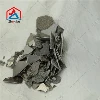
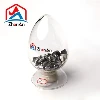
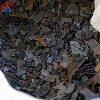
Ferrovanadium Product Appearance
Visual inspection can help check lump size, fines and obvious contamination, but the FeV grade cannot be identified reliably from appearance alone.

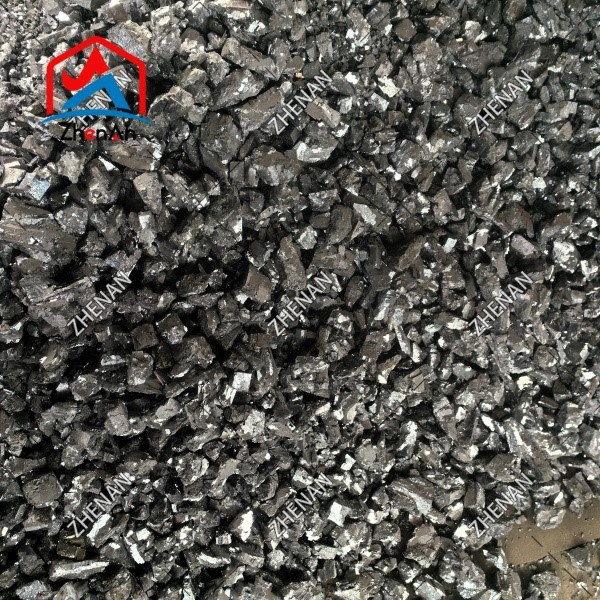
Actual V content and impurity levels should be confirmed from the specification and batch test report.
What to Confirm Before Buying Ferrovanadium
| Item | What to Confirm |
|---|---|
| Grade | FeV50, FeV60, FeV80 or the exact required subgrade |
| V range | Required vanadium range for dosing calculations |
| Impurities | C, Si, Al, P, S and any other process-critical limits |
| Particle size | Required size plus undersize / oversize tolerance where necessary |
| Batch COA | Actual chemistry linked to the supplied production lot |
| Commercial basis | Quantity, packing, trade term and destination port |
Need to Compare Ferrovanadium Grades?
Send your required FeV grade, target V range, impurity limits, particle size, quantity and destination port. We can compare available specifications and recent batch COA data before quotation.
Storage and Handling
Store ferrovanadium in a clean, dry area and keep different grades or production lots separated when batch traceability is required.
Crushing, screening and handling can generate alloy dust, especially where fines are present. Workplace dust control, PPE and handling requirements should follow the SDS supplied with the material and applicable site regulations.
FAQ About Ferrovanadium Uses
What is ferrovanadium mainly used for?
Ferrovanadium is mainly used as a vanadium-bearing alloy addition in steelmaking. It supplies vanadium for microalloying, precipitation strengthening and other composition-dependent metallurgical effects.
How does ferrovanadium increase steel strength?
Vanadium can form fine carbide, nitride and carbonitride precipitates that strengthen the steel by obstructing dislocation movement. The actual effect depends on steel chemistry and thermomechanical processing.
Is ferrovanadium used in HSLA steel?
Yes. Vanadium microalloying is widely used in HSLA steels where precipitation strengthening and controlled microstructure are required.
What is the difference between FeV50 and FeV80 in steelmaking?
FeV80 contains more vanadium per unit mass, so less alloy is theoretically required to supply the same quantity of V. The correct choice should also consider impurity limits, recovery and cost per effective unit of vanadium.
Does a higher FeV grade give higher vanadium recovery?
Not automatically. Recovery is also affected by bath conditions, slag, addition timing, particle size and mixing. The actual recovery used for dosing should come from plant experience.
Why is ferrovanadium particle size important?
Oversize pieces may take longer to dissolve under the same conditions, while excessive fines can increase dust and handling loss. A controlled size range improves repeatability during charging.
What should I check on a ferrovanadium COA?
Check the actual V content together with C, Si, Al, P, S and other required elements. The COA should also be traceable to the batch or lot being supplied.