
Q1. What exactly is FeV50?
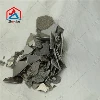
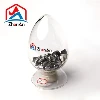
FeV50 is a ferrovanadium alloy widely used to raise strength, hardenability, and toughness in medium-to-high-strength steels. It sits between FeV40 and FeV60 in the global product lineup and is considered a "middle-grade, high-purity" alloy suitable for micro-alloying in construction steel, pipeline steel, tool steel, and high-strength plate.
Its value lies in how efficiently vanadium is recovered in steelmaking. FeV50 usually melts quickly, disperses evenly, and allows mills to hit mechanical-performance targets without raising carbon or nitrogen unnecessarily-especially useful in controlled-rolling and controlled-cooling processes.
Q2. What does the "50" specifically refer to?
The "50" refers to vanadium content, meaning FeV50 typically contains 50% V by mass (often with a narrow tolerance depending on producer). It does not refer to purity, melting point, or efficiency-only the actual elemental vanadium share.
To make this intuitive, here's how FeV grades relate to V content:
| Grade | Typical Vanadium Content (V %) |
|---|---|
| FeV40 | ~40% |
| FeV50 | ~50% |
| FeV60 | ~60% |
| FeV80 | ~78–82% |
In steelmaking, this percentage directly drives the alloy addition rate. Higher-grade FeV means less total tonnage needed to deliver the same final V addition.
Q3. Beyond vanadium %, what specs actually matter when comparing FeV50 from different suppliers?
While most newcomers focus only on V%, steel mills rarely judge FeV on that single figure. Three additional fields change both price and mill performance:
| Specification Field | Why It Matters |
|---|---|
| C, S, P impurities | Affects weldability and toughness; many mills run hard limits. |
| Al, Si content | Impacts deoxidation balance and slag behavior. |
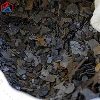
| Size (10–50 mm / 10–60 mm) | Determines melting speed and V recovery; too large → slow dissolution, too fine → increased oxidation loss. |
In practice, mills purchasing FeV50 often adjust their addition strategy based on furnace size, tapping temperature, and upstream refining conditions. Two FeV50 batches with identical V% can behave very differently in melt performance if their size distribution or impurities deviate.
Q4. When would a mill choose FeV50 instead of FeV60 or FeV40?
FeV50 is a "sweet spot" choice. Some typical scenarios:
When aiming for stable micro-alloying costs
FeV50 often prices more steadily than FeV60 due to larger global output.
When mills need predictable recovery
Many EAF and BOF operations report stable V yields with FeV50 thanks to common granularity ranges (10–50 mm).
When FeV80 is overkill
High-grade alternatives can raise alloy cost without delivering proportional benefits unless extremely tight strength windows are required.
Overall, FeV50 balances purchase cost, melting behavior, and alloy recovery-making it the default grade for most long-products and flat-products producers.


Inquiry
If you're sourcing FeV50, the most useful starting point isn't just the V%-it's matching grade + size + impurity limits to your steel route. We supply FeV40 / FeV50 / FeV60 / FeV80 with stable monthly output and consistent size distribution.
If you want, I can help you check the ideal grade and prepare a clean quotation-just tell me:
grade (FeV50 / 60 / 80…)
size
quantity
destination port
shipment window