
Low Carbon Ferrochrome: Composition and Grade Framework
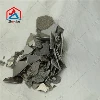
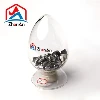
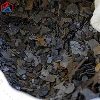
Low carbon ferrochrome (LCFeCr) is a chromium-iron alloy melted on a carbon-restricted route so that residual carbon stays at or below 0.50%, and in the tightest commercial grades at or below 0.15%. Carbon is the element that most strongly stabilises chromium carbides, so holding it down is precisely what separates low carbon ferrochrome from charge chrome and high carbon grades used in bulk steelmaking.
Commercial low carbon grades typically carry 60-70% chromium, with silicon, sulphur and phosphorus controlled to the limits tabulated in GB/T 5683 and ISO 5448. In those designation systems the chromium content and the maximum carbon content both appear in the grade code, so the alloy chemistry can be read directly from the specification line before a heat is planned.
| Element | Typical low carbon range | Function in the heat |
|---|---|---|
| Chromium | 60-70% | Primary alloying element; corrosion and oxidation resistance |
| Carbon | 0.50% max, tight grades 0.15% max | Controls carbide formation, toughness and weldability |
| Silicon | 1.50% max | Reduction residue; governs slag volume and chromium recovery |
| Sulphur / phosphorus | 0.03% / 0.04% max | Cleanliness, impact toughness, hot ductility |
Steel Industry: Alloying of Stainless and Special Steel
The largest single application of low carbon ferrochrome is alloying of stainless steel, heat-resistant steel and engineering special steel. Chromium is added to raise corrosion resistance and to build the passive oxide film that protects the surface, while the low carbon level keeps chromium carbides from forming along grain boundaries during solidification and subsequent thermal treatment.
That carbide control matters because chromium carbides remove chromium from solid solution and leave chromium-depleted zones that are the starting point for intergranular corrosion in welded or sensitised components. By trimming carbon, low carbon ferrochrome supports the homogeneity and phase stability of the steel, improves ductility and toughness, and lengthens the service life of parts that see thermal cycling.
In practice the alloy is added as part of the final alloying and trimming stage, when the melt has already been decarburised, so that the carbon it brings in remains predictable and the aim chemistry is reached in a single correction. Consistent sizing of the lumps also helps dissolution and limits chromium losses to the slag.
Wear-Resistant and Heat-Resistant Materials
Because chromium raises hardness, hardenability and resistance to abrasive and adhesive wear, low carbon ferrochrome is a standard input for wear-resistant steels used in crushing, milling, material handling and earthmoving equipment. A low carbon matrix gives those parts the toughness needed to survive impact loading while the chromium-rich structure resists abrasive loss.
Wear plate and liners for mining and aggregate handling
Grinding media and mill internals that combine abrasion resistance with impact strength
Heat-resistant castings and furnace furniture that must resist scaling at elevated temperature
Components where a combination of hardness and weldability is required for repair or fabrication
For heat-resistant service the same alloy system raises the scaling temperature of the steel, so parts keep their shape and load-bearing section for longer campaigns between shutdowns.
Chemical Industry: Catalysts and Catalyst Carriers
Chromium-based materials derived from low carbon ferrochrome are used in the chemical industry as catalyst precursors and as carriers for active phases. Chromium oxide surfaces take part in oxidation and dehydrogenation reactions, and the controlled impurity profile of a low carbon input keeps catalyst performance reproducible from batch to batch.
Because catalyst manufacture is sensitive to trace elements, the low sulphur and low carbon specification is an advantage: fewer competing side reactions, more stable activity and a longer working life before regeneration. The same chemistry is relevant to chromium chemicals and to pigment precursors, where iron and carbon residues set the final colour and purity.
Aerospace and High-Performance Components
In aerospace and other high-performance sectors, low carbon ferrochrome feeds the melting of chromium-bearing alloys that must retain strength at temperature and resist oxidation and corrosion. Parts such as turbine hardware, fasteners, actuator components and structural fittings are produced from grades in which a low carbon content is required to protect fatigue resistance and notch toughness.
For these applications the alloy is judged not only on chromium content but on the consistency of the residual element package, because casting-to-casting variation propagates directly into mechanical properties. Grain-refined, low-interstitial melting practice is therefore a purchasing requirement rather than a preference.
Selecting and Verifying the Right Grade
Grade selection should start from the carbon ceiling the final steel can tolerate and the chromium recovery the melting shop can achieve. A tight carbon limit usually justifies the higher cost of low carbon ferrochrome, while a less demanding specification may be served by a medium carbon grade.
Confirm chromium and carbon ranges against the governing material standard before ordering
Check lump size against the furnace charging system to avoid fines losses
Request chemical analysis per heat, including sulphur and phosphorus
Verify packaging and moisture protection for storage before use
Frequently Asked Questions
Q: What carbon content defines low carbon ferrochrome?
Low carbon ferrochrome generally contains no more than 0.50% carbon, and the tightest commercially available grades are held at or below 0.15% for applications where carbide formation must be minimised.
Q: Why is low carbon ferrochrome used instead of high carbon ferrochrome?
Chromium raises corrosion resistance, but carbon ties up chromium as carbides and can cause sensitisation in welded or thermally cycled steel. A low carbon input keeps chromium in solid solution, preserving toughness and intergranular corrosion resistance.
Q: Which industries use low carbon ferrochrome most?
The main users are stainless and special steel producers, makers of wear-resistant and heat-resistant materials, the chemical industry for catalyst and carrier production, and aerospace suppliers of high-temperature corrosion-resistant components.
Q: How should chromium recovery be protected when adding the alloy?
Add the alloy during the final trimming stage after decarburisation, charge correctly sized lumps that dissolve readily, and keep slag conditions stable so that chromium is not lost to oxidation or entrapment.
Q: What should a purchase specification include?
State the required chromium range, the maximum carbon content, lump size distribution, and limits for silicon, sulphur and phosphorus, all referenced to the applicable standard, together with the chemical analysis report for each heat.
Q: Can low carbon ferrochrome improve steel service life?
Yes. By supporting a homogeneous, carbide-controlled microstructure it improves strength, hardness, wear resistance and phase stability, which together extend the working life of components in demanding service.