

Quick Answer: Low-carbon ferrochrome is an iron-chromium alloy with a controlled carbon level, used when chromium needs to be added without introducing excessive carbon into the melt. In our current ferrochrome specification, low-carbon grades FeCr-3 and FeCr-4 contain 0.25–0.50% C, while micro-carbon grades use a lower 0.03–0.15% C range. When selecting a grade, compare Cr and C together with Si, P, S, particle size and the actual batch COA.
What Is Low-Carbon Ferrochrome?
Ferrochrome, or FeCr, is an iron-chromium ferroalloy used to introduce chromium into steel and other chromium-bearing alloys.
Different ferrochrome products contain different amounts of carbon. This matters because every FeCr addition introduces not only chromium but also carbon, silicon and smaller amounts of phosphorus and sulfur.
Low-carbon ferrochrome is selected when the process still needs chromium but has less room for additional carbon pickup.
That makes the carbon specification just as important as the chromium range.
For available ferrochrome products, see our ferrochrome product range.
Ferrochrome Grades by Carbon Content
Our current ferrochrome range is divided into micro-carbon, low-carbon, medium-carbon and high-carbon grades.
| Category | Grade | Cr (%) | C (%) | Si (%) | P (%) | S (%) |
|---|---|---|---|---|---|---|
| Micro Carbon | FeCr-1 | 58–68 | 0.03–0.15 | 1.0–2.0 | 0.03–0.06 | 0.025–0.03 |
| FeCr-2 | 63–68 | 0.03–0.15 | 1.0–2.0 | 0.03–0.06 | 0.025–0.03 | |
| Low Carbon | FeCr-3 | 58–68 | 0.25–0.50 | 1.5–3.0 | 0.03–0.06 | 0.025–0.03 |
| FeCr-4 | 63–68 | 0.25–0.50 | 1.5–3.0 | 0.03–0.06 | 0.025–0.03 | |
| Medium Carbon | FeCr-5 | 58–68 | 1.0–4.0 | 1.5–3.0 | 0.03–0.06 | 0.025–0.03 |
| FeCr-6 | 63–68 | 1.0–4.0 | 1.5–3.0 | 0.03–0.06 | 0.025–0.03 | |
| High Carbon | FeCr-7 | 58–68 | 4.0–10.0 | 3.0–5.0 | 0.03–0.06 | 0.03–0.06 |
| FeCr-8 | 63–68 | 4.0–10.0 | 3.0–5.0 | 0.03–0.06 | 0.03–0.06 |
In this product specification, FeCr-3 and FeCr-4 are the low-carbon grades, both with a carbon range of 0.25–0.50%.
The main difference between them is chromium content:
- FeCr-3: Cr 58–68%
- FeCr-4: Cr 63–68%
If carbon must be controlled below this range, the micro-carbon FeCr-1 or FeCr-2 specification may be more appropriate.
Low-Carbon vs Micro-Carbon Ferrochrome
Low-carbon and micro-carbon ferrochrome are sometimes grouped together loosely in commercial conversations, but they should not be treated as identical products.
| Comparison | Low-Carbon FeCr | Micro-Carbon FeCr |
|---|---|---|
| Grades | FeCr-3 / FeCr-4 | FeCr-1 / FeCr-2 |
| C | 0.25–0.50% | 0.03–0.15% |
| Si | 1.5–3.0% | 1.0–2.0% |
| Main Selection Reason | Lower carbon input than medium- or high-carbon FeCr | Used when the remaining carbon allowance is especially tight |
The lowest-carbon product is not automatically the best option. If FeCr-3 or FeCr-4 already keeps the final melt comfortably inside the required C limit, moving to a micro-carbon grade may increase cost without providing a useful metallurgical benefit.
Why Is Carbon Content Important in Ferrochrome?
Ferrochrome is used primarily to deliver chromium, but the carbon contained in the alloy enters the melt at the same time.
The carbon contribution can be estimated as:
Carbon introduced = FeCr addition × C fraction
For example, if 100 kg of ferrochrome is added:
| FeCr Carbon Basis | C in Ferrochrome | Carbon Introduced by 100 kg FeCr |
|---|---|---|
| Low Carbon | 0.50% | 0.50 kg C |
| Micro Carbon | 0.15% | 0.15 kg C |
| High Carbon | 8.0% | 8.0 kg C |
The figures above are simplified examples. Actual calculations should use the batch COA value and the real ferrochrome addition quantity.
This explains why lower-carbon ferrochrome becomes valuable later in refining or whenever the final alloy has limited remaining carbon allowance.
How Is Low-Carbon Ferrochrome Produced?
High-carbon ferrochrome is commonly produced through carbothermic reduction, where carbon acts as the main reducing agent. Producing much lower-carbon FeCr requires a different approach because excessive carbon must be avoided or removed.
Industrial low-carbon ferrochrome can be produced through processes that use silicon-bearing reducing agents, followed by controlled refining according to the required carbon level.
Very-low-carbon ferrochrome may also be produced through additional decarburization routes.
The exact production route can vary by plant and target grade, so the purchasing specification should focus on the final Cr, C, Si, P and S values rather than assuming one manufacturing process from the grade name alone.
Where Is Low-Carbon Ferrochrome Used?
Low-carbon ferrochrome is useful when a melt needs additional chromium but cannot accept the carbon input associated with high-carbon FeCr.
Typical situations include:
- Low-carbon chromium-bearing steels
- Special steels with a narrow carbon specification
- Later refining stages where chromium still needs adjustment
- Alloy or casting processes requiring controlled Cr addition with limited carbon pickup
It should not be described simply as "ferrochrome for stainless steel." Modern stainless-steel refining can also use high-carbon ferrochrome and subsequently remove carbon, depending on the production route.
The correct FeCr grade therefore depends on where the chromium addition occurs and how much carbon margin remains at that stage.
FeCr-3 vs FeCr-4: Which Low-Carbon Grade Should You Choose?
Both FeCr-3 and FeCr-4 use the same reference carbon range of 0.25–0.50%. The main difference is the chromium range.
| Grade | Cr (%) | C (%) | Si (%) | Selection Point |
|---|---|---|---|---|
| FeCr-3 | 58–68 | 0.25–0.50 | 1.5–3.0 | Suitable when the broader Cr range meets the melt requirement |
| FeCr-4 | 63–68 | 0.25–0.50 | 1.5–3.0 | Provides a higher minimum chromium level |
If both grades satisfy the carbon requirement, the practical comparison should focus on the required Cr addition, actual batch Cr value and delivered price.
A useful comparison is the cost per effective unit of chromium, not simply price per tonne of ferrochrome.
What Should Be Checked on the COA?
The product grade gives the reference specification, while the COA shows the actual chemistry of the production lot.
For low-carbon ferrochrome, check:
- Cr: confirms the actual chromium content available for alloying
- C: confirms the actual carbon contribution
- Si: important where silicon input affects the final chemistry
- P: should remain within the phosphorus budget of the melt
- S: should be checked where sulfur input is restricted
The batch number on the COA should also correspond to the supplied lot when traceability is required.
For repeat orders, several recent COAs provide a better indication of chemistry consistency than one isolated certificate.
Low-Carbon Ferrochrome Particle Size and Packing
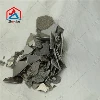
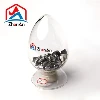
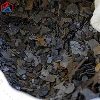
Low-carbon ferrochrome is normally supplied as crushed lump material. The particle-size specification should match the charging method and available dissolution time.
Commercial size ranges may include:
- 10–50 mm
- 10–100 mm
- Other agreed lump or crushed sizes
When size consistency matters, the order should also define acceptable undersize, oversize and excessive fines.
Packing should be agreed according to shipment and handling requirements, including bag type and net weight.
What to Confirm Before Buying Low-Carbon Ferrochrome
| Item | What to Confirm |
|---|---|
| Category | Low-carbon or micro-carbon ferrochrome |
| Grade | FeCr-3, FeCr-4 or another required specification |
| Cr | Required chromium range |
| C | Maximum or agreed carbon range |
| Si / P / S | Required impurity limits or ranges |
| Particle Size | Nominal range plus fines / oversize tolerance where needed |
| Batch COA | Actual chemistry linked to the supplied production lot |
| Packing | Bag type and net weight |
An RFQ that says only "low-carbon ferrochrome" is not precise enough. At minimum, state the required Cr range and C level so different supplier quotations are based on comparable material.
Need to Compare Low-Carbon Ferrochrome Grades?
Send your required Cr range, carbon level, Si/P/S requirements, particle size, quantity and destination port. We can compare available ferrochrome specifications and provide recent batch COA data before quotation.
Storage and Handling
Store ferrochrome in a clean, dry area and keep different grades or batches separated where traceability is required.
Crushing, screening and handling of fine material can generate alloy dust. Appropriate dust-control measures, PPE and workplace procedures should follow the SDS supplied with the product and applicable local requirements.
FAQ About Low-Carbon Ferrochrome
What is low-carbon ferrochrome?
Low-carbon ferrochrome is an iron-chromium alloy with controlled carbon content. It is used when chromium needs to be added while limiting additional carbon pickup in the melt.
What is the carbon content of low-carbon ferrochrome?
In our current product specification, FeCr-3 and FeCr-4 low-carbon grades use a carbon range of 0.25–0.50%.
What is the difference between low-carbon and micro-carbon ferrochrome?
Our low-carbon grades use C at 0.25–0.50%, while micro-carbon FeCr-1 and FeCr-2 use 0.03–0.15%. Micro-carbon material is selected when the remaining carbon allowance is even tighter.
What is the difference between FeCr-3 and FeCr-4?
Both have the same 0.25–0.50% C range. FeCr-3 uses Cr at 58–68%, while FeCr-4 has a higher minimum Cr level of 63%.
Is micro-carbon ferrochrome always better than low-carbon ferrochrome?
No. A lower-carbon grade only provides value when the process requires the additional carbon margin. If low-carbon FeCr already meets the final chemistry requirement, micro-carbon material may be unnecessary.
Why is carbon important when buying ferrochrome?
The ferrochrome addition introduces carbon together with chromium. When the final steel has a tight carbon limit, the C content of the FeCr must be included in the melt calculation.
What should I check on a ferrochrome COA?
Check the actual Cr, C, Si, P and S results and make sure the certificate corresponds to the supplied batch. For repeat purchasing, compare several recent batches to evaluate consistency.
What information should be included in a low-carbon ferrochrome RFQ?
State the required Cr range, carbon level, Si/P/S requirements, particle size, quantity, packing and destination so supplier quotations can be compared on the same specification basis.