
Introduction
FeV60 ferrovanadium is widely used in the production of HSLA structural steel to solve a common challenge faced by steel manufacturers: increasing steel strength without sacrificing weldability or significantly raising alloy costs. HSLA (High-Strength Low-Alloy) steels are widely applied in bridges, heavy machinery, construction equipment, and large infrastructure projects where both strength and structural reliability are critical.
Traditional strengthening methods often rely on increasing carbon content or adding expensive alloying elements. However, higher carbon levels can reduce weldability and increase the risk of brittle fracture in structural applications. For this reason, many steel mills use FeV60 ferrovanadium for HSLA structural steel production.
By adding a small amount of FeV60 ferrovanadium during steelmaking, producers can significantly improve strength, toughness, and microstructure stability through vanadium microalloying.

Industry Applications of FeV60 Ferrovanadium in HSLA Structural Steel
HSLA structural steel strengthened with FeV60 ferrovanadium is widely used in industries that require high-performance steel materials.
Common applications include:
- Bridge construction
- Structural beams and columns
- Offshore engineering structures
- Heavy construction machinery
- Energy infrastructure projects
In these sectors, steel must withstand heavy loads and long service lifetimes, making ferrovanadium microalloying an important metallurgical solution.
How FeV60 Ferrovanadium Improves HSLA Structural Steel Strength
When FeV60 ferrovanadium is added to molten steel during ladle refining, vanadium reacts with carbon and nitrogen to form vanadium carbonitrides (V(C,N)).
These particles strengthen steel through several metallurgical mechanisms.
Grain Refinement from FeV60 Ferrovanadium
Vanadium carbonitrides restrict grain growth during thermomechanical processing. Smaller grain sizes significantly improve strength and toughness in HSLA structural steel.
Precipitation Strengthening from FeV60 Ferrovanadium
Fine V(C,N) precipitates strengthen the steel matrix by restricting dislocation movement. This mechanism allows FeV60 ferrovanadium to improve HSLA steel strength without increasing carbon content.
Microstructure Stability from Ferrovanadium Microalloying
Vanadium helps stabilize the steel microstructure during rolling and cooling processes, ensuring consistent mechanical properties in structural components.
Advantages of Using FeV60 Ferrovanadium in Structural Steel Production
Steel producers prefer FeV60 ferrovanadium because it offers several key advantages.
Higher strength
Vanadium microalloying significantly increases yield strength.
Better weldability
Strength improvements occur without increasing carbon content.
Improved toughness
Fine grain structures improve resistance to brittle fracture.
Cost-effective alloying
Small vanadium additions provide significant strengthening effects, making FeV60 ferrovanadium a cost-efficient alloying material.

Why Steel Mills Buy FeV60 Ferrovanadium for Structural Steel
As infrastructure development continues worldwide, demand for high-strength structural steel continues to grow. Steel manufacturers increasingly rely on FeV60 ferrovanadium suppliers to ensure consistent alloy quality during production.
Many producers choose to buy FeV60 ferrovanadium because it provides a reliable and efficient strengthening solution for HSLA steels used in modern engineering structures.
Reliable FeV60 Ferrovanadium Supply for Structural Steel Producers
FeV60 ferrovanadium has become an essential alloying material for the production of HSLA structural steel, helping steel manufacturers solve critical challenges related to strength, weldability, and structural reliability. Through vanadium microalloying, even small additions of FeV60 ferrovanadium can significantly improve steel performance while maintaining cost efficiency.
For steel producers seeking a stable FeV60 ferrovanadium supplier, consistent quality and reliable supply are equally important. Our company specializes in supplying high-quality ferrovanadium alloys with stable chemical composition and dependable delivery. With our own ferroalloy production facilities and integrated supply chain, we are able to provide a steady supply of FeV60 ferrovanadium to steel mills and alloy buyers worldwide.
Whether you are looking to improve HSLA structural steel performance or searching for a trusted ferrovanadium supplier, our team can support your ferroalloy sourcing needs with reliable products and professional service.
E-mail:sale@zanewmetal.com
FAQ
Q: 1. What grades of ferrovanadium do you supply?
A: We mainly supply four common grades of ferrovanadium, including:
FeV40
FeV50
FeV60
FeV80
Each grade has different vanadium content and is used for different alloying requirements in steel production. If you are not sure which grade is suitable for your application, you can tell us your usage or target vanadium content and our team can help you choose the appropriate grade.
Q: 2. What is the vanadium content of your ferro vanadium?
A: The vanadium content depends on the grade.
For example:
FeV40: about 38–45% V
FeV50: about 45–55% V
FeV60: about 58–65% V
FeV80: about 78–82% V
Different grades are used depending on the vanadium content required in the alloy or steelmaking process. If you need the detailed chemical composition for a specific grade, we can provide the full specification.
Q: 3. Can you provide the chemical composition or specification?
A: Yes, we can provide the complete chemical composition specification for each grade of ferro vanadium.
The specification normally includes elements such as:
Vanadium (V)
Aluminum (Al)
Silicon (Si)
Carbon (C)
Phosphorus (P)
Sulfur (S)
These values vary depending on the grade (FeV40, FeV50, FeV60, FeV80). If you need the full specification sheet or technical data, our team can send it to you.
Q: 4. What size of ferro vanadium do you supply?
A: Our standard particle sizes are:
3–20 mm
10–50 mm
These sizes are commonly used in steelmaking and alloy production. If you have a specific size requirement for your process, you can tell us and we will confirm the available options.
Q: 5. What does your ferro vanadium look like?
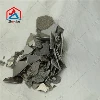
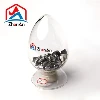
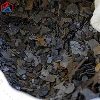
A: Our ferro vanadium typically appears as silver gray or gray metallic lumps.
It has a metallic structure and is supplied in crushed lump form suitable for alloying applications. This form helps ensure easier handling and feeding during the production process.
Q: 6. What is the melting point of ferro vanadium?
A: The melting point of our ferro vanadium is about 1800°C.
This high melting point makes it suitable for use in steelmaking and alloy production processes, where high-temperature stability is required.
Q: 7. What is your minimum order quantity (MOQ)?
A: Our minimum order quantity is 1 ton.
If you need to test the product before placing a large order, we can also discuss sample arrangements.
Q: 8. Do you provide samples?
A: Yes, free samples are available.
However, the shipping cost needs to be paid by the buyer. Once we receive the courier details or shipping arrangement, we can prepare the sample accordingly.
Q: 9. Do you provide COA or quality certificates?
A: Yes, we can provide COA (Certificate of Analysis) for the product.
The COA includes the chemical composition and quality data of the specific batch, so buyers can confirm that the material meets their requirements.
Q: 10. What is your delivery time and how do you quote the price?
A: For stock goods, the delivery time is usually around 15 days.
As ferro vanadium prices change frequently with the market, the quotation is usually confirmed based on:
Product grade
Order quantity
Destination port
You can send us this information, and our sales team will provide the latest quotation sheet for your reference.