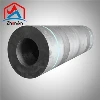
1. High alumina bricks: With an Al2O3 content greater than 75, they have a higher fire resistance than clay bricks, good resistance to acid and alkali corrosion, and are suitable for areas such as cement kiln firing belts. They have a long service life but are expensive
2. Dolomite brick: It has good performance in hanging kiln skin and corrosion resistance, but there is a certain amount of f-CaO in the brick, which is easy to hydrate and difficult to transport and store. It is rarely used in production
3. Magnesium chromium bricks: They are good for hanging kiln skins and are often used for firing belts. However, their disadvantage is poor thermal shock resistance. In addition, the highly toxic hexavalent Cr makes the production and use of magnesium chromium bricks in countries around the world gradually decrease. Currently, production units using this brick should find substitutes as soon as possible
4. Spinel brick: commonly used in transition zones, with good seismic performance and resistance to reduction, but slightly inferior fire resistance
5. Anti stripping brick: This brick contains a small amount of ZrO, which undergoes martensitic transformation and forms fine cracks during the heating process. It has strong alkaline resistance, good anti stripping and slag resistance
6. Phosphate bricks: low fire resistance, but high strength and good thermal shock resistance, commonly used in castor coolers, kiln head covers, etc
7. Silicon carbide brick: high temperature resistance (about 1800 ℃, load softening temperature is 1620-1640), low coefficient of thermal expansion, good resistance to rapid cooling and heat and abrasion resistance, suitable for cooling belt and kiln mouth
8. Silicon Mo brick: Good thermal shock resistance, high strength, good wear resistance, suitable for transition zone.
Refractory soil
People light stoves. A type of soil used for lining the furnace.
Clay refractory soil
1. Characteristics and Application: Clay refractory bricks are weakly acidic refractory materials with good thermal stability, suitable for hot air furnaces, various boiler linings, as well as flues, smoke chambers, etc.
2. Product specification form: standard shaped, regular shaped, irregular shaped, and special shaped bricks. Physical and chemical properties of clay refractory bricks.
Refractory clay
Refractory clay products come in various forms, with basic quality requirements for alumina exceeding 38% (usually 42-47%) and low iron and low alkali metal content. These products can be calcined or not, and include high-performance calcined products such as mullite.
Refractory clay is used for the production of shaped and monolithic refractory materials. Brick products include fire clay bricks, such as blast furnace barrier bricks and high alumina bricks, such as support bricks for lining horizontal and vertical induction furnaces. In the amorphous material department, there are various products consumed, such as refractory clay, plastic materials for overload use, high alumina plastics, refractory clay, and high alumina castables.
Refractory clay is mainly composed of hydrated aluminum silicate, with a molecular formula of Al2O3 · 2SiO2 · 2H2O (i.e. 39.5% alumina, 46.5% silica, and 14% water). Among this group of minerals, kaolin is the most abundant.
Refractory clay, flint clay, or hard clay, ball clay, or plastic clay, and kaolin. However, its general feature is that these minerals contain kaolinite, which is composed of 20-45% Al2O3,<3% Fe2O3 and<3% Na2+K2O.
When kaolinite is calcined under the condition of gradually increasing temperature, its mineral phase constantly changes, forming metakaolin (Al2Si2O7) at about 550 ℃, spinel ((Al2O3) 2 (SiO2) 3+SiO2) at about 1000 ℃, and pseudo mullite ([Al2O3 · SiO2] 2) at about 1100 ℃. Another type of "refractory clay" product is mullite (3Al2O3 · 2SiO2), which can be prepared by calcining high alumina kaolin and bauxitic kaolin at 1200-1500 ℃. At these temperatures, the main mineral phases of clay are converted into mullite, cristobalite, and a glass phase.
1. Refractory clay
This is a siliceous clay rich in hydrated aluminum silicate, which has the ability to not deform, shatter, soften, and paste at high temperatures. Low iron, calcium, and alkali metals, similar in composition to kaolin, with a better grade after calcination containing at least 35% Al2O3 (Mining Terminology Dictionary, compiled by the American Geological Society).
2. Chert clay
A smooth, flint like refractory clay rock mainly composed of kaolin, with a shell like cleavage and resistance to maturation in water. Prolonged grinding in water can produce plasticity (Mining Terminology Dictionary, American Geological Society).
3. Cooked refractory soil
It is a part of the mixture used in the production of refractory bricks, and is composed of calcined clay or reground bricks, also known as (clay) clinker. Its English name is chamotte (Dictionary of Mining Terms, American Geological Society).
4. Bauxite clay
This is a material mainly composed of (hard) bauxite (also known as diaspore), bonded by refractory clay. The purest bauxite clay often contains 70-80% Al2O3 after calcination.
5. Chinese clay
Soft clay (including ball clay), refractory clay, and kaolin:<45% Al2O3
Chert clay (commonly known as "pyrogemstone" in China), kaolin, and high alumina ore:>45% Al2O3
High alumina clay clinker (also known as "mature bauxite"): 75-90% Al2O3
6. Refractory mud/refractory clay mortar
Raw fire clay, together with calcined refractory clay or crushed refractory clay bricks, or both, all its components are ground to appropriate fineness (Mining Terminology Dictionary, American Geological Society).

May 06, 2023
Leave a message
What Are The Refractory Materials For Refractory Bricks
Send Inquiry