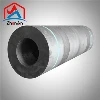
According to the different components of refractory bricks, they can be divided into five categories, namely: silicon aluminum series refractory bricks, alkaline series refractory bricks, carbon containing refractory bricks, zirconium containing refractory bricks, and insulation refractory bricks. Any furnace is not built with just one type of refractory brick, it requires a combination of different refractory bricks to be used. Below is a detailed introduction to the components of these five major types of refractory bricks.
1. Silicon aluminum refractory bricks are based on the phase diagram of the AL2O3-SiO2 binary system as the basic theory, mainly including the following types.
(1) Silicon bricks refer to refractory bricks containing over 293% SiO, and are the main type of acidic refractory bricks. It is mainly used for building coke ovens, as well as for the arches and other load-bearing parts of various glass, ceramic, carbon calciners, refractory brick thermal kilns. It is also used in high-temperature load-bearing parts of hot blast furnaces, but it is not suitable for use in thermal equipment below 600 ℃ and with large temperature fluctuations.
(2) Clay bricks are mainly composed of mullite (25%~50%), glass phase (25%~60%), and cristobalite and quartz (up to 30%). Usually, hard clay is used as the raw material, and the mature material is pre calcined, followed by the addition of soft clay. The clay brick products are formed by semi dry or plastic methods and fired at a temperature of 1300~1400 C. It is also possible to add a small amount of water glass, cement and other binders to make unburned products and amorphous materials. It is a commonly used refractory brick in blast furnaces, hot blast furnaces, heating furnaces, power boilers, lime kilns, rotary kilns, ceramic and refractory brick firing kilns.
(3) High alumina refractory bricks are composed of minerals such as corundum, mullite, and glass phase. Their content depends on the AL2O3/SiO2 ratio, as well as the type and quantity of impurities. The grade of refractory bricks can be classified based on the AL2O3 content. The raw materials are natural ores such as high alumina bauxite and sillimanite, as well as those mixed with fused corundum, sintered alumina, synthetic mullite, and clinker calcined with alumina and clay in different proportions. It is mostly produced by sintering method. But the products also include fused cast bricks, fused grain bricks, unburned bricks, and amorphous refractory bricks. High alumina refractory bricks are widely used in the steel industry, non-ferrous metal industry, and other industries.
(4) Corundum refractory brick refers to a type of refractory brick with an AL2O3 content of not less than 90%, mainly composed of corundum. It can be divided into sintered corundum brick and electric fused corundum brick.
2. Alkaline series refractory bricks. Basic refractory bricks refer to refractory products with basic oxide such as Mg0 and CaO as the main components. The main varieties are as follows.
(1) Magnesia refractory brick refers to the refractory brick with magnesite as raw material, periclase as main crystal phase, and MgO content of 80%~85%. Its products are divided into two categories: metallurgical magnesia and magnesia products. According to their chemical composition and usage, there are Martin sand, ordinary metallurgical magnesia, ordinary magnesia brick, magnesia silica brick, magnesia aluminum brick, magnesia calcium brick, magnesia carbon brick, and other varieties. Magnesium refractory bricks are the most important products in alkaline refractory bricks, with high fire resistance and good resistance to alkaline slag and iron slag. They are an important advanced refractory brick. Mainly used for open-hearth furnaces, oxygen converters, electric furnaces, and non-ferrous metal smelting.
(2) Dolomite brick is an alkaline refractory brick produced using dolomite as the main raw material. Widely used in alkaline converters, it can also be used as a lining for certain external refining ladles.
(3) Forsterite refractory brick is a kind of refractory brick mainly composed of forsterite 2MgO · SiO2. Mainly used for grid bricks in open hearth regenerative chambers, bricks for ingots, heating furnace bottoms, and also has good application effects in copper smelting furnaces.
3. Carbon containing refractory bricks. Carbon containing refractory bricks refer to refractory brick products made of carbon or carbon compounds, with different forms of carbon as the main component. They are mainly divided into the following types.
(1) Carbon bricks are high-temperature resistant neutral refractory brick products made with carbon materials as the main raw material and an appropriate amount of binder added. Carbon bricks are widely used for laying the bottom, hearth, bosh, and lower part of the blast furnace. It can improve the continuous operation time of the blast furnace and extend its service life. In addition, carbon bricks are widely used in the electrochemical industry, chemical industry, petrochemical industry, electroplating industry, ferroalloy industry furnaces (or equipment linings), acid and alkali tank linings and pipelines, as well as furnace linings for smelting non-ferrous metals (such as lead, aluminum, tin, etc.).
(2) Graphite refractory products are refractory materials made from natural graphite as raw material and clay as a binder. This type of product includes graphite clay crucibles, distillation pots, plug bricks for casting steel, nozzle bricks, and lining bricks for steel drums, etc. Among them, graphite clay crucibles are the most widely produced and widely used for steelmaking and smelting non-ferrous metals.
(3) Silicon carbide refractory products are advanced refractory materials produced using silicon carbide (SiC) as raw material. It has good wear and corrosion resistance, high high-temperature strength, high thermal conductivity, low linear expansion coefficient, and good thermal shock resistance. In the field of steel smelting, it can be used for lining steel drums, nozzles, plugs, blast furnace bottom and bosh, tapping slots, converter and electric furnace tapping ports, and water-cooled slide rails for heating furnaces. In the smelting of non-ferrous metals (zinc, copper, aluminum, etc.), it is widely used in distillers, distillation tower trays, electrolytic cell sidewalls, molten metal pipelines, suction pumps, and melting metal crucibles. In the silicate industry, it is widely used as a shed and flame barrier material for various kilns, such as muffle furnace lining and sagger. In the chemical industry, it is commonly used in areas such as oil and gas generators, organic waste calciners, petroleum gasifiers, and desulfurization furnaces. In addition, it can be used as rocket nozzles and high-temperature gas turbine blades in space technology.
4. Zirconium containing refractory bricks. It belongs to an acidic material and is a product made from natural zircon sand (ZrSiO2) as the raw material. Zirconium refractory bricks are different from silicon aluminum refractory bricks and carbon containing refractory bricks. They have good slag resistance, low thermal expansion rate, decreased thermal conductivity with increasing temperature, high load softening temperature, high wear resistance, and good thermal shock resistance. They have become important materials in various industrial fields. With the development of continuous casting and vacuum degassing technology in the metallurgical industry, the application of zircon refractory bricks is becoming increasingly widespread, mainly classified into the following categories.
(1) Zircon bricks are used in the steelmaking process by tapping and degassing. Zircon refractory materials have good corrosion resistance and thermal shock resistance to slag and molten steel, and are suitable for working under reduced pressure. They are widely used in the metallurgical industry for lining degassing steel drums, as well as stainless steel drum liners, continuous casting drum liners, casting mouth bricks, plug bricks, sleeve bricks, and high-temperature induction furnace linings. Zircon refractory bricks have high resistance to acidic slag and glass, and are therefore widely used in severely damaged areas of glass kilns that melt the most active glass. Zircon based refractory materials also have the property of not being penetrated by metal aluminum, aluminum oxides, and their slag, thus achieving good results on the bottom of aluminum smelting furnaces.
(2) AZS fused bricks, also known as fused zirconia corundum bricks, have become essential refractory materials for key parts of glass kilns with the development of the glass industry. It has strong resistance to the erosion of glass liquid.
(3) AZS re sintered electric fusion bricks are mainly used for building thermal equipment such as bottom, wall, and thermal storage grid bricks of glass tank kilns.
(4) Zirconium mullite fused bricks are characterized by dense crystal structure, high load softening temperature, good thermal shock resistance, high mechanical strength at room and high temperatures, good wear resistance, good thermal conductivity, and excellent resistance to slag erosion. This type of product has a wide range of uses, and is used for the discharge port of metallurgical heating furnaces, soaking pits, calcium carbide furnaces, glass furnace walls, etc., with good performance.
5. Insulated refractory bricks. Refers to refractory materials with high porosity, low bulk density, and low thermal conductivity. Insulating refractory materials, also known as lightweight refractory materials. It includes the following categories.
(1) High aluminum insulated lightweight refractory bricks. It is an insulated lightweight refractory brick with an AL2O3 content of not less than 48%, mainly composed of bauxite. The production process adopts foam method or burn out additive method. High alumina insulated lightweight refractory bricks can be used for laying insulation layers and areas without strong high-temperature molten material erosion and erosion. When in direct contact with flames, the surface contact temperature of general high alumina insulated refractory bricks should not exceed 1350 ℃. Mullite insulated refractory bricks can directly come into contact with flames, and have characteristics such as high temperature resistance, high strength, and significant energy-saving effects. Suitable for lining pyrolysis furnaces, hot air furnaces, ceramic roller kilns, electric porcelain drawer kilns, and various resistance furnaces.
(2) Clay based thermal insulation lightweight refractory bricks are insulation refractory bricks with an AL2O3 content of 30% to 48%, mainly made from refractory clay. Its production process adopts burn out plus figure method and foam method. Using refractory clay, floating beads, and refractory clay clinker as raw materials, adding binders and sawdust, after batching, mixing, forming, drying, and firing, a volume density of 0 Products ranging from 3 to 1.5g/cm3. The production of clay based thermal insulation bricks accounts for more than half of the total production of thermal insulation refractory bricks.
According to the Chinese standard (GB 3994-1983), clay based thermal insulation bricks are classified into 10 grades based on their bulk density: NG 1.5, NG 1.3a, NG 1.3b, NG 1.0, NG 0.9, NG 0.8, NG 0.7, NG 0.6, NG 0.5, and NG 0.4.
(3) Diatomaceous earth thermal insulation lightweight refractory brick is a thermal insulation refractory product made from diatomaceous earth as the main raw material. It is mainly used in insulation layers below 900 ℃.
The Chinese standard (GB 3996-1983) divides diatomaceous earth insulation products into GG-0.7a and GG-0 according to their bulk density There are six grades: 7b, GG-0.6, GG-0.5a, GG-0.5b, and GG-0.4.
(4) Drift bead bricks are heat-insulating and fire-resistant products made mainly from float beads. Drift beads are hollow glass beads made of aluminum silicate obtained by flotation from fly ash in thermal power plants. It is lightweight, thin walled, hollow, with a smooth surface, high temperature resistance, and good insulation performance. By utilizing the excellent properties of floating beads, lightweight thermal insulation refractory materials with excellent insulation performance can be manufactured. The production of floating bead bricks can be formed using a semi dry method.

May 05, 2023
Leave a message
Classification Of Refractory Bricks
Send Inquiry