
Product Description
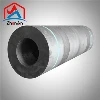
Zero thermal expansion silica brick is also called fused quartz brick or thermal shock resistant silica brick. It has acid slag corrosion resistance and relatively high high-temperature strength. The load softening starting temperature of zero thermal expansion silica brick is 1620 to 1670 deg C. It will not deform after long-term use at high temperatures. It has good thermal shock stability. It uses natural silica as raw material, plus an appropriate amount of mineralizing agent to promote the transformation of quartz in the green body into tridymite. It is slowly fired at 1350 to 1430 deg C in a reducing atmosphere.
Typical Properties
| Property | Value |
|---|---|
| Bulk density | 1.85 g/cm3 |
| Apparent porosity | 22% |
| Cold crushing strength | 40 MPa |
| Refractoriness under load (Ta) | Greater than 1650 deg C |
| Thermal expansion at 1000 deg C | 0.2% |
| Thermal shock resistance at 1100 deg C water | 40 cycles |
| SiO2 | 98.0% |
| Al2O3 | 0.3% |
| Fe2O3 | 0.2% |
| CaO | 0.1% |
Values are typical supply references; final acceptance should follow the agreed purchase specification.
Characteristics
1. SiO2 content is greater than 98 percent, with excellent corrosion resistance and acid resistance.
2. Low Fe2O3 content, giving no pollution to products such as glass liquid.
3. Low flux index (Al2O3 plus 2R2O) below 0.3 percent.
4. The thermal expansion rate is close to zero, so there is no need to reserve expansion joints during repairs, which increases the tightness of the masonry.
5. Excellent thermal stability: the product will not explode during hot repair, and can be repaired directly at high temperatures without stopping the furnace.
6. After repair (hot repair), peeling and other phenomena will not occur, and it is safe and reliable for long-term use.
7. Good corrosion resistance: due to the lack of calcium, corrosion cannot form easily.
Frequently Asked Questions
What is zero thermal expansion silica brick? fused quartz based brick with very low thermal expansion, good thermal shock resistance, and acid slag resistance.
What is the thermal expansion at 1000 deg C? about 0.2 percent, close to zero expansion.
Why is no expansion joint needed? The near-zero thermal expansion rate increases the tightness of the masonry and simplifies repairs.
What are the typical properties of zero thermal expansion silica brick? Bulk density 1.85 g/cm3, apparent porosity 22 percent, cold crushing strength 40 MPa, refractoriness under load above 1650 deg C, thermal expansion at 1000 deg C of 0.2 percent, and thermal shock resistance of 40 cycles at 1100 deg C in water.
Why can the furnace be repaired without stopping it? The product will not explode during hot repair, can be repaired directly at high temperatures, and peeling will not occur after repair, making it safe and reliable for long-term use.