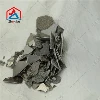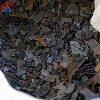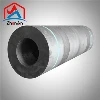

Pure tungsten electrodes are the oldest members of the tungsten electrode family used in inert-gas arc welding, and their limitations are as clearly defined as their advantages. Under DC welding conditions the tip of the electrode runs hotter, the grain structure grows, the arc beam becomes unstable, arc starting becomes more difficult and the service life of the electrode is shortened. For this reason a pure tungsten electrode is normally restricted to welding under AC conditions, or to service as a resistance welding electrode.
Those limitations do not make the material obsolete. Pure tungsten electrodes offer a combination of properties that no other electrode reproduces exactly: very low vapour pressure, low electrical resistance, good electrical conductivity, small thermal expansion and a high elastic modulus. In AC welding and in certain specialised welding applications the pure tungsten electrode remains uniquely suitable and is not replaceable by another type.
What Defines a Pure Tungsten Electrode
In the AWS A5.12 and ISO 6848 classifications the pure tungsten electrode carries the designation EWP. It contains no deliberately added oxide and is specified with a minimum tungsten content of 99.5%. The electrode is produced by powder metallurgy: the powder is pressed, sintered and then swaged or drawn down to the finished diameter, which creates the dense, longitudinally fibrous structure that resists tip deformation during welding.
Because no emissive oxide phase is present, the emission behaviour of the surface is not modified, so the arc strikes at a higher temperature than with oxide-added electrodes. That is the root cause of the harder arc starting reported for EWP, and it is also why the electrode tolerates contamination better in some AC applications.
Physical and Electrical Properties
| Property | Typical value | Practical significance |
|---|---|---|
| Melting point | 3422 °C | Tip survives extreme arc temperature without melting |
| Boiling point | 5555 °C | Very little material lost by evaporation |
| Density | 19.3 g/cm3 | High thermal mass, stable geometry in the torch |
| Vapour pressure | Very low | Keeps the arc atmosphere clean |
| Electrical resistivity | 5.6 × 10⁻⁸ Ω·m at 20 °C | Low resistive heating in the electrode and collet |
| Thermal conductivity | about 173 W/(m·K) | Transfers heat from the tip into the holder |
| Linear thermal expansion | 4.5 × 10⁻⁶ /K | Very small dimensional change when heated |
| Elastic modulus | about 400 GPa | Tip resists bending and maintains its shape |
Good electrical conductivity combined with a low resistance means that less of the welding current is converted into heat inside the electrode, which reduces collet heating and improves current transfer at the tip.
Behaviour in DC and AC Welding
Under DC welding the electrode is the cathode for most of the cycle. Electron emission from a clean tungsten surface requires a high temperature, so the tip runs hot, the grains coarsen and the tip eventually melts into a rounded ball. The unstable arc beam, the difficult arc start and the short service life reported for EWP all follow from this thermal cycle.
Under AC conditions the electrode alternates between cathode and anode. During the positive half cycle it is cooled by the incoming electrons and by the shielding gas flow, so the tip does not reach the same temperature and grain growth is slower. The result is stable operation at moderate currents, which matches the AC welding of aluminium and magnesium and the AC cleaning action required by their oxide films.
Where Pure Tungsten Remains the Right Choice
AC inert-gas arc welding of aluminium, magnesium and their alloys.
Resistance welding electrodes, where the electrode is not consumed by an arc.
Applications where the weld must not receive any oxide addition from the electrode.
Conditions where the arc must tolerate contamination in the shielding gas or on the workpiece.
Cost-sensitive AC work, since EWP is the least expensive tungsten electrode type.
Where direct current and long electrode life matter more than cost, oxide-added electrodes are the better engineering choice.
Comparison with Oxide-Added Electrodes and Operating Notes
| Designation | Addition | Typical use |
|---|---|---|
| EWP | None, tungsten 99.5% minimum | AC welding, resistance welding |
| EWTh-2 | 1.8-2.2% ThO2 | DC welding with easier arc starting and longer life |
| EWCe-2 | 1.8-2.2% CeO2 | DC and AC welding where lower arc-start voltage is required |
| EWLa-1.5 | 1.4-1.6% La2O3 | DC welding with high current capacity and stable arc |
Prepare the tip by grinding longitudinally; circumferential grinding marks disturb the arc.
Keep a grinding wheel reserved for tungsten electrodes so that the tip is not contaminated.
Form a rounded ball tip for AC welding and a tapered tip for DC welding.
Stay inside the recommended current range for the electrode diameter to avoid overheating.
Use adequate pre-flow and post-flow of shielding gas to protect the hot tip.
Frequently Asked Questions
Q: Why are pure tungsten electrodes only used for AC welding?
Under DC the tip runs hot, the grains coarsen and the arc becomes unstable with difficult starting and short life, whereas AC operation cools the tip on the positive half cycle and keeps the arc stable.
Q: What properties do pure tungsten electrodes have?
Low vapour pressure, low electrical resistance, good electrical conductivity, small thermal expansion and a high elastic modulus, together with a melting point of 3422 °C.
Q: What designation is used for a pure tungsten electrode?
EWP under the AWS A5.12 and ISO 6848 classification, with a minimum tungsten content of 99.5% and no deliberate oxide addition.
Q: Are pure tungsten electrodes also used for resistance welding?
Yes. Because no arc is struck in resistance welding, the thermal cycle that limits EWP in DC arc welding does not apply, so the material can be used directly.
Q: Why is arc starting more difficult with a pure tungsten electrode?
Without an emissive oxide addition the surface must reach a higher temperature before electrons are emitted, so the arc is harder to initiate than with oxide-added types.
Q: How should a pure tungsten electrode tip be prepared?
Grind the tip longitudinally with a wheel reserved for tungsten, form a ball tip for AC work, and keep the welding current within the recommended range for the electrode diameter.