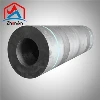

What Magnesia Carbon Refractory Is
Magnesia carbon refractory is a composite material made from high-quality magnesia and carefully selected carbon sources. Magnesia supplies the high-temperature strength and slag resistance, while the carbon phase raises thermal shock resistance and limits wetting by molten slag and metal. Composition and manufacturing process are controlled so that the finished material has a dense and uniform structure rather than a variable one, which is what allows the same basic chemistry to be tailored to very different vessels.
Why the Combination Performs Well
Thermal shock resistance. The carbon network accommodates rapid heating and cooling, which matters in vessels that are charged, tapped and reheated in short cycles.
Chemical attack. Magnesia is basic, so it stands up to the basic slags and high-basicity conditions found in steelmaking and in non-ferrous smelting.
Mechanical stress. A dense structure carries load and resists abrasion from scrap, metal movement and slag flow.
Tailorable formulation. Carbon level, grain sizing and additive package are varied to suit a particular vessel, campaign length and operating temperature.
Because the material resists thermal shock, chemical attack and mechanical stress at the same time, it holds its shape through conditions that would shorten the life of a single-phase basic brick.
Industrial Applications
Magnesia carbon refractory is used far beyond one furnace type. The table below pairs the main industries with the equipment involved and the property being relied on.
| Industry | Typical equipment | Property relied on |
|---|---|---|
| Steelmaking | Converter linings, ladle walls and bottoms, electric arc furnace hot spots | Slag resistance with thermal shock resistance |
| Non-ferrous metal production | Melting and refining furnaces and ladles for copper, nickel and aluminium | Chemical stability at high temperature |
| Petrochemical and chemical | Reactors, incinerators and gasifiers | Corrosion resistance and mechanical strength |
| Cement manufacturing | Kiln burning zones and transition sections | Thermal stability under continuous operation |
In each case the material is selected for the same underlying reason: it has to keep its structure while hot, aggressive and mechanically loaded conditions act on it at the same time.
Formulation and Shape Options
Suppliers offer a range of formulations and shapes so that a lining can be matched to a specific application requirement instead of being compromised around it. Practical choices usually cover the carbon content of the mix, the magnesia grain sizing and purity, the additives used to protect the carbon phase, and the shape of the finished part. Shapes range from standard brick formats to wedges and specials that follow a vessel's curvature, with repair mixes used where a full reline is not economic.
Matching the formulation to the failure mode is the point of the exercise. A zone that fails by slag corrosion, a zone that spalls under thermal cycling and a zone that wears by abrasion will not be best served by the same mix.
Service Life and Operating Cost
The extended service life of magnesia carbon refractory comes directly from its resistance to thermal shock, chemical attack and mechanical stress. Longer campaigns mean fewer stoppages, less maintenance labour and lower replacement cost, and they also let a plant plan relines around production rather than around failures. Better thermal and mechanical behaviour also supports steady process performance, because a lining that keeps its profile keeps the thermal and flow conditions predictable.
When comparing suppliers, the useful measures are lining life in heats or tonnes, the frequency of hot repairs, and the cost per tonne of product rather than the price of the brick alone.
Frequently Asked Questions
Q: What is magnesia carbon refractory made of?
It is made from high-quality magnesia combined with carefully selected carbon sources, blended and formed so the finished product has a dense, uniform structure.
Q: Why is carbon added to magnesia bricks?
The carbon phase improves thermal shock resistance and reduces wetting by slag and metal, which extends service life in cyclically operated vessels.
Q: Which industries use magnesia carbon refractory?
Steelmaking, non-ferrous metal production, petrochemicals and cement manufacturing are the main users, along with chemical reactors, incinerators and gasifiers.
Q: Can the formulation be customised?
Yes. Carbon content, grain sizing, additive package and product shape can all be varied to suit a particular vessel and process.
Q: How does it reduce maintenance cost?
Longer lining life means fewer relines and less hot repair work, so maintenance and replacement costs fall even where the initial brick price is higher.
Q: Is it suitable for non-ferrous furnaces?
Yes. It is used in melting and refining equipment for metals such as copper, nickel and aluminium, where it provides thermal stability and corrosion resistance.