
What a 98 Percent V2O5 Flake Specification Really Covers
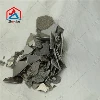
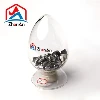
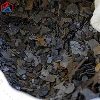
Vanadium pentoxide is the principal traded intermediate of the vanadium chain. It leaves the plant as dark orange to dark brown flakes and moves either into ferrovanadium for steel, into catalyst production for sulfuric acid, into vanadium chemicals, or into electrolyte for vanadium redox flow batteries. A 98 percent minimum grade states only that the vanadium content expressed as V2O5 reaches 98.0 percent on a dry basis. That single figure says nothing about which impurities are present, how the material behaves in your furnace or reactor, or whether the certificate describing it can be trusted. Buyers who treat the assay as the whole specification are the ones who later discover that a cheaper lot cannot be used.
How a Vanadium Pentoxide COA Should Be Structured
A certificate of analysis is a controlled document, not a marketing sheet. It should carry a unique certificate number, the supplier name, the lot or batch number, the production date, the quantity covered, the sampling procedure and the test standard applied, for example GB/T 3283 for vanadium pentoxide. Each reported value should be tied to a stated method. Redox titration with ferrous ammonium sulfate or potassium permanganate remains the reference approach for the V2O5 assay, while inductively coupled plasma optical emission spectrometry and X-ray fluorescence are widely used for the impurity suite and as a cross check. A report that lists methods but no maximum limits for individual impurities is only half a specification.
Impurities That Decide Whether a Lot Fits Your Process
Iron, silicon, phosphorus, sulfur and arsenic are the elements most often controlled. Sulfur and phosphorus follow vanadium into ferrovanadium and then into steel, where they raise brittleness and segregation risk. Arsenic is watched closely whenever high purity chemistry or catalyst service is involved. Sodium, potassium and other alkali elements influence melting behaviour and refractory or furnace lining life. Loss on ignition reflects moisture and easily reduced oxides and matters for both mass balance and safe handling. Particle size distribution of the flakes affects dosing accuracy, dissolution rate and dust generation, so it deserves a place beside the chemical data rather than in a separate note.
Sampling and Independent Verification
Certificates fail more often through poor sampling than through poor laboratory work. A representative sample must be drawn from several points of the lot, combined, reduced by riffling or quartering, and split into portions large enough for repeated analysis. For orders of significant value the accepted practice is to seal part of the sample, retain a portion with each party, and send another portion to a laboratory that neither side controls. Comparing the supplier certificate with an independent result on the same sealed sample is the quickest test of whether the documentation reflects the material. Retain the sample until the lot has been fully consumed, because arbitration depends on it.
How Fake Specifications and Recycled Certificates Appear
Documentation problems have recognisable patterns. Certificates that list the V2O5 assay but omit impurity maxima remove the ability to verify anything. Reports issued for one batch number that reappear under a different batch, or certificates with no batch number at all, cannot be traced to the material offered. Values that stay identical across many production dates contradict the normal variation of a real process. Assays reported to more decimal places than the stated method can support suggest the number was copied rather than measured. A supplier who cannot name the test standard, describe the sampling plan or explain a disputed value should not receive an advance payment. Blurred scans, missing signatures and certificates issued by a third party who never handled the goods are further warnings. A short checklist closes the remaining gaps before you commit. Fix the specification in writing first: minimum V2O5, a maximum for each critical impurity, acceptable loss on ignition, particle size range, packaging and the arbitration route. Request the certificate for the actual lot offered rather than a generic sample report, and check that the batch number matches the markings on the containers. Where value justifies it, arrange independent analysis on a sealed sample and agree in advance which laboratory decides a dispute. Keep the retained sample until consumption is complete, and record the receiving inspection result so that any later claim is supported by evidence from your own site.
Frequently Asked Questions
Q: What does 98 percent V2O5 flake mean?
A: It means the material contains at least 98.0 percent vanadium pentoxide on a dry basis. The remaining fraction is made up of other oxides, alkali elements, moisture and trace impurities that determine how the flake behaves downstream.
Q: Which test methods are used for the assay?
A: Redox titration is the reference method, with ferrous ammonium sulfate or potassium permanganate as the titrant. Inductively coupled plasma and X-ray fluorescence are used for impurities and as cross checks. The method must be named on the certificate.
Q: Which impurity limits should I insist on?
A: Every element that affects your process should be reported with a guaranteed maximum. For metallurgical use that normally means iron, silicon, phosphorus and sulfur, while high purity chemical and battery work adds arsenic and tighter alkali control.
Q: Why do two laboratories report different V2O5 contents?
A: Differences usually come from sampling rather than from the laboratories. Samples taken from a single point of the lot, or certificates issued long apart on different material, can produce results that differ by more than the analytical error of the method.
Q: Is a lower price a sign of a fake specification?
A: Not by itself, but a price well below the market range combined with vague documentation is a warning. Ask for the lot certificate, the test standard and an independent verification on a sealed sample before committing.
Q: How should a purchase contract handle quality?
A: Name the minimum V2O5 content, the maximum for each critical impurity, the acceptable loss on ignition, the sampling standard, the arbitration laboratory and the remedy if a failed analysis is confirmed on the retained sample.