
By zhenan international | TOP SUPPLIERFOUNDED IN 1993
Low-sulfur vanadium pentoxide flakes are becoming increasingly important for steel mills trying to prevent hot shortness in steel and improve metallurgical consistency in demanding applications. Steel cracking during hot working is often treated as a rolling problem, a furnace problem, or a process adjustment issue, but in many cases the real cause begins much earlier - in the raw materials.
For mills producing HSLA steel, alloy steel, and other high-performance grades, impurity control in additives is not a secondary issue. It directly affects downstream performance, grain refinement efficiency, smelting stability, and final steel quality. This is why more engineers are paying attention to the sulfur level in vanadium-bearing materials. Not every 98% V2O5 product offers the same metallurgical reliability, and that difference may appear later as cracking, brittleness, or unstable rolling results.

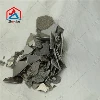
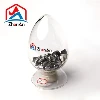
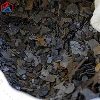
V2O5 Vanadium Pentoxide Flake 98%
- Grade: 98% Vanadium Pentoxide Flake
- Form: flake for industrial processing and bulk supply
- Packing: 25 kg bags, 1 MT jumbo bags, or customized packaging
- MOQ: 1 MT
- Trade Terms: FOB / CIF
- Reference Price: Subject to market fluctuations
- Basis: tax included, ex-works / subject to payment terms
- Bulk Orders: contact us for the latest quotation
Bulk inquiry welcome for industrial and long-term purchasing.
How Low-Sulfur Vanadium Pentoxide Flakes Help Prevent Hot Shortness in Steel
For many steel plants, hot cracking is one of the most expensive and frustrating quality problems. It can interrupt rolling schedules, increase scrap risk, and force repeated process adjustments. In some cases, mills focus too heavily on the furnace, rolling line, or cooling process, while overlooking the raw material source of the problem.
This is where low-sulfur vanadium pentoxide flakes become important. If sulfur enters the steelmaking system through unstable alloy additives, the final steel may become more vulnerable during hot working. That is why vanadium source quality matters, especially in mills where vanadium is used as an alloy additive for strengthening and microstructure control.
For buyers looking to prevent hot shortness in steel, sulfur is not a small specification detail. It is a metallurgical risk factor that should be controlled at the procurement stage.
Why Sulfur in V2O5 Weakens Steel Structure During Hot Working
The reason sulfur is dangerous in steelmaking is tied to how it behaves chemically in the steel matrix. Sulfur can combine with iron to form iron sulfide (FeS), a compound with a relatively low melting point compared with the surrounding metal structure.
Under hot working conditions, FeS can weaken grain boundaries and make steel more prone to cracking. In practical terms, this may lead to:
- reduced hot ductility
- greater risk of edge cracking or surface cracking
- weaker grain boundary integrity
- less stable performance during rolling or forging
This is especially important in HSLA steel and other demanding alloy systems, where vanadium is often added to improve strength and support grain refinement. If the vanadium source also introduces too much sulfur, it may partially offset the intended metallurgical benefits.
That is why mills using V2O5 flakes for high-strength steel must pay close attention not only to V2O5 purity, but also to sulfur control.
Why V2O5 Flakes for High-Strength Steel Need Better Impurity Control
In high-strength steel production, raw material quality influences far more than basic chemistry. Vanadium is used because it contributes to:
- strengthening
- precipitation control
- grain refinement
- better alloy performance
But these benefits are only reliable when the vanadium-bearing material itself is suitable for demanding metallurgical use.
When the process involves V2O5 flakes for high-strength steel, impurity control becomes critical because:
- high sulfur may increase cracking risk
- unstable chemistry may reduce repeatability
- poor raw material consistency may increase process correction frequency
- downstream steel quality may become less predictable
For technical teams, this means vanadium pentoxide should not be purchased like a generic commodity. It should be selected as a controlled metallurgical raw material.
Why Not All 98% V2O5 Products Meet Low-Sulfur Metallurgical Requirements
A common mistake in procurement is assuming that all 98% vanadium pentoxide products are essentially the same. In reality, the nominal purity number does not tell the full story.
Two V2O5 products may both be labeled "98%," yet still differ significantly in:
- sulfur level
- phosphorus level
- iron content
- batch consistency
- practical suitability for metallurgical use
This is exactly why steel mills should look beyond headline purity. A standard market-grade product may satisfy the basic V2O5 percentage, but still carry sulfur levels that are too risky for demanding steel applications.
That is why many buyers now prioritize low-sulfur vanadium pentoxide flakes instead of selecting material based on purity alone. For mills that want more reliable rolling behavior and fewer cracking risks, the safer choice is usually a product with stronger impurity control and clearer metallurgical positioning.
If your team is comparing supply options, this is where low-sulfur vanadium pentoxide flakes become a much more meaningful purchasing standard than a generic "98% V2O5" label.
Checklist: What to Ask for in Metallurgical Grade Vanadium Pentoxide Specs
If your mill has experienced hot cracking, brittleness, or unstable alloy performance, the next purchase order should include more than just "98% V2O5." It should clearly define the impurity limits that matter in real steel production.
Here is a practical checklist for your next inquiry.
1. Confirm the Sulfur Limit Clearly
Your order should state a sulfur requirement such as:
S ≤ 0.03%
This is one of the most important procurement points if your goal is to prevent hot shortness in steel.
2. Review Full Metallurgical Grade Vanadium Pentoxide Specs
Do not rely on purity alone. Ask for complete metallurgical grade vanadium pentoxide specs, including:
- V2O5
- S
- P
- Fe
- Si
moisture or related data if relevant
3. Ask for COA and Test Support
A supplier should be able to provide:
- COA
- composition analysis
- third-party testing support when needed
This helps engineers and purchasing teams confirm whether the material is truly suitable for steelmaking.
4. Match the Material to the Steel Grade
If the product will be used in HSLA steel, alloy steel, or other crack-sensitive grades, sulfur control should be treated as a technical requirement, not just a commercial preference.
5. Check Batch-to-Batch Stability
Even a good one-time sample is not enough. Long-term supply value depends on whether the supplier can maintain consistent impurity control across repeated orders.
Why Procurement and Technical Teams Should Work Together on V2O5 Selection
In many mills, procurement focuses on quoted price while engineers focus on steel performance. But for vanadium-bearing raw materials, these two areas are closely connected.
A cheaper product may become more expensive if it causes:
- lower rolling stability
- more cracking risk
- more production correction
- less reliable alloying results
That is why selection of low-sulfur vanadium pentoxide flakes should ideally be a joint decision between procurement and technical personnel. Engineers understand the downstream risk, while buyers control the sourcing standard that determines whether those risks increase or decrease.
For demanding steel production, good purchasing is not just about finding vanadium. It is about finding vanadium with the right impurity profile.
Conclusion
Low-sulfur vanadium pentoxide flakes are not just a better specification on paper. They are a practical solution for mills trying to prevent hot shortness in steel, improve alloy consistency, and protect the performance of HSLA steel and other high-strength grades.
Steel cracking during hot working is often blamed on rolling parameters or furnace conditions, but the problem may start much earlier in the smelting process - with the impurity profile of the raw materials. Sulfur control in V2O5 matters because sulfur can weaken grain boundaries, reduce hot ductility, and increase the risk of cracking during hot working.
Not all 98% V2O5 products are equal. For mills that take cracking prevention seriously, the safer path is to request clear metallurgical grade vanadium pentoxide specs and prioritize low-sulfur vanadium pentoxide flakes with stable batch quality.
If you want to verify how low-sulfur V2O5 performs in your workshop, contact us to request a free sample for plant testing, impurity review, and steelmaking evaluation.
FAQ
Q:Why is sulfur in vanadium pentoxide dangerous for steelmaking?
A:Because sulfur can contribute to the formation of iron sulfide, which weakens grain boundaries at high temperature and increases the risk of hot shortness and cracking.
Q:How do low-sulfur vanadium pentoxide flakes help prevent hot shortness in steel?
A:They reduce sulfur input from alloy raw materials, helping lower the risk of sulfur-related brittleness during hot working.
Q:Are all 98% V2O5 products suitable for high-strength steel?
A:No. Two products may have the same nominal purity but different sulfur and impurity levels, which can affect suitability for demanding steel grades.
Q:What sulfur limit should buyers request?
A:For stricter metallurgical applications, buyers often request S ≤ 0.03%, depending on process requirements.
Q:Why do HSLA steel producers care about vanadium raw material quality?
A:Because vanadium is used for strengthening and grain refinement, and impurity-heavy raw materials may reduce those metallurgical benefits.
Q:What should engineers check before ordering V2O5 flakes?
A:They should check full metallurgical grade vanadium pentoxide specs, especially sulfur, phosphorus, iron, silicon, COA support, and batch consistency.