
Silicon metal grades 1101 and 553 are among the most commonly traded specifications in the global market. Buyers frequently ask "What is the difference between silicon metal 1101 and 553?" because both grades are used in aluminum alloys and metallurgical applications, yet they serve different technical and commercial purposes.
This article explains the property differences between silicon metal 1101 and 553, focusing on chemical composition, physical behavior, application suitability, and practical buying considerations.
What Do Silicon Metal 1101 and 553 Mean?
Silicon metal grades are defined mainly by their impurity limits, not by changes in the base material itself.
- Silicon metal 1101 is considered a high-purity grade, with stricter control over impurities.
- Silicon metal 553 is a standard commercial grade, widely used for cost-sensitive applications.
Both grades are still elemental silicon, so their fundamental physical properties-such as melting point-remain the same. The differences lie in impurity content and consistency, which directly affect performance in downstream processes.
Chemical Composition: The Core Difference
The most important distinction between 1101 and 553 is impurity control.
Silicon Metal 1101
- Higher overall purity
- Lower levels of iron, aluminum, calcium, and other trace elements
- More consistent batch-to-batch composition
Silicon Metal 553
- Higher allowable impurity levels
- Broader tolerance ranges
- Designed for general-purpose use
Why this matters:
In applications sensitive to impurities-such as certain aluminum alloys-silicon metal 1101 reduces the risk of performance variation, while 553 prioritizes cost efficiency.
Physical Properties: Similar Base, Different Behavior
From a strict physical standpoint:
- Melting point: Both grades melt at ~1,414°C, the melting point of elemental silicon
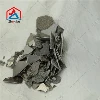
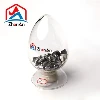
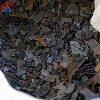
- Appearance: Metallic gray, brittle solid
- Density: Essentially the same, as both are silicon-based
However, practical behavior during melting and alloying can differ:
- Silicon metal 1101 tends to dissolve more predictably due to cleaner chemistry
- Silicon metal 553 may introduce more variability depending on impurity interaction with the melt
These differences become more noticeable in tightly controlled processes.
Impact on Aluminum Alloy Applications
Silicon Metal 1101
Often preferred when:
- Alloy chemistry must be tightly controlled
- Impurity-related defects must be minimized
- Stable mechanical or corrosion properties are required
Used in applications where quality stability outweighs material cost.
Silicon Metal 553
Commonly selected when:
- The alloy system tolerates higher impurity levels
- Cost efficiency is a priority
- Production volumes are large and margins are sensitive
Widely used in mainstream aluminum alloy production.


Processing and Recovery Considerations
Although melting point is the same, recovery efficiency can differ:
- 1101: cleaner chemistry can lead to more predictable recovery and fewer side reactions
- 553: recovery may vary slightly depending on impurity interaction and process control
Particle size, addition method, and bath temperature still play a larger role than grade alone, but grade choice can influence consistency.
Cost vs Performance: How Buyers Decide
From a procurement perspective, the choice between 1101 and 553 is rarely about "which is better" and more about which is appropriate.
- Choose 1101 if your process is sensitive to impurities or requires stable alloy properties
- Choose 553 if your process is tolerant and cost control is the main objective
Many experienced buyers evaluate cost per effective performance, not just cost per ton.
Typical Use Cases by Industry
| Industry | Common Preference | Reason |
|---|---|---|
| Aluminum alloys (high-end) | 1101 | Purity and consistency |
| Aluminum alloys (standard) | 553 | Cost-performance balance |
| Metallurgical applications | Both | Depends on impurity tolerance |
| Trading / distribution | 553 | Broad market acceptance |
Buyer Checklist: 1101 vs 553
Before confirming an order, buyers typically verify:
- Impurity limits stated in the COA
- Batch consistency across shipments
- Particle size specification
- Packaging and moisture protection
- Application suitability
Grade selection without these checks often leads to avoidable quality disputes.
Company Background
ZHEN AN INTERNATIONAL CO., LIMITED, located in Anyang City, Henan Province, China, supplies silicon metal 1101, 553, and other grades, along with ferrosilicon, calcium silicon products, and electrolytic manganese flakes, to industrial customers worldwide.
The company focuses on consistent quality control, export-ready packaging, and reliable shipment coordination for global buyers.