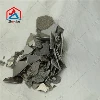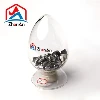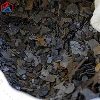

Silicon metal 1101 is widely used in aluminum alloys and metallurgical applications where composition stability and impurity control are critical. Buyers often know that 1101 is considered a higher-purity grade, but the real question is: how do its properties actually affect alloy performance in practice?
This article explains how the key properties of silicon metal 1101 influence alloy behavior, process stability, and final product quality.
Purity and Impurity Control: The Foundation of Performance
The defining characteristic of silicon metal 1101 is its tight impurity control. Compared with more commercial grades, 1101 limits elements such as iron, aluminum, calcium, and other trace metals more strictly.
In alloy production, this directly affects:
Chemical stability of the melt
Predictability of alloy composition
Reduced risk of unwanted intermetallic phases
For aluminum alloys, where small impurity variations can influence mechanical properties and corrosion resistance, this level of control helps maintain consistent performance across batches.
Melting Behavior and Dissolution Efficiency
Although the melting point of silicon metal 1101 is the same as elemental silicon (about 1,414°C), its cleaner chemistry influences how it behaves during alloying.
In molten aluminum:
Silicon metal 1101 tends to dissolve more evenly
Fewer impurities mean fewer side reactions during dissolution
Operators can achieve more predictable silicon recovery
This improves process control, especially in operations that rely on precise silicon adjustment rather than coarse alloying additions.
Impact on Mechanical Properties of Alloys
Silicon plays a key role in aluminum alloys by:
Improving fluidity during casting
Enhancing strength-to-weight ratio
Supporting controlled microstructure formation
When silicon metal 1101 is used, the reduced impurity load helps ensure that these benefits are delivered without introducing variability. This is particularly important in applications where mechanical performance must meet tight specifications.
Lower impurity content reduces the likelihood of brittle phases or inclusions that could weaken the final alloy.


Influence on Corrosion Resistance and Surface Quality
In many aluminum applications, surface quality and corrosion behavior are critical.
Using silicon metal 1101 can:
Minimize impurity-driven corrosion sites
Support more uniform alloy chemistry
Improve consistency in downstream surface treatments
While silicon itself is not a corrosion inhibitor, impurity control helps prevent secondary effects that can reduce corrosion resistance over time.
Consistency Across Production Batches
One of the most practical advantages of silicon metal 1101 is batch-to-batch consistency.
For alloy producers, this means:
Fewer composition corrections during production
Reduced rework and scrap rates
More stable quality data across long production runs
In contrast, wider impurity tolerances can force operators to adjust processes more frequently, increasing operational complexity.
Particle Size and Handling Effects
Although particle size is specified separately from grade, silicon metal 1101 is often supplied with tighter size control when purchased for performance-sensitive applications.
Better size consistency supports:
Faster and more uniform dissolution
Reduced dust loss
Improved alloying efficiency
This reinforces the performance benefits already provided by high purity.
Cost vs Performance Trade-Off
Silicon metal 1101 typically trades at a premium compared with more general grades. From a performance perspective, this premium is justified when:
Alloy properties must be tightly controlled
Downstream performance risk is costly
Production consistency is prioritized over lowest raw material cost
For impurity-tolerant applications, lower grades may be sufficient. For performance-driven alloys, 1101 often delivers better overall value.
Conclusion
The properties of silicon metal 1101-particularly its high purity, controlled impurities, and stable behavior during alloying-have a direct and positive impact on alloy performance. These properties support consistent mechanical behavior, predictable melting and dissolution, and reduced production variability.
For alloy producers focused on quality stability and performance reliability, silicon metal 1101 is often a strategic choice rather than just a specification upgrade.
Company Background
ZHEN AN INTERNATIONAL CO., LIMITED is located in Anyang City, Henan Province, China, supplying silicon metal 1101 and other grades, along with ferrosilicon, calcium silicon products, and electrolytic manganese flakes, to industrial customers worldwide.
With extensive export experience, the company focuses on consistent quality control, export-ready packaging, and reliable shipment coordination for global buyers.