
What Is Ferro Silicon?
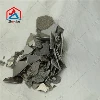
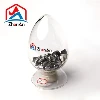
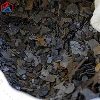
Ferro silicon is a master alloy of iron and silicon that is used on a very large scale in the steelmaking and iron-casting industries. It is produced by reducing silica in an electric arc furnace in the presence of iron, and it is supplied as lumps, granules or powder according to the application. Commercial grades cover a silicon range from roughly 45% up to 75%, with FeSi75 and FeSi72 the most widely traded. Because silicon has a strong affinity for oxygen, ferro silicon behaves both as a deoxidiser and as an alloying addition, and its use in metallurgy helps to raise the hardness and toughness of steel.
Standard Grades and Chemical Composition
The table below gives the chemical composition limits of the common grades. Silicon is the guaranteed minimum; every other element is a guaranteed maximum. Grades are written according to the usual standard designation, for example FeSi75 for a minimum of 75% silicon.
| Grade | Si (min, %) | Al (max, %) | Ca (max, %) | Mn (max, %) | Cr (max, %) | P (max, %) | S (max, %) | C (max, %) |
|---|---|---|---|---|---|---|---|---|
| FeSi75 | 75 | 1.5 | 1.0 | 0.5 | 0.5 | 0.04 | 0.02 | 0.2 |
| FeSi72 | 72 | 2.0 | 1.0 | 0.5 | 0.5 | 0.04 | 0.02 | 0.2 |
| FeSi70 | 70 | 2.0 | 1.0 | 0.6 | 0.5 | 0.04 | 0.02 | 0.2 |
| FeSi65 | 65 | 2.0 | 1.0 | 0.8 | 0.5 | 0.04 | 0.02 | 0.2 |
| FeSi60 | 60 | 2.0 | 1.0 | 0.7 | 0.5 | 0.05 | 0.03 | 0.2 |
| FeSi45 | 45 to 47 | 2.0 | 1.0 | 0.8 | 0.5 | 0.04 | 0.02 | 0.2 |
Composition is normally verified by sampling each lot and reporting silicon, aluminium, calcium, manganese, chromium, phosphorus, sulphur and carbon, in line with the ferrosilicon requirements of GB/T 2272. Phosphorus and sulphur deserve particular attention because both embrittle steel, so buyers usually ask for the guaranteed maxima to be stated on the inspection certificate.
The Role of Ferro Silicon in Steelmaking
Deoxidation. Silicon combines with dissolved oxygen to form silica particles that grow and float out of the bath, lowering the oxygen content and improving internal cleanliness.
Alloying. Silicon is a deliberate alloying element in transformer, spring, electrical and many structural steels, where it raises strength, hardness and electrical resistivity.
Reduction of oxides. Ferro silicon reduces oxides in the steelmaking process and is also used in the production of other ferroalloys as a reducing agent.
Slag control. Silicon additions influence slag viscosity and the behaviour of the slag-metal interface during tapping and refining.
Consistency of recovery. Because the addition is made in a controlled way, recovery is predictable, which allows the heat to be aimed at a narrow specification window.
Ferro Silicon in Cast Iron
In the foundry, ferro silicon is used mainly as an inoculant. A small addition made to the melt before pouring promotes graphite nucleation, refines the graphite structure in grey iron and reduces chill depth in thin sections. This gives a more uniform hardness across the casting and lowers the risk of hard edges that are expensive to machine. Ferro silicon is also the base for magnesium ferrosilicon, the treatment alloy used to produce nodular iron, and it is used in some grades of steel powder and welding consumables.
Packing, Transport and Quality Control
Packing. Standard practice is high-quality ton bags that protect the product in transit, with wooden frames or iron drums used for smaller lots or where extra protection is needed.
Transport. Land and sea transport are both routine, and packing is chosen so that the alloy arrives without moisture pickup or fines loss.
Storage. Keep the material dry and off the ground. Silicon-bearing alloys pick up moisture from wet floors and this can create gas on contact with liquid metal.
Sampling. Representative sampling and full chemical analysis for each lot allow the actual silicon and impurity content to be matched against the specification before the heat is charged.
Size grading. Lumps, granules and powder are offered so that the addition dissolves at the intended rate and does not sit on the bath surface.
Frequently Asked Questions
Q: What is ferro silicon used for?
Its largest uses are deoxidation and alloying in steelmaking, where silicon removes dissolved oxygen and raises hardness and toughness, and inoculation of cast iron, where a small silicon addition controls graphite structure and reduces chill.
Q: What silicon content do standard grades contain?
Commercial grades cover roughly 45% to 75% silicon. FeSi75 and FeSi72 are the most widely traded, while FeSi70, FeSi65, FeSi60 and FeSi45 are chosen when a smaller or more economical silicon addition is required.
Q: How does ferro silicon deoxidise steel?
Silicon has a high affinity for oxygen, so it removes dissolved oxygen from the melt and forms silica particles that float out into the slag, which lowers the oxygen content and improves internal cleanliness.
Q: What is the difference between FeSi75 and FeSi72?
Both are high-silicon grades. FeSi75 guarantees at least 75% silicon with a tighter aluminium maximum of 1.5%, while FeSi72 guarantees at least 72% silicon with an aluminium maximum of 2.0%. Phosphorus and sulphur limits are the same for both.
Q: How is ferro silicon supplied and packed?
Ton bags are the standard packing, with wooden frames or iron drums available for smaller and export lots, shipped by land or sea. The material should be stored dry to prevent moisture pickup.
Q: Why is phosphorus control important in ferro silicon?
Phosphorus embrittles steel, so every grade carries a guaranteed maximum. The usual limit is 0.04% P together with 0.02% S, with slightly wider 0.05% P and 0.03% S limits permitted for FeSi60.