
When buyers ask "How to make ferrovanadium?", they are usually looking for more than a textbook process description. They want to understand why different suppliers can offer the same grade label yet deliver different consistency, impurity patterns, or sizing behavior. Ferrovanadium is a vanadium-bearing iron alloy used to add vanadium to steel and certain alloys. Industrial production focuses on two priorities: achieving the target vanadium content efficiently and keeping impurities and physical form stable for repeat use.
Below is a high-level, buyer-friendly explanation of how a vanadium ferroalloy is typically made, and which steps matter most for quality and reliability.
Raw materials: where the vanadium comes from
Ferrovanadium production starts with vanadium-bearing feedstock. Depending on the producer and the region, feedstock can include vanadium oxides or vanadium-rich intermediates that are suitable for conversion to an FeV alloy. The choice and consistency of feedstock directly influence the impurity profile. From a procurement perspective, this is the first reason why two producers can show different impurity bands: different feedstock routes leave different "fingerprints" in the final iron vanadium alloy.
Producers also require iron-bearing material (the iron source) and one or more reducing agents, depending on the process route.
Two common industrial routes
Commercial ferrovanadium is typically produced using one of two broad routes. The exact details vary by plant, but the logic is consistent.
-
Route A: Smelting/reduction in a high-temperature furnace
In a furnace-based route, vanadium-bearing material is reduced at high temperature to form a vanadium-iron alloy. The furnace route aims to:
Convert vanadium into the metallic phase efficiently
Control slag chemistry to separate unwanted oxides
Stabilize the vanadium content in the molten alloy
This route is strongly influenced by operating discipline. Furnace stability, temperature control, and slag management affect yield and impurity behavior. If the furnace is unstable, you often see wider variability in chemistry across heats.
-
Route B: Aluminothermic reduction (thermite-type conversion)
Another route uses aluminothermic reduction to convert vanadium oxides into metallic vanadium that alloys with iron. The key feature of this method is that it can produce ferrovanadium with controlled chemistry when inputs and reaction control are disciplined.
From a buyer's perspective, the production route matters less than the outcome: stable vanadium content, predictable impurity pattern, and physical quality that travels well.
Refining and chemistry adjustment
After the primary reduction step, producers may adjust chemistry to meet target grade requirements, such as ferrovanadium 50 or ferrovanadium 80. The final grade is not only a "number." It is a controlled chemistry band that must be consistent from lot to lot for industrial users.
At this stage, quality control typically includes sampling and chemical analysis. A professional producer links sampling to each heat or batch so the COA can be lot-specific rather than generic.
Casting and solidification
Once chemistry is within target, the molten material is cast and allowed to solidify. Casting practice affects the physical integrity of the alloy. Poor casting or cooling control can produce brittle material that breaks excessively during crushing and transport, creating higher fines. Many buyer complaints are actually "physical quality" problems, not chemistry problems, so casting and solidification are more important than many people assume.
Crushing, screening, and sizing (where many problems start)
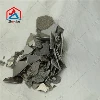
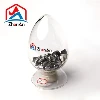
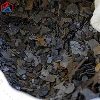
Most ferrovanadium is sold as lumps in specified size ranges. After solidification, the alloy is crushed and screened. This step determines:
- Size distribution (how consistent the lumps are)
- Fines content (dust and small particles)
- Handling behavior during shipping and receiving
If you want stable recovery in use, sizing discipline matters. Even when chemistry is correct, excessive fines can increase loss and create variable dosing behavior. That is why many experienced buyers specify a size range and set a practical fines tolerance in the purchase order.
Packing, labeling, and batch traceability
Finally, the material is packed and labeled. This is not just a logistics step. It is part of the quality system. Labels and bag marks should match the batch or lot identifier on the COA, and the description should align with the invoice and packing list. A batch-linked COA is one of the strongest signals that a supplier is operating with professional discipline.
What buyers should take away
If you are sourcing ferrovanadium for steelmaking or alloy production, you do not need to audit every metallurgical detail. You do need to understand which parts of the process create risk: feedstock stability, conversion discipline, casting integrity, sizing control, and traceable documentation. When those are controlled, the FeV alloy behaves predictably and repeat orders become straightforward.
FAQ
Q1: What are the main ways to make ferrovanadium?
A: Industrial production commonly uses high-temperature furnace reduction/smelting or aluminothermic reduction, followed by refining, casting, crushing, and screening.
Q2: Why do two ferrovanadium suppliers show different impurity patterns?
A: Feedstock choice and process discipline (especially conversion and slag control) can change the impurity "fingerprint" and stability across lots.
Q3: What step affects fines the most?
A: Casting integrity and post-cast crushing/screening discipline strongly influence fines generation and size distribution.
Q4: How can buyers reduce disputes and variability?
A: Specify size range and fines tolerance, require a batch-linked COA, and ensure packing marks match documentation.
Q5: How do I choose between ferrovanadium 50 and ferrovanadium 80?
A: Choose based on target vanadium addition, dosing practice, and cost per effective vanadium delivered, then confirm impurity limits and sizing.
About Our Company
We are a factory direct supply partner with stable monthly supply capacity and a factory area of about 30,000 m². Our products are exported to 100+ countries and regions, and we have served 5,000+ customers. Our sales team understands industry dynamics and market trends, and we supply ferrosilicon, silicon metal, and other metallurgical products.