



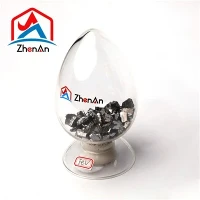
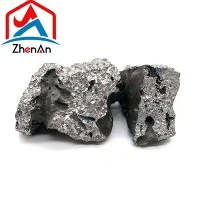
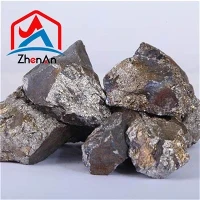



Reliable Ferro Vanadium For Alloy Production
Enhances alloy properties
Predictable processing results
Widely used alloy material
Ferrovanadium Lump vs Granule: Quick Answer
Choose ferrovanadium lumps when you charge alloy into a furnace or ladle by hand or by chute and want slower, controlled dissolving with less loss. Choose screened granules when your feeding system needs a narrower size range or you want the alloy to dissolve faster. Our standard sizes are 10–50 mm and 50–100 mm, and other ranges are available on request. The right choice depends on your feeding method, your furnace size and how much time the alloy has to dissolve.
What Is the Difference Between FeV Lumps and Granules?
| Factor | Lumps | Screened granules |
|---|---|---|
| Feeding | Manual or chute charging into a furnace or ladle | Feeding systems that need a narrow, repeatable size range |
| Dissolving speed | Slower, because each piece has less surface area for its weight | Faster, because the pieces are smaller |
| Loss risk | Lower | Higher if fines are carried into the slag or lost as dust |
| Sizes we supply | 10–50 mm and 50–100 mm | Screened ranges on request |
| Packing | 25 kg bags or 1,000 kg big bags, other packing available | 25 kg bags or 1,000 kg big bags, other packing available |
How Does FeV Size Affect Dissolving and Vanadium Recovery?
Smaller pieces dissolve faster, but a smaller size is not automatically better. Fine material can be swept into the slag or lost as dust before it reaches the metal, and vanadium that oxidizes into slag is vanadium you paid for and did not recover. Larger pieces avoid that loss, but they need more time and heat to dissolve, and they may not dissolve fully if you add them too late.
Two other factors matter as much as size. The first is where you add the alloy: vanadium recovers better when you add it after deoxidation than when you add it into an oxidizing melt. The second is stirring, which helps the alloy dissolve evenly. Measure recovery on your own heats, sampling before and after the addition, and compare lump and granule on the same grade.
Which FeV Size Fits Your Furnace or Ladle?
| Your setup | Starting point | What to confirm |
|---|---|---|
| Induction furnace with good stirring | Lumps or a coarser screened range | That the alloy is not pulled into the slag before it dissolves |
| Ladle addition with little time to dissolve | Smaller pieces or granules | Dust and fines loss, and whether you add after deoxidation |
| Automatic feeding system | Screened granules in a fixed range | The size range your feeder is built for |
| Manual charging of large melts | 10–50 mm or 50–100 mm lumps | Whether the piece size suits the quantity per addition |
These are starting points, not fixed rules. Tell us your furnace type, melt size and addition point, and we will suggest a size range.
Which FeV Grade Should You Combine With Your Size Choice?
Size and grade are separate decisions. Grades FeV50, FeV60 and FeV80 differ in vanadium content, and the impurity limits for carbon, silicon, aluminum, phosphorus and sulfur are set per grade and contract. For grade details, see our FeV50 ferro vanadium page and our FeV50, FeV60 and FeV80 supply page. If you are comparing vanadium sources, our guide on vanadium pentoxide flakes vs ferrovanadium explains the difference, and you can browse the full ferro vanadium range.
FeV Packing, Documents and Shipment Preparation
- Packing: 25 kg bags or 1,000 kg big bags, and other packing for export on request. Confirm the packing for your grade and size before you order.
- Identification: Lots are marked so your receiving team can separate, record and store the material correctly.
- Documents: A COA and shipment paperwork are available for each lot to support your QC and import checks.


What to Send for a Ferrovanadium Quote
Send your quantity, grade or target vanadium level, delivery form, size range, packing and destination. Add your furnace type and addition point so we can match the size. You can also email us at business@zaferroalloy.com.
Ferrovanadium Lump and Granule FAQ
Q: Does a smaller FeV size always give better vanadium recovery?
A: No. Smaller pieces dissolve faster, but fines can be lost to the slag or as dust. Recovery also depends on where you add the alloy and on stirring, so compare sizes on your own heats.
Q: Can you screen ferrovanadium to my size range?
A: Yes. Standard sizes are 10–50 mm and 50–100 mm, and other screened ranges are available when you give us your target range.
Q: Is dust a problem when I handle FeV granules?
A: Granules can contain more fines than lumps, so plan for dust control when you open bags and charge material. If dust is a concern for your feeding system, tell us and we can discuss a coarser screened range.
Q: How should I store lumps and granules?
A: Keep both dry and in intact packing. Damp alloy is a safety concern when it goes into molten metal, and smaller pieces expose more surface, so keep granule bags sealed until use.
Q: What documents can I get for import and QC checks?
A: A COA and standard shipment paperwork are available for each lot. If you need other documents, ask before you order so they can be arranged.
Q: Can you supply FeV regularly for repeat production?
A: Yes. We support repeat purchasing and can coordinate supply with your production schedule. Share your expected monthly quantity so we can confirm the arrangement.
Hot Tags: reliable ferro vanadium for alloy production, China reliable ferro vanadium for alloy production manufacturers, suppliers, factory, ferro alloy for logistics industry, ferro alloy for food industry, ferro alloy for hauling industry, ferro alloy for tourism industry, ferro alloy for domestic hemp industry, 50 Block Ferro Vanadium
You Might Also Like


Send Inquiry