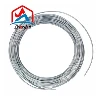

1. Outside diameter: refers to the outside diameter of the coil, usually expressed in meters (mm) or inches (inch). The outer diameter determines the overall size of the coil.
2. Inner diameter: refers to the diameter inside the coil, usually expressed in meters or inches. The inner diameter affects the channel diameter of the coil and also affects the speed and resistance of fluid through the coil.

3. Coil length: Length is usually expressed in meters or inches. It refers to the linear length of the coil and usually determines the heat exchange surface area of the coil.
4. Number of discs: The discs are corrugated sheet components that make up the titanium coil and are usually made of titanium alloy. The number of discs determines the heat transfer surface area and performance of the heat exchanger. These dimensional parameters will directly affect the heat exchange performance of the titanium coil and the fluid flow rate it is suitable for. Selecting the appropriate coil size requires consideration of the specific requirements of the application, including the temperature, pressure, flow rate and chemical properties of the fluid. In addition, the design of the heat exchanger will also affect its size selection,

Generally speaking, titanium coils can be sized according to specific heat exchanger design and application requirements to ensure that the heat exchanger can meet the requirements of the specific process. The choice of size will affect the performance and efficiency of the heat exchanger and therefore needs to be carefully considered during the design phase.