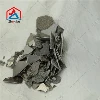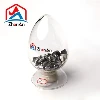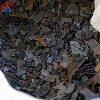

Vanadium pentoxide is an odourless, tasteless, toxic orange-yellow or reddish-brown powder or flaky powder. It is widely used in metallurgy, chemical industry, etc. It is mainly used as alloy additive for smelting ferrovanadium, and secondly used as catalyst of organic chemical industry, i.e. catalyst, and used as inorganic chemicals, chemical reagent, enamel and magnetic material.

Methods of production of vanadium pentoxide
Generally speaking, the raw materials are divided into the following types.
1) extraction of vanadium from vanadium slag; and
2) vanadium from vanadium-containing steel slag; and
3) vanadium from sodium slag; and
4) vanadium from rock coal; and
5)vanadium from calcification of vanadium ores; and
6) vanadium from vanadium-bearing uranium ores; and
7) extraction of vanadium from bauxite, and so on.

Next, vanadium extraction from vanadium slag is introduced.
The principle of vanadium dioxide production from vanadium slag
Raw material: vanadium slag
Accessories: sodium salt (sodium carbonate, sodium sulfate) or calcium salt (calcium carbonate), ammonium salt (ammonium chloride or ammonium sulfate).
Product: Vanadium Pentoxide in the form of flakes or powder, generally 97-99%.
The production of V2O5 from vanadium slag consists of five main processes: raw material pre-treatment, roasting, vanadium liquid precipitation and crystallisation, vanadate decomposition, drying and smelting.