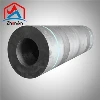

The material of the ladle slide plate needs to have extremely high temperature resistance, thermal shock resistance, erosion resistance and mechanical strength to withstand the scouring of molten steel (above 1600°C), chemical erosion and frequent temperature changes. The following are the characteristics and requirements of the key materials for ladle slide plates:
1. Main material composition
Ladle slides are usually made of composite refractories, the main components of which include:
alumina (Al₂O₃): provides high-temperature stability and erosion resistance.
carbon (C, graphite or carbon black): enhances thermal shock resistance and slag erosion resistance.
metal additives (such as Si, Al, Mg): improves oxidation resistance and sintering strength.
Binder (resin or pitch): After forming, it is carbonized at high temperatures to form a carbon-based binding network.
Common types of slide material
Material type Main components Applicable scenarios Maximum operating temperature
Aluminum carbon (Al₂O₃-C) Al₂O₃ (60-80%) + C (10-20%) Ordinary steel grades (mild steel, medium carbon steel) 1650-1700°C
Zirconium-carbon (ZrO₂-C) ZrO₂ (40-60%) + Al₂O₃ + C High-oxygen steel, special steel (stainless steel, high-manganese steel) 1700-1750°C
Magnesia carbonaceous (MgO-C) MgO (70-80%) + C (15-20%) High basicity slag environment (e.g. LF refining furnace) 1600-1650℃
Composite slide plate (Al₂O₃-ZrO₂-C) Al₂O₃ + ZrO₂ + C Ultra-low carbon steel, high cleanliness steel Above 1750℃
2. Key material properties
(1) High-temperature strength
The slide plate must maintain sufficient flexural strength (≥10MPa) and compressive strength (≥50MPa) at temperatures above 1600°C to prevent cracking caused by molten steel scouring.
The addition of ZrO₂ improves high-temperature toughness (phase transformation toughening effect).
(2) Thermal shock resistance
Frequent opening and closing of the slide plate can cause drastic temperature changes (e.g. from 1600°C to room temperature).
Carbon (graphite) is introduced to reduce the coefficient of thermal expansion and reduce thermal stress cracking.
Microporous structure design can buffer thermal stress.
(3) Resistance to molten steel/slag erosion
Al₂O₃ resists acidic slag, MgO resists alkaline slag, and ZrO₂ has excellent erosion resistance against high-oxygen molten steel (such as stainless steel).
Carbon oxidation treatment (such as adding SiC or Al powder) can reduce the oxidation loss of carbon at high temperatures.
(4) Oxidation resistance
Carbon is easily oxidized (CO/CO₂ volatilization) at high temperatures, leading to structural porosity.
Anti-oxidants (such as Si, Al, B₄C) form a protective layer (SiO₂, Al₂O₃) at high temperatures to slow down the oxidation of carbon.
(5) Low wettability
The slide plate needs to reduce the wettability of the molten steel on the material (contact angle>90°) to prevent the molten steel from penetrating.
Graphite's steel-repellent properties can effectively reduce the adhesion of molten steel.
3. Material optimization technology
(1) Particle grading optimization
Coarse particles (1-3mm) provide skeleton strength, and fine powder (<0.1mm) fills the pores to improve density.
(2) Additive modification
Metallic silicon (Si): Forms a protective SiO₂ film at high temperatures.
Boron carbide (B₄C): Enhances oxidation resistance and wear resistance.
Yttria (Y₂O₃): stabilizes the crystal phase of ZrO₂ and prevents cracking during phase transformation at high temperatures.
(3) Special processes
Isostatic pressing: increases material density and evenness.
High-temperature firing (1400-1600°C): forms a stable ceramic-carbon composite structure.
4. Selection of slide material according to steel type
Steel type Recommended slide material Reason
Plain carbon steel Alumina-carbon (Al₂O₃-C) Low cost, good thermal shock resistance
Stainless steel Zirconia-carbon (ZrO₂-C) Resistant to attack by high-oxygen molten steel
High-manganese steel Zirconia-carbon or composite slide plate Resistant to attack by Mn and FeO slag
Ultra-low carbon steel Composite slide plate (Al₂O₃-ZrO₂-C) Prevents carbonisation, high cleanliness requirements
Calcium-treated steel Magnesium carbonaceous (MgO-C) Resistant to highly alkaline slags (CaO/SiO₂>2)