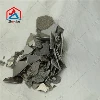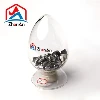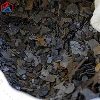

Vanadium pig iron is refined through blast furnaces, and vanadium slag is extracted in the atomising furnace or converter blowing process. Vanadium slag after crushing with sodium salt (soda ash, table salt or anhydrous manganese nitrate) for the oxidation of sodium roasting, so that the vanadium becomes soluble sodium metavanadate, leaching purification and ammonium sulphate precipitation out of ammonium polyvanadate, and then melted by the de-ammonia, casting flakes of vanadium pentoxide. Requirements for the composition of vanadium pentoxide: 97 ~ 99%, P <0.05%, S <0.05%, Na2O + K2O <1.5%. Vanadium pentoxide is also extracted directly from vanadium-containing iron ore concentrates or vanadium-containing carbonaceous shales by chemical treatment.

The main methods of smelting ferro-vanadium are:
Electrosilicon heat method Flake vanadium pentoxide with 75% ferrosilicon and a small amount of aluminium as reductant, in the alkaline electric arc furnace, through the reduction, refining two stages of refining qualified products. Reduction period will be a furnace of all the reductant and 60 ~ 70% of the total amount of flake vanadium pentoxide loaded into the electric furnace, in the high calcium oxide slag, silicon heat reduction. When the V2O5 in the slag is less than 0.35%, release the slag (known as poor slag, can be discarded or used as building materials), transferred to the refining period. At this time, and then add flake vanadium pentoxide and lime to remove the excess silicon, aluminium, etc. in the alloy liquid, once the alloy composition to meet the requirements, can be out of the slag out of ferroalloys.

Refining the late release of the slag is called rich slag (containing V2O5 up to 8 ~ 12%), in the next furnace to start charging, return to use. The liquid alloy is generally cast into cylindrical ingots, which are cooled, demoulded, crushed and cleaned of slag to become finished products. This method is generally used in the smelting of ferrovanadium containing 40 to 60 per cent vanadium. The recovery of vanadium can be up to 98 per cent. Each tonne of ferrovanadium smelted consumes about 1,600 kW-hr of electricity.

Aluminium thermal method Using aluminium as the reducing agent, smelting is carried out in alkaline lined furnace cylinders using the lower ignition method. A small portion of the mixed charge is loaded into the reactor and ignited. The rest of the charge is added after the reaction has started. It is usually used for smelting high vanadium iron (containing 60-80 per cent vanadium), with a slightly lower recovery of about 90-95 per cent compared to the electro-silicothermal method.