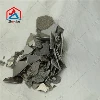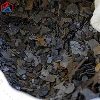

Ferrochrome (FeCr) is an alloy of iron and chromium used primarily in steel making, especially for stainless steel. The ferrochrome production process involves smelting chromite ore (FeCr₂O₄) in a high-temperature furnace. There are various methods for producing ferrochrome, but the most common is the submerged arc furnace (SAF) method.
Here's a step-by-step description:
1. Raw Material Preparation
Chromite ore (FeCr₂O₄): The main source of chromium.
Reducing agents: Usually, coke or coal is used to reduce chromite.
Fluxes: Limestone, dolomite, or quartz can be added to remove impurities.
2. Melting Process (Immersion Arc Furnace Method)
The raw materials are mixed and fed into a submerged arc furnace (SAF).
High-voltage electrical energy is supplied using carbon electrodes.
Intense heat (1,500-1,800°C or 2,730-3,270°F) melts the materials.
Reduction Reaction: FeCr2O4+4C→Fe+2Cr+4CO Carbon from coke reacts with oxygen in the ore to release chromium and iron.
3. Ferrochrome Separation
Molten ferrochrome is heavier and sinks to the bottom of the furnace.
Impurities (slag) float to the top and are removed.
Liquid ferrochrome is poured out of the furnace and poured into ingots or granulated.
4. Refining (If Necessary)
Depending on the carbon content, ferrochrome can be further refined.
High carbon ferrochrome (HC FeCr): Directly used in steelmaking.
Low carbon ferrochrome (LC FeCr): Produced by refining HC FeCr by converter method or vacuum refining.
5. Final Processing
The hardened ferrochrome is crushed and crushed according to industrial requirements.
It is supplied to steel manufacturers for the production of stainless steel.