
Basic Properties of Metallic Silicon (Silicon Metal):
Physical Properties:
Atomic Number: 14 (Group 14, Period 3 of the periodic table).
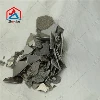
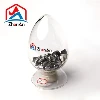
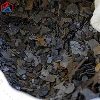
Appearance: Brittle, crystalline solid with a bluish-gray metallic luster.
Crystal Structure: Diamond cubic structure at room temperature.
Phase: Solid at standard temperature and pressure.
Melting Point: 1,414°C (2,577°F).
Boiling Point: 3,265°C (5,909°F).
Density: 2.33 g/cm³ (solid).
Electrical Conductivity: Semiconductor; conductivity increases with temperature.
Chemical Properties:
Reactivity: Relatively inert at room temperature but reacts at high temperatures.
Reacts with oxygen (>900°C) to form silicon dioxide (SiO₂).
Reacts with halogens (e.g., chlorine, fluorine) to form silicon tetrahalides (e.g., SiCl₄).
Acid/Base Behavior:
Insoluble in water and most acids (e.g., HCl, H₂SO₄).
Dissolves in hydrofluoric acid (HF) to form hexafluorosilicic acid (H₂SiF₆).
Reacts with strong alkalis (e.g., NaOH) to produce silicates and hydrogen gas.
Thermal Properties:
High thermal conductivity (≈149 W/m·K), making it useful in heat dissipation.
Low thermal expansion coefficient.
Mechanical Properties:
Hard but brittle (Mohs hardness ~6.5).
Lacks ductility, typical of non-metallic materials.
Applications:
Key material in semiconductors and microelectronics.
Used in solar cells (photovoltaic industry).
Alloying agent in aluminum, steel, and other metals.
Raw material for silicones, silanes, and synthetic polymers.