
Why Polysilicon Sets the Tightest Purity Requirement
Polysilicon is the feedstock for solar wafers and semiconductor devices, and its electrical behaviour is decided by impurities measured in parts per million and below. That is why the silicon metal feeding a polysilicon plant is selected on impurity ceilings rather than on price or availability. The grade scheme for silicon metal and its Fe, Al and Ca requirement tables are set out in GB/T 2881; solar-grade polysilicon, the product made from that feedstock, is specified separately in GB/T 25074. Reading the two standards together shows the logic of the chain: the feedstock must be clean enough that downstream purification and crystallisation can reach the product specification with acceptable yield.
Grade Comparison for Polysilicon Feedstock
Grade numbers in the four-digit system encode impurity ceilings in order: the first two digits describe iron, the second two aluminium and the final pair calcium, so grade 1101 caps iron and aluminium at 0.1% each and calcium at 0.01%. Lower grades relax those ceilings progressively.
| Grade | Fe / Al / Ca ceilings | Suitability for polysilicon |
|---|---|---|
| 1101 | 0.1% / 0.1% / 0.01% | Standard feedstock for Siemens and fluidised bed routes |
| 2202 | 0.2% / 0.2% / 0.02% | Non-critical chemical routes and blending only |
| 3303 | 0.3% / 0.3% / 0.03% | Silane and lower-grade feedstock blending |
| 441 | 0.4% / 0.4% / 0.1% | Metallurgical and aluminium alloy duty, not solar |
| 553 | 0.5% / 0.5% / 0.3% | Deoxidation and general alloying, not solar |
The controlling rule for a buyer is simple: only 1101 consistently meets the purity demand of high-efficiency cell platforms and monocrystalline wafer production, and grade substitution at the bottom of the chain shows up as yield loss at the top.
Feedstock Demands of Siemens and Fluidised Bed Routes
In the Siemens route, silicon metal is converted to trichlorosilane, purified by distillation and deposited on heated filaments to form high-purity rods. In fluidised bed reactors, silane or chlorosilane decomposes onto silicon seed particles at lower temperature, producing granular polysilicon. Both routes rely on distillation to remove the bulk of contaminants, but each places different demands on the feedstock: the Siemens route tolerates a wider impurity band than the granular route in some respects, while both are sensitive to elements that form volatile species and follow the process stream. That is why plants specify both the grade and additional trace ceilings for elements such as boron and phosphorus, which are far more damaging to cell performance than iron at equal concentration.
How Impurities Affect Crystal Growth and Cell Efficiency
Iron, aluminium and calcium do not merely dilute the product; they interact with crystallisation. During ingot solidification they segregate, create lattice defects and dislocations, and act as recombination centres that reduce minority carrier lifetime. The visible results are lower conversion efficiency, higher wafer breakage during slicing and more rejected rods. In melt processes, some impurities also raise the risk of inclusions and black spots that survive into the finished wafer. Selecting grade 1101 keeps the starting contamination low enough that purification and directional solidification can do the rest of the work.
Size Fraction, Packing and Contamination Control
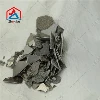
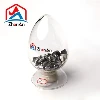
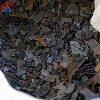
Purity is lost easily after the furnace. Feedstock is normally supplied as screened lumps or granules with a defined size band, packed in moisture-barrier bags or bulk bags, and handled with clean equipment to avoid iron pick-up from worn crushers, chutes and loader buckets. Surface oxidation and moisture on fines can introduce oxygen and hydrogen into the chlorosilane circuit, so drying and dry storage are part of the specification. A sieve analysis, a moisture figure and a clean-handling statement in the packing documents are the practical evidence that the delivered material still matches the certificate.
Frequently Asked Questions
Q: Which silicon metal grade should a polysilicon plant buy?
A: Grade 1101, with iron and aluminium capped at 0.1% and calcium at 0.01%, is the standard feedstock because it keeps crystal growth clean.
Q: Can grade 2202 or 3303 be used instead?
A: Only for non-critical chemical routes or blending; their higher impurity ceilings make them unsuitable for high-efficiency solar and monocrystalline production.
Q: What makes a trace element more damaging than iron?
A: Elements such as boron and phosphorus are electrically active at very low concentrations and are harder to remove in purification, so they harm cell efficiency more than an equal amount of iron.
Q: Does feedstock grade affect wafer yield?
A: Yes. Higher contamination produces lattice defects and dislocations that raise breakage rates during slicing and reduce the electrical performance of finished cells.
Q: Which size fraction is preferred for polysilicon feedstock?
A: A screened, tightly controlled band matched to the reactor feed system, supplied dry, since an excess of fines carries surface moisture and oxygen into the process.
Q: What should accompany a feedstock shipment?
A: A lot certificate of analysis with measured Fe, Al and Ca values, the sieve analysis, moisture content and packing details that document protection during transport.