
What Is Ferrosilicon
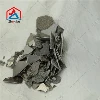
Ferrosilicon is an iron alloy composed of iron and silicon. It is made by smelting coke, steel scraps and quartz or silica in an electric furnace. The silicon content of commercial ferrosilicon varies by grade, with grades such as 75% silicon being common in foundry and steelmaking applications.
Uses of Ferrosilicon
Ferrosilicon has three main groups of uses. First, it is an essential deoxidizer in the steelmaking industry: in steelmaking, ferrosilicon is used for precipitation deoxidation and diffusion deoxidation, and it is also used as an alloying agent in steel. Second, it is used as an inoculant and spheroidizing agent in the cast iron industry; in the production of ductile iron, 75 ferrosilicon is an important inoculant that helps precipitate graphite and a spheroidizing agent. Third, it is used as a reducing agent in ferroalloy production. The chemical affinity between silicon and oxygen is very high, and the carbon content of high-silicon ferrosilicon is very low, so high-silicon ferrosilicon is a commonly used reducing agent when producing low-carbon ferroalloys.
What Are Ferrosilicon Particles
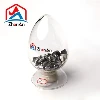
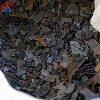
Ferrosilicon granules are formed by crushing ferrosilicon into small pieces of a certain proportion and filtering them through a sieve with a certain mesh size. Simply speaking, ferrosilicon granules are made from natural blocks of ferrosilicon that are crushed and screened into controlled size fractions. The small particles screened out are currently used as inoculants in foundries on the market.
Ferrosilicon Particle Sizes
Ferrosilicon grain supply sizes commonly include 0.2-1 mm, 1-3 mm and 3-8 mm, and other ranges can be customized according to customer requirements. The grain size is selected to match the inoculation practice, the pouring temperature and the desired dissolution behavior in the melt.
Advantages of Ferrosilicon Particles
Ferrosilicon granules can be used not only in the steelmaking industry but also as a commonly used metallurgical material in the cast iron industry. This is mainly because ferrosilicon granules can be used by cast iron manufacturers to replace inoculants and nodulizing agents. In the cast iron industry, the price of ferrosilicon granules is lower than that of equivalent prepared inoculants and the material melts more easily, making it a ferroalloy product with superior casting capabilities. High-quality ferrosilicon particle inoculant has uniform particle size and good inoculation effect during casting. It promotes the precipitation and spheroidization of graphite and is a necessary metallurgical material for the production of ductile iron.
How to Choose Between Lump and Particles
Lump ferrosilicon suits furnace charging and steelmaking additions where coarse material is convenient, while particle grades are preferred for inoculation and nodulizing in foundries where controlled dissolution and precise dosing are needed. Buyers should confirm the silicon grade, the particle-size range and the impurity limits for the specific application.
FAQ
Q: What is the difference between ferrosilicon and ferrosilicon particles?
A: Ferrosilicon is the iron-silicon alloy itself, while ferrosilicon particles are the same alloy crushed and sieved into controlled grain sizes for foundry inoculation and precise dosing.
Q: How is ferrosilicon made?
A: It is smelted in an electric furnace using coke, steel scraps and quartz or silica as raw materials.
Q: What are the main uses of ferrosilicon?
A: It is used as a deoxidizer and alloying agent in steelmaking, an inoculant and spheroidizing agent in cast iron production, and a reducing agent in ferroalloy production.
Q: What grain sizes are available?
A: Common supply sizes include 0.2-1 mm, 1-3 mm and 3-8 mm, with other ranges customized according to customer requirements.
Q: Why are ferrosilicon particles used as inoculants?
A: They have uniform particle size, melt easily and give a good inoculation effect, promoting the precipitation and spheroidization of graphite in ductile iron production.