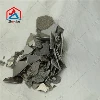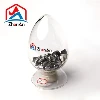

Silicon Carbide grades are mainly differentiated by SiC content, impurity levels, and stability in high-temperature processes.
In industrial use, buyers rarely choose "the highest grade" blindly. Instead, they select the most suitable grade based on application, cost-performance balance, and process requirements.
Among standard industrial grades:
- 88% Silicon Carbide is widely used for cost-sensitive metallurgical applications
- 90% Silicon Carbide is preferred where performance stability and cleaner reactions are required

Applications of 88% Silicon Carbide
Why Is 88% Silicon Carbide Used in Metallurgy?
88% Silicon Carbide is commonly used in:
- Steelmaking
- Cast iron production
- Foundry applications
It functions mainly as a deoxidizer and silicon–carbon additive.
Because of its balanced Si and C content, 88% SiC helps:
- Improve melt cleanliness
- Reduce oxygen content
- Stabilize chemical composition
For many foundries, 88% Silicon Carbide offers a good balance between performance and cost, making it suitable for large-volume production.
How Is 88% Silicon Carbide Used in Foundries?
In cast iron production, 88% Silicon Carbide is often added during melting to:
- Adjust carbon and silicon levels
- Improve metal fluidity
- Reduce slag formation
Its performance is stable enough for standard-grade castings, where ultra-low impurity control is not required.
Why Do Buyers Choose 88% Silicon Carbide?
Industries typically choose 88% Silicon Carbide when:
- Cost efficiency is a key concern
- Production volumes are high
- Process tolerance allows moderate impurity levels
In short, 88% SiC is a practical, economical choice for routine metallurgical use.

Applications of 90% Silicon Carbide
Why Is 90% Silicon Carbide Preferred in Higher-Performance Applications?
90% Silicon Carbide contains higher effective SiC content and relatively lower impurities, which makes its behavior more stable and predictable during high-temperature reactions.
It is commonly used in:
- Higher-quality steel grades
- Precision castings
- Performance-sensitive foundry processes
How Does 90% Silicon Carbide Improve Process Stability?
Compared with 88% grade, 90% Silicon Carbide:
- Reacts more consistently in molten metal
- Produces less slag and residue
- Improves yield of silicon and carbon
This makes it especially suitable for producers who want tighter control over composition and repeatable results.
Is 90% Silicon Carbide Used in Refractory and Special Applications?
Yes. In some cases, 90% Silicon Carbide is also used in:
- Refractory materials
- Wear-resistant components
- Applications requiring better thermal and chemical stability
Although it is not the highest SiC grade, it provides better reliability than lower-grade materials at a reasonable cost level.
How to Choose Between 88% and 90% Silicon Carbide
Key Selection Factors
When choosing between 88% and 90% Silicon Carbide, buyers usually consider:
- Application type (steel, foundry, refractory)
- Required reaction stability
- Impurity tolerance
- Cost-performance balance
General Selection Guidance
- Choose 88% Silicon Carbide for:
- Standard steelmaking and foundry use
- Large-volume, cost-sensitive production
- Choose 90% Silicon Carbide for:
- Higher-quality castings
- Processes requiring better consistency
- Applications with tighter quality control
About Our SiC Supply[contact us]
Our company is an integrated supplier of metallurgical materials, specializing in products such as silicon carbide, ferroalloys, and manganese-based materials for global industrial markets. With established production facilities and export experience, we focus on providing materials with stable chemical composition, consistent quality, and reliable supply to customers in steelmaking, foundry, and related industries. Our operations emphasize long-term cooperation, technical understanding, and practical solutions tailored to different industrial applications.

Conclusion
Both 88% and 90% Silicon Carbide play important roles in industrial production, but they are designed for different performance expectations.
88% Silicon Carbide offers a reliable and economical solution for routine metallurgical applications, while 90% Silicon Carbide provides improved stability and cleaner reactions for more demanding processes.
Understanding these differences helps buyers select the right grade for their application, optimize production efficiency, and control overall manufacturing costs.