
Introduction
When buyers talk about ferrosilicon (FeSi), they often focus on chemical composition first. But in real production-especially steelmaking and foundry work-physical properties and particle size can be just as important. These factors affect melting speed, silicon recovery, dust loss, and how smoothly the material fits into a furnace or ladle process. Below are common questions buyers ask when they want to understand what "good physical quality" looks like for ferrosilicon and how to choose the right size.
Industry Q&A: What Are the Physical Properties and Particle Size Requirements for Ferrosilicon?
Q1: What are the main physical properties of ferrosilicon that buyers should know?
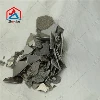
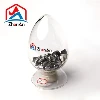
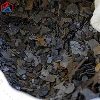
Most commercial ferrosilicon is a grey-silver metallic alloy produced in electric furnaces and supplied as lumps, granules, or powder. The physical properties buyers usually care about include:
Appearance and cleanliness: should look metallic and reasonably clean, without excessive dirt, sand, or unusual discoloration.
Hardness and brittleness: ferrosilicon is typically brittle, which is normal and helps it be crushed into different sizes.
Bulk density / packing behavior: not always listed, but it affects loading, bagging, and shipping efficiency.
Moisture condition: it should be dry and protected from long exposure to moisture, especially for fine sizes.
In practice, physical quality is often judged by consistency: does the product look and behave the same across deliveries?
Q2: Why does particle size matter so much in steelmaking and casting?
Particle size controls how ferrosilicon melts and reacts. Even with the same chemical grade (like FeSi75), different sizes can behave very differently:
Large sizes melt slower → more stable reaction, usually less dust, more predictable recovery.
Small sizes melt faster → quicker effect, useful for fine adjustments, but can increase dust loss or "fast reaction spikes."
So when buyers choose size, they are basically choosing the melting rhythm that best matches their process. If the size is wrong, it can lead to uneven silicon recovery, wasted material, or unstable chemistry control.
Q3: What are the most common particle size ranges, and where are they used?
Common commercial sizes include:
10–50 mm: widely used in steelmaking; reliable melting and stable recovery.
10–100 mm: often used for larger furnaces, especially when adding directly into the furnace.
3–10 mm / 3–8 mm: more common in foundries or where faster melting is preferred.
1–5 mm: popular for ladle addition and refining processes that need quick dissolution.
0–3 mm (powder/fines): used for very fast reactions or special processes, but requires careful handling.
Different buyers ask for different ranges not because one is "better," but because their furnaces and alloying methods are different.
Q4: What particle size is "best" if I want higher silicon recovery and less waste?
For many steel mills, 10–50 mm is a safe and practical choice. It melts at a controlled speed and typically leads to stable recovery.
If you use too many fines (very small particles), you may experience more dust loss during transport and feeding, especially in windy or open handling conditions.
If the particles are too large for your furnace, melting may be slow and uneven, which can also reduce recovery.
So the "best" size is usually the one that matches furnace size and addition method, rather than the smallest or biggest option.
Q5: What should buyers request from suppliers to ensure physical quality and size consistency?
To reduce risk, buyers commonly request:
A clear size specification (for example, 10–50 mm, max fines % if needed)
Photos of the product or pre-shipment inspection pictures
Packing method confirmation (jumbo bags, small bags, moisture protection)
COA plus basic quality notes (especially if impurities are strict)
If you are buying fines or small granules, it's also reasonable to ask how the supplier controls dust and moisture during packing and loading.


About Our Products
We supply ferrosilicon in common grades such as FeSi75, FeSi72, and FeSi65, and we can provide multiple size ranges including 10–50 mm, 10–100 mm, 3–8 mm, 1–5 mm, and 0–3 mm. If you tell us your furnace type and preferred addition method, we can suggest a suitable size and share recent COAs and packing options, along with updated FOB pricing from major Chinese ports.