
Why Titanium Is Difficult to Add Directly
The addition of various metal and non-metal elements can result in a range of enhanced performance characteristics in iron and steel. However, the proportion of titanium is relatively low, at only about 4% in many applications. The high melting point of 1690°C and the low proportion make titanium an expensive material to use. It is also prone to oxidation, which results in the loss of a significant amount of oxide on the surface of the liquid steel. Because the manufacturing process is complex and the monomer production cost is high, it is not suitable to add titanium directly into liquid steel in the state of a pure metal or non-metal monomer.
How Seamless Titanium-Iron Cored Wire Is Made
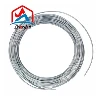
The production of seamless titanium-iron cored wire involves grinding titanium-iron alloy into powder and wrapping it with a steel belt by compaction. The result is a continuous wire with a dense, sealed core. This construction allows the wire to be fed deep into the molten steel, enhancing the recovery of the alloying element and reducing costs compared with surface additions of loose powder or lump material.
Deep Insertion and Higher Recovery
The seamless design allows deeper insertion into the molten steel, which improves the recovery rate of the reactive element. Because the powder core is protected by the steel sheath during feeding, less of the element is lost to oxidation at the melt surface. The compacted core also reduces the void or powder-weight variation that can affect feeding consistency, so the addition is more predictable from heat to heat.
Avoiding Unwanted Impurity Pickup
The sealed sheath construction avoids the harmful elements that can be introduced with loose powder cores, including sulfur, phosphorus, carbon and silicon pickup, which greatly improves the recovery rate and stability of the active element. This makes the wire a cleaner addition route for steel grades where impurity control is critical.
Mechanical Properties of the Wire
Cored wire offers a number of advantages in handling and feeding. It has a uniform diameter, high tensile strength, good toughness and resistance to breakage, which makes it ideal for accurate control of the wire feeding quantity. A compact core is tightly wrapped, ensuring a longer storage life and optimal performance during feeding.
Summary of Benefits
For steelmakers, seamless titanium-iron cored wire provides a practical way to add titanium with higher recovery, lower oxidation loss, better feeding consistency and less impurity pickup than direct monomer additions. Buyers should confirm the titanium content of the core, the wire diameter and coil weight, and the packaging to keep the wire dry before use.
FAQ
Q: Why is titanium not added directly to molten steel?
A: Titanium has a high melting point of about 1690°C, a low addition proportion and a strong tendency to oxidize, which causes high losses and high cost when added as a monomer.
Q: How is seamless titanium-iron cored wire made?
A: Titanium-iron alloy is ground into powder and wrapped with a steel belt by compaction to form a continuous, sealed wire with a dense core.
Q: What are the main advantages of the seamless design?
A: Deeper insertion into the melt, higher element recovery, lower oxidation loss, reduced impurity pickup and more consistent feeding behavior.
Q: Does the wire improve recovery compared with loose powder?
A: Yes. The steel sheath protects the core during feeding and allows deep insertion, so less of the reactive element is lost at the melt surface.
Q: What mechanical properties does the wire have?
A: It has uniform diameter, high tensile strength, good toughness and breakage resistance, supporting accurate control of the feeding quantity.
Q: How should the wire be stored?
A: The tightly wrapped, compact core gives a longer storage life; the wire should be kept dry and protected from moisture before feeding.