
Last updated: August 14, 2026
Vanadium pentoxide purity affects how much V2O5 is supplied per unit mass and how much non-V2O5 material enters the downstream process. However, a higher purity number does not automatically guarantee higher ferrovanadium recovery or better final alloy quality.
This guide compares common V2O5 grades such as 98%, 99% and 99.5%, explains why Si, Fe, P, S and other impurities still matter, and shows what buyers should check when selecting vanadium pentoxide for ferrovanadium and other industrial applications.
Quick Answer
V2O5 98%, 99% and 99.5% mainly differ in the minimum vanadium pentoxide content and the amount of non-V2O5 material present in the product.
For ferrovanadium production, higher-purity V2O5 provides more vanadium-bearing oxide per ton of feed and can reduce the mass of accompanying impurities. However, actual vanadium recovery also depends on reduction conditions, reductant dosage, slag composition, temperature, mixing and furnace practice.
For purchasing, the purity number should therefore be checked together with the actual limits for Si, Fe, P, S, moisture and physical form.
What Does V₂O₅ Purity Mean?
The purity grade indicates the proportion of vanadium pentoxide in the supplied material.
For example:
- V₂O₅ 98% contains at least about 98% vanadium pentoxide under the agreed specification.
- V₂O₅ 99% contains a higher proportion of vanadium pentoxide and a smaller total non-V₂O₅ fraction.
- V₂O₅ 99.5% is selected where a still tighter overall purity requirement is needed.
The remaining percentage is not necessarily one single impurity. It can include different combinations of Si-, Fe-, P-, S- or other compounds depending on the raw material and production route.
Two V₂O₅ products with the same nominal purity are not necessarily equivalent if their impurity specifications are different.
V₂O₅ 98% vs 99% vs 99.5%
| Grade | V₂O₅ Minimum | Non-V₂O₅ Fraction | General Selection Direction |
|---|---|---|---|
| V₂O₅ 98% | ≥98% | Up to about 2% under the agreed specification | General metallurgical or industrial use where the impurity profile is acceptable |
| V₂O₅ 99% | ≥99% | Up to about 1% under the agreed specification | Applications requiring tighter impurity control |
| V₂O₅ 99.5% | ≥99.5% | Up to about 0.5% under the agreed specification | Higher-purity applications or stricter downstream chemistry requirements |
This table shows the purity difference only. It does not define universal limits for Si, Fe, P or S. Those values should be confirmed from the actual supplier specification or batch COA.
Which Impurities Matter Besides V₂O₅?
The purity percentage tells you how much V₂O₅ is present, but it does not explain the composition of the remaining fraction.
For metallurgical purchasing, the following elements are often more useful for comparing offers than purity alone.
Silicon
Silicon-bearing impurities can influence the non-vanadium oxide load entering a ferrovanadium or other metallurgical process.
If the downstream process has a strict Si balance, the actual silicon limit should be confirmed rather than assumed from the overall V₂O₅ purity.
Iron
Iron content can matter when the downstream product has a defined alloy chemistry or when the feed composition is being balanced against other iron-bearing materials.
A higher V₂O₅ purity does not automatically mean the lowest Fe level unless the Fe limit is specifically controlled.
Phosphorus and Sulfur
P and S are commonly controlled impurities in metallurgical raw materials because their downstream tolerance can be limited.
When V₂O₅ is used to produce ferrovanadium, the contribution from the oxide feed should be included in the overall impurity balance.
Moisture and Other Reported Components
Moisture can affect handling, weighing and material consistency. Other reported elements or oxides may also be relevant depending on the application.
The most reliable comparison therefore uses the complete chemical specification rather than the headline purity number alone.
How Does V₂O₅ Purity Affect Ferrovanadium Production?
Vanadium pentoxide is an important vanadium-bearing raw material for ferrovanadium production. Its purity affects the amount of V₂O₅ entering the charge and the amount of accompanying non-V₂O₅ material that must also be handled by the process.
However, purity should not be confused with actual vanadium recovery.
Higher Effective V₂O₅ Input
For the same feed mass, a higher-purity material introduces more V₂O₅.
This can be shown with a simple theoretical comparison.
| Feed Mass | V₂O₅ Purity | Theoretical V₂O₅ Input |
|---|---|---|
| 1,000 kg | 98% | 980 kg V₂O₅ |
| 1,000 kg | 99% | 990 kg V₂O₅ |
| 1,000 kg | 99.5% | 995 kg V₂O₅ |
For example, one metric ton of 98% material theoretically contains 15 kg less V₂O₅ than one metric ton of 99.5% material.
This is only a theoretical feed-mass comparison. It does not mean that the final ferrovanadium yield will differ by exactly 15 kg.
Lower Non-V₂O₅ Load
A higher-purity V₂O₅ feed also introduces less total non-V₂O₅ material per ton.
Depending on what those impurities are, this can influence:
- slag load,
- flux balance,
- reductant demand,
- impurity control,
- and final ferrovanadium chemistry.
The practical effect depends on the actual impurity composition rather than the purity percentage alone.
Does Higher V₂O₅ Purity Mean Higher Vanadium Recovery?
Not necessarily. Higher purity increases the amount of V₂O₅ available per unit mass, but actual vanadium recovery depends on the metallurgical process.
Recovery can be influenced by:
- reduction route,
- type and dosage of reductant,
- reaction temperature,
- slag composition,
- mixing and reaction contact,
- furnace or reactor practice,
- and vanadium losses to slag or other phases.
A 99.5% V₂O₅ feed can therefore provide a cleaner and more concentrated vanadium source, but poor process control can still result in low vanadium recovery.
For this reason, purity should be treated as one feed-quality parameter rather than a guaranteed recovery indicator.
When Is V₂O₅ 98% Usually Enough?
V₂O₅ 98% can be suitable when the downstream process accepts the associated impurity profile and does not require tighter purity control.
It may be considered when:
- the minimum V₂O₅ requirement is satisfied,
- Si, Fe, P and S remain within the downstream limits,
- the process can accommodate the non-V₂O₅ fraction,
- and the lower-purity grade provides a better cost balance.
The decision should be based on the actual process requirement rather than assuming that 99% or 99.5% is automatically necessary.
When Should You Consider 99% or 99.5% V₂O₅?
A higher-purity grade becomes more relevant when the downstream process requires a more concentrated vanadium source or tighter control of accompanying impurities.
Typical reasons include:
- stricter Si, Fe, P or S limits,
- reduced tolerance for slag-forming or non-vanadium components,
- specialty alloy production,
- more controlled chemical applications,
- or customer specifications that explicitly require a higher V₂O₅ grade.
The important question is not whether 99.5% is "better," but whether the tighter purity and impurity specification provides a practical benefit in the target process.
Does V₂O₅ Physical Form Matter?
Purity and physical form are separate purchasing parameters.
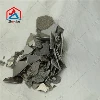
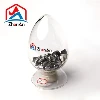
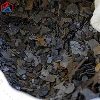
Vanadium pentoxide can be supplied in different forms depending on the production route and downstream application. Common commercial descriptions may include flakes, powder or other processed forms.
The physical form can affect:
- weighing and batching,
- dust generation,
- feeding method,
- reaction contact,
- storage,
- and packaging requirements.
A higher purity does not automatically correspond to a particular particle size or physical form. Both should be specified separately.
How to Choose the Right V₂O₅ Purity
Step 1: Define the Downstream Application
Start with the actual use, such as ferrovanadium production, alloy processing or another industrial application.
Step 2: Define the Minimum V₂O₅ Requirement
Determine whether 98%, 99% or 99.5% is actually required by the process or customer specification.
Step 3: Check Si, Fe, P and S Limits
Compare the complete impurity profile rather than the purity number alone.
Step 4: Compare Effective V₂O₅ Input
If two grades have different purity, calculate how much V₂O₅ is actually supplied per ton of feed.
Step 5: Consider Process Impact
Evaluate whether the non-V₂O₅ fraction affects slag load, reductant balance, impurity control or downstream chemistry.
Step 6: Compare Cost on the Same Basis
Do not compare only the price per ton. Compare purity, impurity limits, usable V₂O₅ input and the process requirement together.
Key Takeaways
- V₂O₅ 98%, 99% and 99.5% differ in vanadium pentoxide concentration, but purity alone does not define the complete material quality.
- Si, Fe, P, S and other impurities should be checked separately because two products with the same V₂O₅ purity can still have different impurity profiles.
- Higher V₂O₅ purity provides more vanadium-bearing oxide per unit mass and reduces the total non-V₂O₅ fraction.
- Higher purity does not automatically guarantee higher ferrovanadium recovery because recovery also depends on reduction conditions, slag chemistry and process control.
- The correct grade should be selected from downstream chemistry, impurity limits, physical form and cost rather than from the highest available purity.
FAQ About Vanadium Pentoxide Purity
What is the difference between V₂O₅ 98% and 99.5%?
The main difference is the amount of vanadium pentoxide per unit mass. One ton of 98% material theoretically contains 980 kg of V₂O₅, while one ton of 99.5% material contains 995 kg. The actual impurity profile must still be compared separately.
Is 99.5% V₂O₅ always better than 98%?
No. If 98% V₂O₅ already meets the downstream purity and impurity limits, a higher-purity grade may not provide enough additional process benefit to justify the higher material cost.
Does higher V₂O₅ purity improve ferrovanadium recovery?
Higher purity increases the theoretical V₂O₅ input per ton of feed, but actual vanadium recovery also depends on the reduction route, reductant dosage, temperature, slag chemistry and vanadium losses. Purity alone does not guarantee a specific recovery rate.
Which impurities should be checked in vanadium pentoxide?
For metallurgical applications, buyers commonly need to check Si, Fe, P, S and other specified impurities in addition to V₂O₅ purity. The required limits depend on the downstream process and final product specification.
Should I buy V₂O₅ based only on purity?
No. Compare the V₂O₅ minimum together with impurity limits, physical form, particle size where applicable, moisture, batch COA, packing and downstream application.
Need to Compare V₂O₅ Grades?
If you are choosing between V₂O₅ 98%, 99% and 99.5%, send us your required purity, Si/Fe/P/S limits, physical form, quantity and application.
If you already have a purchasing specification or previous COA, we can compare the material on the same chemistry basis instead of selecting only by the headline purity.