
What Makes Calcium Carbide Hazardous
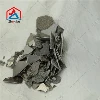
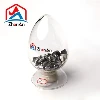
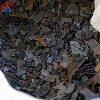
Calcium carbide is a hard, grey-black material supplied as lumps or granules and packed in sealed steel drums. Its hazard comes from two directions at the same time: the material itself is strongly alkaline when it contacts moisture, and the gas it releases, acetylene, is flammable across an unusually wide range of concentrations.
The controlling reaction is simple and highly exothermic: calcium carbide plus water gives acetylene gas plus calcium hydroxide. Because the reaction releases heat, a small amount of water inside a closed drum can generate both a flammable gas and enough heat to ignite it. Every rule in handling, storage and firefighting follows from that single fact.
| Property | Value or behaviour |
|---|---|
| Reaction with water | CaC2 + 2H2O -> C2H2 + Ca(OH)2, strongly exothermic |
| Acetylene flammable range in air | approximately 2.5-81 % by volume |
| Acetylene autoignition temperature | about 305 C |
| Theoretical gas yield | about 349 litres of acetylene per kg of pure CaC2; commercial grades yield roughly 250-300 litres per kg |
| Skin contact | Irritating; moisture on the skin forms calcium hydroxide, which produces caustic burns and ulcers |
| Inhalation | Dust irritates the respiratory tract; the gas displaces oxygen and may carry impurities |
Impurities deserve separate attention. Commercial carbide contains small amounts of calcium phosphide and calcium sulphide, so the acetylene produced also carries phosphine and hydrogen sulphide. Phosphine can self-ignite in air, which is why a drum of carbide can show a flame at the vent even with no ignition source present. Acetylene also forms explosive acetylides with copper, silver and mercury, so copper fittings and copper-alloy tools must never be used in contact with the gas.
Personal Protection and Handling Discipline
Dry, well-ventilated work and a fixed set of personal protective equipment prevent nearly all carbide injuries.
Eyes and face. Chemical goggles plus a face shield when drums are opened or material is charged into a generator.
Respiratory system. A dust mask for routine handling and a suitable respirator where dust is heavy or ventilation is limited.
Skin. Dry, alkali-resistant gloves and long sleeves; a rubber apron where spilling is likely. Leather gloves are not suitable because they absorb moisture and hold it against the skin.
Tools. Non-sparking tools only; copper and copper alloys are prohibited because of acetylide formation.
Housekeeping. Spilled carbide is swept up dry and placed in a dry, vented metal container. It is never washed into a drain, where it would release acetylene inside a confined space.
Handling hygiene is equally important. Do not eat, drink or smoke in the storage or handling area, and wash hands and face after work. Any clothing that has been wetted with carbide dust is removed and rinsed away from ignition sources before being worn again.
Firefighting and Emergency Response
Carbide fires must be fought dry. Water reacts with the material to produce more acetylene and more heat, so its use turns a small fire into a large one.
Extinguish with dry sand, carbon dioxide, or dry sodium carbonate powder.
Never apply water, foam or a wet blanket to burning carbide.
Cool adjacent drums with water spray from a protected position only if they are still sealed and not involved in the fire.
Withdraw if drums are bulging or discoloured from heat, and treat them as liable to rupture.
For exposure to people, move anyone showing dizziness, headache or vomiting to fresh air immediately and keep them warm and at rest. Serious cases go to hospital without delay, and the treating clinician should be told that carbide dust or acetylene was involved so that caustic and phosphine exposure are both considered.
Drum Handling, Packaging and Marking
Packaging is part of the safety system, not just transport logistics. Carbide is packed in iron drums with a wall thickness of at least 1 mm, in nominal 100 kg or 200 kg sizes, and the drum is marked with the warning to avoid water and fire. A drum that has been dented, corroded or opened loses much of that protection.
Before a drum is moved or stored it must be vented so that any acetylene generated inside can escape in a controlled way. Rolling, dropping, dragging or striking the drum is prohibited, because impact can damage the seam, strike a spark, or release gas through a weakened wall. If a package is broken, welding and soldering must not be carried out nearby, since the residual gas can be ignited by the arc.
Storage and Shelf Life
Correct storage keeps moisture out, keeps heat away, and keeps incompatible materials at a distance.
Store in a dry, cool and well-ventilated warehouse, preferably a dedicated carbide store.
Keep drums off damp floors and away from roofs, walls and pipes where water can condense or leak.
Segregate from combustible materials, strong acids and oxidizers, and never store near copper, silver or mercury products.
Vent drums before they are placed in storage, and keep them upright with closures secure.
Respect the storage period of 6-12 months; material that has been stored longer is inspected before use and handled as if moisture has penetrated the seal.
The store itself should have a dry powder or dry sand extinguisher and, where local rules require, a dry-type firefighting supply within reach. Electrical fittings are vapour-proof, and lighting is arranged so that no lamp is exposed to gas that may collect at low level.
Frequently Asked Questions
Q: Why is water forbidden on a calcium carbide fire?
Water reacts with calcium carbide to produce acetylene and heat. Both feed the fire, and the gas can spread the hazard beyond the source of the flame. Dry sand, carbon dioxide or dry sodium carbonate extinguishes the fire without generating more fuel.
Q: What should be done with a drum that has been opened and partly used?
Reseal or cover it immediately, keep it in the dry store, and vent any gas before further handling. A partly used drum is more vulnerable than a full one, because air and humidity have already entered it.
Q: Why are copper tools banned?
Acetylene reacts with copper to form copper acetylide, which is sensitive to shock and heat. Copper alloys are therefore kept away from carbide drums, acetylene lines and any venting point.
Q: Can carbide dust be washed away with water?
No. Wetting releases acetylene, and if the wash water drains into a pit, duct or cellar the gas collects in a confined space where a spark can ignite it. Sweep dry and collect the residue in a vented metal container.
Q: What is the normal storage period?
Six to twelve months is the working limit. Beyond that, seal integrity and moisture uptake become uncertain, so the material is tested for gas yield, fines and moisture before it is charged to a generator.
Q: How is a carbide burn treated at the workplace?
Remove contaminated clothing, brush dry material off the skin, and rinse the area with large amounts of clean water before medical assessment. Because the reaction product is alkaline, eye contact is always treated as an emergency and irrigated immediately.