
What High-Calcium Cored Wire Is and How It Is Made
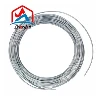
A cored wire, sometimes called a flux-cored or filled wire, is a steel strip folded around a powdered or granular core and drawn or rolled to a finished diameter. In a high-calcium cored wire the core is metallic calcium, so the wire delivers a concentrated, controllable calcium addition deep into the melt. The sheath is normally low-carbon cold-rolled steel strip between 0.3 and 0.5 mm thick, and the finished diameters used in ladle treatment range from roughly 9 mm to 16 mm, with coil weights usually between 800 kg and 1500 kg depending on the feeding equipment.
Delivery rate is the parameter that distinguishes this product from a ferrocalcium wire. A ferrocalcium wire carries calcium as a ferroalloy, typically around 28–32% Ca, whereas a high-calcium wire carries a much richer core, so for the same calcium addition the ferrocalcium wire must be fed roughly three times the length. Even when both wires are compared on equal calcium content, published plant data report that the ferrocalcium wire consumption is about 2.45 times that of the high-calcium wire, which is the main reason calcium treatment economics changed once cored wire injection became routine.
The Function: Calcium Treatment and Inclusion Modification
In aluminium-killed steel the deoxidation product is solid alumina, which is hard, high melting and prone to building up on the inner wall of the submerged entry nozzle, causing clogging and interrupted casting sequences. Calcium reacts with alumina to form calcium aluminates, and the aim of calcium treatment is to reach a liquid calcium aluminate at steelmaking temperature. The classic target is the 12CaO·7Al₂O₃ phase, whose melting point is below about 1450 °C, so the inclusions remain liquid and can be carried out of the ladle without blocking the nozzle. That phase has a CaO to Al₂O₃ mass ratio of about 0.94, calculated from the stoichiometry of 12 mol CaO (672 g) to 7 mol Al₂O₃ (714 g), which is a useful starting point when setting a calcium addition target.
Calcium has secondary effects that matter to the steel grade. It modifies manganese sulphide inclusions into globular calcium sulphide-bearing particles that are less damaging to transverse ductility and toughness in plate and linepipe steels. It also provides some desulphurisation and, because calcium boils at about 1484 °C and the steel is hotter than that, the injection depth and wire speed determine how much calcium dissolves before the vapour escapes. Feeding too fast or too shallow produces spitting, surface defects and a low recovery; feeding too slowly wastes wire and lengthens the treatment cycle.
Reported Operating Benefits Compared with Ferrocalcium Wire
Comparisons published from plant practice for low-carbon, low-silicon steel where high-calcium cored wire replaced ferrocalcium wire report a temperature drop reduced by an average of 2.6 °C, a silicon pick-up reduced by 0.001%, a feeding time shortened by 1 minute, and a yield improvement of a factor of 2.29. Inclusion levels after treatment with high-calcium cored wire were reported as comparable to those obtained with ferrocalcium wire and as meeting the product requirements of the grade concerned. The practical reading of those figures is that the higher calcium concentration reduces the mass of wire that has to be pushed into the ladle, which in turn cuts the thermal penalty and the treatment time rather than changing the inclusion population once the calcium addition is correctly targeted.
Specification, Verification and Handling
A purchase specification for cored wire should state the core type and minimum calcium content, the sheath steel grade and thickness, the finished diameter with tolerance, the linear mass of core per metre, the coil weight and core diameter, and the packaging. Chemistry should be certified at lot level, and an EN 10204 3.1 inspection certificate is the usual document for critical applications because it ties the results to the specific lot. Calcium in the core and in the steel after treatment is normally determined by the wet chemical methods grouped in the GB/T 223 series for the analysis of iron, steel and alloys, or by optical emission spectrometry after dissolution.
Two handling points decide field performance. First, moisture in the core is unacceptable: absorbed water vapourises during injection and causes spitting and erratic feeding, so coils should stay sealed and be stored in a dry area, with opened coils used promptly. Second, wire straightness and sheath integrity must be preserved; a dented or kinked coil will jam the feeder and can break in the guide tube. Feeder settings, guide tube length and injection depth should be recorded for each grade so that the calcium recovery can be traced and compared between heats.
Frequently Asked Questions
Q: How much high-calcium cored wire is needed per tonne of steel?
A: It is set by the calcium target, not by a fixed consumption figure. Calculate the calcium required to reach the intended calcium aluminate composition from the alumina content of the steel, then divide by the calcium content of the wire and by the expected recovery for the injection depth used.
Q: Why does calcium treatment reduce temperature loss?
A: Less wire mass enters the ladle for the same calcium addition, and the injection time is shorter, so the sensible heat absorbed by the wire and the radiated loss during feeding both fall; plant data for high-calcium wire report an average reduction of 2.6 °C in temperature drop compared with ferrocalcium wire.
Q: Can too much calcium be harmful?
A: Yes. Excess calcium beyond what the alumina can absorb forms solid calcium sulphide and high-melting calcium aluminate phases that can themselves clog the nozzle, so the target has to be matched to the sulphur and aluminium contents of the grade rather than simply increased.
Q: What wire diameter is used for ladle treatment?
A: Diameters from about 9 mm to 16 mm cover most ladle and tundish applications. Smaller wire suits lower capacity ladles and finer control, while larger wire delivers more calcium per metre and suits high-throughput lines with short treatment windows.
Q: How is the sheath thickness checked at goods-in?
A: A short length is cut, the sheath is separated from the core, and the strip thickness is measured with a micrometer at several points around the circumference. The core is then weighed to confirm the linear mass per metre against the specification, since both thickness and core fill determine the calcium delivered per metre of wire.