
Silicon is a critical industrial element used across metallurgy, chemical manufacturing, refractories, and advanced materials. In commercial markets, silicon is commonly supplied either as silicon metal or as silicon powder, including silicon metal powder and si powder. Although both originate from metallurgical-grade silicon, their physical form leads to meaningful differences in handling, performance, and application suitability.
Understanding the differences between silicon powder and silicon metal is essential for manufacturers who require precise process control, consistent reaction behavior, and stable product quality.

What Is Silicon Metal?
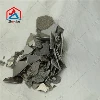
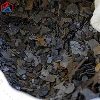
Silicon metal is typically produced in submerged arc furnaces using quartz and carbon materials. It is most commonly supplied in:
- Lumps
- Granules
- Broken pieces
Silicon metal is valued for its relatively high silicon content and is widely used in bulk metallurgical processes where large-scale alloying or deoxidation is required.
Because of its larger particle size, silicon metal reacts more slowly than powdered forms, making it suitable for applications where gradual dissolution is preferred.
What Is Silicon Powder?
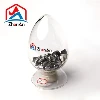
Silicon powder, also referred to as silicon metal powder or si powder, is produced by crushing, milling, or atomizing silicon metal into fine particles. This significantly increases surface area and changes how silicon behaves during chemical or metallurgical reactions.
Silicon powder is often selected for applications that require:
- Faster reaction rates
- Precise dosing
- Uniform distribution
Particle size control is a key quality parameter for silicon powder, as it directly affects performance and handling.

Key Differences Between Silicon Powder and Silicon Metal
1. Physical Form and Particle Size
The most obvious difference lies in physical form. Silicon metal is supplied in solid pieces, while silicon powder consists of fine particles with controlled size distribution.
This difference influences:
- Feeding methods
- Storage requirements
- Reaction speed
Silicon powder requires more careful handling but offers greater flexibility in precision applications.
2. Reaction Behavior and Efficiency
Due to its higher surface area, silicon powder reacts more quickly than silicon metal. This makes silicon metal powder and si powder particularly suitable for:
- Chemical synthesis
- Fine alloy adjustments
- Applications requiring rapid silicon availability
Silicon metal, by contrast, reacts more slowly and is often preferred in bulk alloying processes where controlled, gradual dissolution is acceptable.
3. Application Scenarios
Silicon metal is commonly used in:
- Aluminum alloy production
- Bulk steel deoxidation
- Large-scale metallurgical processes
Silicon powder is more often used in:
- Specialty alloys
- Chemical and silicone manufacturing
- Refractory and ceramic materials
- Advanced industrial additives
The choice depends on whether speed, precision, or volume is the primary requirement.
4. Process Control and Precision
In applications where precise control of silicon addition is required, silicon powder provides a clear advantage. Fine si powder allows for:
- Accurate dosing
- Uniform mixing
- Reduced compositional variation
Silicon metal is better suited for processes where exact dosing is less critical and operational simplicity is prioritized.
5. Handling and Safety Considerations
While silicon metal is relatively easy to store and handle, silicon powder requires additional precautions due to its fine particle size. Proper storage and handling practices are important to:
- Prevent oxidation
- Reduce dust generation
- Maintain consistent quality
These considerations are part of standard industrial material management.
How to Choose Between Silicon Powder and Silicon Metal
When deciding between silicon powder and silicon metal, buyers typically consider:
- Required reaction speed
- Precision of silicon addition
- Production scale
- Handling capabilities
There is no universal "better" option; the correct choice depends on the specific process and performance requirements.
About Our Silicon Powder and Silicon Metal Products
We supply silicon powder, silicon metal powder, si powder, and silicon metal for metallurgical, chemical, and industrial applications. Our products focus on controlled particle size, stable purity, and consistent quality, supporting reliable performance across different use cases.
With experience in international supply, we provide clear specifications and practical application support to help customers select suitable silicon materials.

Looking for Silicon Powder or Silicon Metal? [Contact Us]
If you are evaluating silicon powder versus silicon metal for your application, choosing the right specification is essential for process stability and cost control.
Contact us to discuss material requirements, particle size options, or supply details for silicon products.
Conclusion
Both silicon powder and silicon metal play important roles in industrial applications, but their differences in form, reactivity, and usage make them suitable for different purposes. Silicon powder offers higher reaction efficiency and precision, while silicon metal provides simplicity and scalability. Understanding these key differences helps buyers make informed material selection decisions and optimize industrial performance.