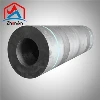

Low-carbon ferrochrome (LCFeCr) is an iron-chromium alloy with distinct physical characteristics that make it essential in metallurgical applications. Below are its key physical properties:
1. Mechanical Properties
Density: ~7.1–7.3 g/cm³ (slightly higher than pure iron).
Melting Point: 1,500–1,550°C, making it suitable for high-temperature processes like steelmaking.
Hardness: Moderate hardness due to chromium content, but remains ductile for processing.
Ductility: Exhibits good malleability and can be rolled or forged into sheets or billets.
2. Thermal Properties
Thermal Conductivity: High thermal conductivity (~25–30 W/m·K), aiding heat dissipation in alloys.
Thermal Expansion Coefficient: ~12–14 × 10⁻⁶/°C (similar to stainless steel), ensuring dimensional stability under temperature fluctuations.
High-Temperature Stability: Resists oxidation and scaling at elevated temperatures (critical for furnace linings or high-grade steels).
3. Electrical Properties
Electrical Conductivity: Moderate electrical conductivity, lower than pure metals but sufficient for alloying purposes.
4. Surface Characteristics
Oxidation Resistance: Forms a protective chromium oxide (Cr₂O₃) layer when exposed to air, preventing further corrosion.
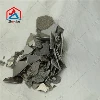
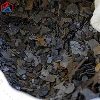
Luster: Metallic silver-gray appearance with a smooth surface when processed.
5. Magnetic Properties
Ferromagnetic: Retains magnetic properties below its Curie temperature (~750°C), useful in magnetic applications.
6. Thermal Stability
Retains structural integrity under rapid heating/cooling cycles, reducing warping or cracking risks in steel manufacturing.