



Last Updated: August 13, 2026
Vanadium pentoxide (V₂O₅) is the highest common oxide of vanadium, with vanadium in the +5 oxidation state. Its redox activity, melting behavior, physical form and chemical reactivity determine how it performs in vanadium metallurgy, oxidation catalysts and vanadium-based chemical processes.
For industrial users, V₂O₅ should not be evaluated by purity alone. Melting point, particle form, water solubility, oxidation-reduction behavior and impurity levels can all influence processing and downstream use.
1. Chemical Composition and Oxidation State
Vanadium pentoxide has the chemical formula V₂O₅, with vanadium in the +5 oxidation state. This high oxidation state makes V₂O₅ an important oxidizing and redox-active vanadium compound.
Its oxidation state is particularly important in processes where vanadium repeatedly changes valence. Instead of being chemically inert, V₂O₅ can participate in oxidation-reduction cycles and can be converted into lower-valence vanadium species under reducing conditions.
In metallurgical processing, this is also why V₂O₅ can serve as a vanadium-bearing raw material for ferrovanadium and other vanadium alloy production. The oxide is reduced during processing rather than remaining chemically unchanged in the final alloy.
2. Oxidation-Reduction Behavior
Redox activity is one of the most important chemical properties of vanadium pentoxide. Vanadium can move between different oxidation states during a reaction, allowing V₂O₅-based systems to participate repeatedly in oxidation and reduction cycles.
A well-known example is the catalytic oxidation of sulfur dioxide to sulfur trioxide during sulfuric acid production. In this type of process, vanadium species undergo reversible changes in oxidation state as oxygen is transferred through the catalytic cycle.
This ability to participate in reversible redox reactions is also relevant to other catalytic and electrochemical applications. However, the actual reaction rate and stability depend on temperature, supporting materials, reactant composition and process conditions rather than on V₂O₅ alone.
3. Melting Point and Thermal Behavior
Vanadium pentoxide melts at approximately 690°C, so it should not simply be described as an oxide that remains structurally unchanged at all industrial high temperatures.
Below its melting point, V₂O₅ can remain a solid crystalline oxide under suitable conditions. As temperature increases, however, its physical state and chemical behavior can change significantly.
This distinction is especially important in metallurgy. Steelmaking and ferroalloy production can involve temperatures far above the V₂O₅ melting point. Under these conditions, vanadium pentoxide is used as a reactive vanadium-bearing material and may be melted, reduced or chemically transformed rather than retaining its original crystalline structure.
| Property | Reference Value | Practical Meaning |
|---|---|---|
| Formula | V₂O₅ | Vanadium is present mainly in the +5 oxidation state |
| Molecular Weight | About 181.9 g/mol | Used for chemical and process calculations |
| Melting Point | About 690°C | V₂O₅ can become molten well below typical steelmaking temperatures |
| Specific Gravity | About 3.36 | Relevant to material handling and bulk-processing calculations |
| Water Solubility | About 0.8% | Limited water solubility under normal reference conditions |
Property Note: Physical-property values are reference values for V₂O₅. Actual industrial behavior can vary with purity, particle form, temperature and process conditions.
4. Physical Appearance and Crystal Structure
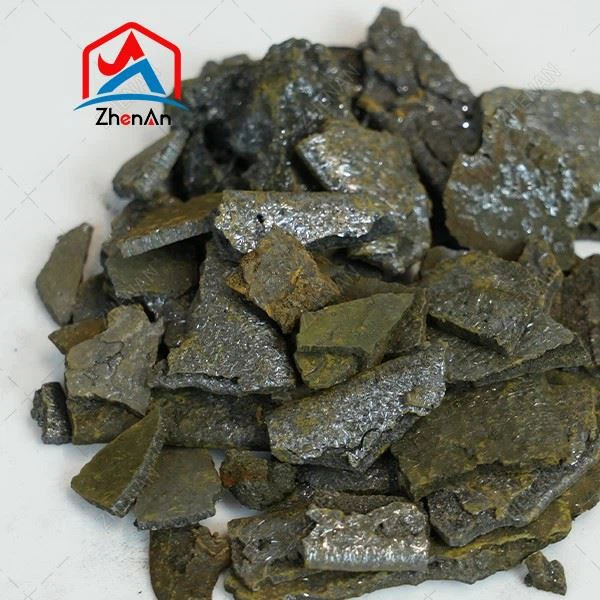
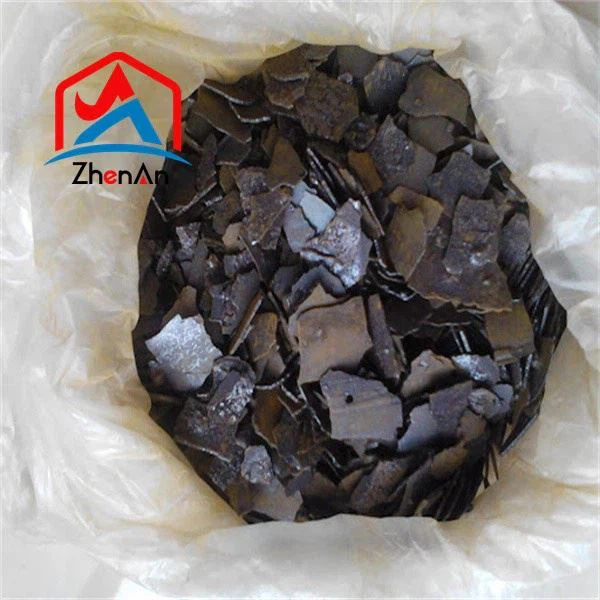
Vanadium pentoxide can appear as yellow-orange to reddish-brown material, while some industrial forms may appear darker depending on particle form, purity and processing history.
V₂O₅ has a layered crystalline structure. This structure is relevant to its redox chemistry because oxygen and vanadium sites participate in chemical reactions and changes in oxidation state.
Commercial V₂O₅ can be supplied in different physical forms, including flakes and powder. Physical form does not change the basic chemical formula, but it can affect surface area, dust generation, reaction rate, feeding and handling behavior.
Fine powder generally provides more available surface area than large flakes, while flakes may generate less airborne dust during routine material handling. The appropriate form therefore depends on the downstream process rather than on purity alone.
5. Solubility and Chemical Reactivity
Vanadium pentoxide has limited solubility in water, so it should not be described as a freely water-soluble vanadium compound.
Its behavior changes significantly with solution chemistry. V₂O₅ can react or dissolve under sufficiently acidic or alkaline conditions, producing different dissolved vanadium species depending on pH, concentration and temperature.
In alkaline systems, vanadate species can form, while acidic processing can also be used to convert or dissolve vanadium-bearing materials under controlled conditions. For this reason, the phrase "reacts readily with acids and alkaline solutions" is too broad unless the actual reagent concentration and process conditions are specified.
This pH-dependent behavior is important in hydrometallurgy and vanadium chemical processing because V₂O₅ may serve as an intermediate for preparing other vanadium compounds or solutions.
6. Role in Vanadium Redox Flow Battery Electrolyte Production
Vanadium pentoxide can be used as a vanadium source for preparing vanadium electrolyte, but solid V₂O₅ itself is not the working electrolyte in a vanadium redox flow battery.
During electrolyte preparation, vanadium-containing raw materials are converted into dissolved vanadium species in an acidic electrolyte system. The required oxidation state and concentration are then adjusted according to the battery chemistry.
For this application, impurity control is especially important because metallic and ionic contaminants can influence electrolyte stability, electrochemical behavior and long-term battery performance.
The suitable V₂O₅ specification therefore depends on the electrolyte manufacturer's process rather than simply on choosing the highest nominal V₂O₅ purity.
7. Why V₂O₅ Properties Matter in Metallurgy
In metallurgy, vanadium pentoxide is important primarily as a concentrated vanadium-bearing raw material rather than as a material that must retain its original oxide structure.
V₂O₅ can be reduced to introduce vanadium into ferrovanadium or other vanadium-bearing alloy systems. The +5 oxidation state, oxygen content and chemical purity influence the reduction requirement and processing conditions.
For ferrovanadium production, the relevant purchasing factors can include V₂O₅ content, Fe, Si, P, S and other impurity limits as well as particle form and batch consistency.
This is different from catalyst or battery applications, where surface behavior or solution purity may be more important than reduction behavior.
Why These Properties Matter in Industry
The value of V₂O₅ comes from the combination of its high vanadium oxidation state, redox activity, defined melting behavior and ability to be chemically converted into other vanadium forms.
| Application | Relevant V₂O₅ Property | Why It Matters |
|---|---|---|
| Ferrovanadium Production | High vanadium content and reducibility | Provides a concentrated vanadium source for alloy production |
| Oxidation Catalysts | Reversible redox behavior | Allows vanadium species to participate repeatedly in oxidation-reduction cycles |
| Vanadium Electrolyte Preparation | Chemical convertibility and purity | Allows V₂O₅ to serve as a vanadium source for solution preparation |
| Chemical Processing | pH-dependent reactivity | Supports conversion into other vanadium compounds and solution species |
For industrial purchasing, the appropriate V₂O₅ grade should therefore be selected according to the actual process requirement, impurity limits, physical form and quality documentation rather than by purity percentage alone.
What Should Buyers Check When Purchasing Vanadium Pentoxide?
Buyers should match V₂O₅ chemistry and physical form to the intended downstream process.
For metallurgical use, the focus may be on V₂O₅ content, impurity limits and reduction behavior. Catalyst applications may require more attention to physical form and consistency, while electrolyte preparation can require tighter control of specific trace contaminants.
| Purchase Item | What to Confirm |
|---|---|
| V₂O₅ Content | Required minimum purity for the downstream process |
| Impurities | Elements that may interfere with metallurgy, catalysis or electrolyte preparation |
| Physical Form | Flake, powder or another agreed form |
| Particle Size | Size or distribution appropriate for feeding, reaction and handling |
| Batch COA | Actual batch chemistry linked to the supplied shipment |
FAQ About Vanadium Pentoxide Properties
What oxidation state does vanadium have in V₂O₅?
Vanadium is in the +5 oxidation state in vanadium pentoxide. This is the highest common oxidation state of vanadium and is important to the redox behavior of V₂O₅.
What is the melting point of vanadium pentoxide?
Vanadium pentoxide melts at approximately 690°C. This means V₂O₅ can become molten well below typical steelmaking temperatures and should not be described as remaining structurally unchanged under all high-temperature industrial conditions.
Is vanadium pentoxide soluble in water?
Only to a limited extent. Reference data indicate water solubility of roughly 0.8% under standard reference conditions. Solubility and reaction behavior change with solution chemistry and temperature.
What color is vanadium pentoxide?
V₂O₅ is commonly associated with yellow-orange to reddish-brown material, although some industrial particulate or flake forms can appear darker depending on physical condition and processing history.
Why is V₂O₅ used as a catalyst?
Its ability to participate in reversible oxidation-reduction cycles makes vanadium pentoxide useful in oxidation-catalyst systems, including sulfur dioxide oxidation.
Is V₂O₅ used directly as vanadium battery electrolyte?
No. V₂O₅ can be used as a vanadium-bearing raw material for electrolyte preparation, but the working battery electrolyte contains dissolved vanadium species in an acidic solution rather than solid vanadium pentoxide.
Need Vanadium Pentoxide for Industrial Use?
Tell us your required V₂O₅ purity, impurity limits, physical form, particle size, quantity and destination port. We can confirm available specifications, packing and batch COA before quotation.
Request V₂O₅ Quote










