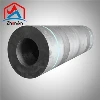

What Are Ceramic Fiber Products
Ceramic fiber products refer to industrial products made from ceramic fibers as raw materials. They combine light weight, high temperature resistance, good thermal stability, low thermal conductivity, low specific heat, and resistance to mechanical vibration. Because of this combination, they are an excellent refractory material for high-temperature, high-pressure, and easily worn environments. Ceramic fiber is a fibrous lightweight refractory material, which makes it convenient to handle and install compared with dense brick linings.
Key Properties
The main advantages of ceramic fiber products include light weight, high temperature resistance, small heat capacity, good insulation performance, high-temperature insulation performance, and non-toxicity. Low thermal conductivity reduces heat loss through the furnace wall, while low specific heat means the lining heats up and cools down quickly, shortening cycle times in batch processes. Resistance to mechanical vibration makes the fiber suitable for equipment that experiences thermal cycling and mechanical stress.
Energy-Saving Benefits
With the continuous rise in global energy prices, energy conservation has become a central concern for industry. Ceramic fiber products can save energy by roughly 10 to 30 percent compared with traditional refractory materials such as insulation bricks and castable materials. Because the fiber lining has low heat storage and low heat loss, furnaces reach operating temperature faster and maintain it with less fuel input. This energy advantage is a major reason for the wide adoption of ceramic fibers in high-temperature process industries.
Main Application Areas
The application scope of ceramic fiber products mainly includes the processing industry and the heat treatment industry, covering industrial kilns, heat treatment equipment, and other thermal equipment. The material has been widely used in machinery, metallurgy, chemical engineering, petroleum, ceramics, glass, electronics, and related industries. In the processing and heat treatment industries, consumption accounts for a large share of ceramic fiber production, followed by the steel industry, which is another major consumer of the material.
Product Forms and Selection
Ceramic fiber is available in several forms, including blankets, boards, modules, paper, and bulk fiber, and can be combined with binders and rigidizers for specific applications. When selecting a product, buyers should consider the continuous service temperature, thermal conductivity at operating temperature, density, and the chemical environment. Thicker fiber linings reduce heat loss further, while higher density improves erosion resistance in high-velocity gas zones. The fiber grade should always be matched to the maximum temperature of the process.
FAQ
Q: What are ceramic fiber products?
A: They are industrial products made from ceramic fibers, offering light weight, high temperature resistance, low thermal conductivity, low specific heat, and resistance to mechanical vibration.
Q: How much energy can ceramic fiber save?
A: Compared with traditional refractory materials such as insulation bricks and castable materials, ceramic fiber linings can save roughly 10 to 30 percent of energy.
Q: Where are ceramic fiber products mainly used?
A: They are used in industrial kilns, heat treatment equipment, and other thermal equipment in machinery, metallurgy, chemical, petroleum, ceramics, glass, and electronics industries.
Q: Why is low specific heat an advantage?
A: Low specific heat means the lining stores less heat, so furnaces heat up and cool down faster, reducing cycle time and energy consumption in batch processes.
Q: What product forms are available?
A: Ceramic fiber is available as blankets, boards, modules, paper, and bulk fiber, with options for binders and rigidizers depending on the application.
Q: What should be considered when selecting ceramic fiber?
A: Continuous service temperature, thermal conductivity, density, chemical environment, and the mechanical conditions of the equipment should all be matched to the fiber grade.