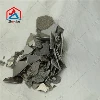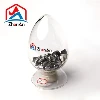

Choosing between silicon carbide 88 (SiC 88) and silicon carbide 90 (SiC 90) is not just about purity-it's about understanding how quality affects real industrial performance.
In practice, many production problems in steelmaking and foundry applications are caused by inconsistent material quality rather than process issues. Knowing how to evaluate silicon carbide quality can help buyers avoid risks and ensure stable results.
Why Quality Evaluation Matters
Silicon carbide is widely used as a deoxidizer and carbon additive, directly influencing:
- carbon recovery
- slag formation
- reaction stability
- final product quality
Even small differences between SiC 88 and SiC 90 can lead to noticeable changes in performance, especially in high-temperature processes.
If you are new to these applications, it helps to understand how silicon carbide works in metallurgical environments and why quality consistency is critical.
Silicon Carbide 88 vs 90: What's the Real Difference
The main difference lies in SiC content and impurity levels.
- SiC 88: ~88% purity, higher impurities, lower cost
- SiC 90: ~90% purity, lower impurities, more stable
While the difference seems small, it can significantly impact:
- reaction efficiency
- carbon absorption
- slag behavior
In many real-world cases, plants start with SiC 88 for cost reasons but switch to SiC 90 when they need more consistent performance.
Key Factors to Evaluate Silicon Carbide Quality
1. SiC Content (Purity Level)
Purity is the first indicator of quality.
Common grades include:
- SiC 88
- SiC 90
- SiC 98
Higher purity usually means better performance, but not always better value. The right choice depends on your production needs.
If you're comparing grades, understanding how different purity levels behave in applications like steelmaking or casting can help you make better decisions.
2. Impurity Levels (Most Critical Factor)
Impurities such as Fe₂O₃ and Al₂O₃ play a major role in performance.
In practice, higher impurity levels may cause:
- unstable carbon recovery
- increased slag formation
- inconsistent reaction performance
In our experience, impurity control is often more important than small differences in SiC content.
3. Particle Size Distribution
Particle size consistency is often underestimated.
Uniform size ensures:
- stable reaction speed
- predictable performance
- better process control
Inconsistent particle size is one of the most common causes of unstable production results.
4. Batch Consistency
Even within the same grade, performance can vary between batches.
Reliable suppliers maintain:
- consistent composition
- stable particle size
- uniform quality across shipments
This is why experienced buyers prioritize consistency over nominal specifications.
5. Moisture and Storage Conditions
Moisture can affect material performance, especially in bulk shipments.
Improper storage or packaging may lead to:
- reduced efficiency
- handling issues
- performance variation
Understanding storage conditions is part of evaluating overall quality.
How to Test Silicon Carbide Quality
Step 1: Check Chemical Composition
Request reports showing:
- SiC content
- impurity levels
- trace elements
Step 2: Review Test Reports
Reliable suppliers provide:
- lab analysis
- particle size data
- quality certificates
Step 3: Evaluate Samples
Testing samples in your actual production environment is essential.
Step 4: Start with Trial Orders
In practice, many buyers place small trial orders before committing to bulk purchases.
Common Problems Caused by Poor Quality
Unstable Carbon Recovery
Often linked to impurity levels and inconsistent material.
Excessive Slag Formation
Usually caused by lower-quality SiC with higher impurities.
Inconsistent Production Results
Typically due to batch variation.
In many cases, these issues are material-related rather than process-related.
How This Applies to Real Applications
In foundry applications, SiC 88 is commonly used for cost-effective production, while higher grades are selected when stability is more important.
In steelmaking, the choice between SiC 88 and 90 often depends on carbon control requirements and process sensitivity.
Understanding how each grade performs in specific scenarios helps ensure better results.
How to Choose a Reliable Supplier
Quality evaluation is closely tied to supplier selection.
A reliable supplier should provide:
- consistent batch quality
- clear test reports
- stable supply
- good communication
In practice, supplier reliability often matters more than price.
If you're sourcing materials internationally, it's important to evaluate suppliers carefully and understand how quality, pricing, and consistency affect long-term performance.
Practical Recommendation
Based on industry practices:
- Use SiC 88 for cost-sensitive applications
- Use SiC 90 for higher stability and quality
- Focus on impurity control and consistency
- Always test samples before bulk orders
The right choice depends on your production requirements, not just the grade.
Frequently Asked Questions
Q:What is the difference between SiC 88 and SiC 90?
A:SiC 90 has higher purity and lower impurities, resulting in more stable performance.
Q:Is higher purity always better?
A:Not always. The best choice depends on application requirements and cost considerations.
Q:What is the most important quality factor?
A:Impurity levels and batch consistency are often more important than purity alone.
Q:How can I test silicon carbide quality?
A:Request reports, test samples, and evaluate performance in real conditions.
Q:Why is particle size important?
A:It affects reaction efficiency and consistency in industrial processes.
Looking for reliable silicon carbide with stable quality?
We provide:
- Consistent SiC 88 and SiC 90 supply
- Strict impurity control
- Stable batch quality
- Full test reports
Contact us today to request samples and quotation

ZHEN AN INTERNATIONAL CO.,LIMITED
ZhenAn is an enterprise specializing in Metallurgical & Refractory products , integrating production, processing, sales and importing and exporting business.
We are focused on building a dedicated team of professionals across the globe. At ZhenAn, we are committed to provide complete solutions by delivering the "right quality & quantity" to suite our customer's processes.
Annual production and sales more than 150,000 tons. Our factory covering an area of 30,000 square meters, it has a complete set of modern production equipment, two large production bases including hydro-metallurgy, two key laboratories and a metallurgical materials testing center with dozens of senior researchers.