
Why Ferrovanadium Matters for Energy Storage
The shift toward renewable energy and grid modernization has increased interest in long-duration energy storage. Vanadium redox flow batteries (VRFBs) store energy in vanadium electrolytes and are recognised for long cycle life, deep discharge capability and scalability. Ferrovanadium (FeV) is the primary industrial source of vanadium used to produce electrolyte, which makes it an important upstream material for this technology.
How a Vanadium Redox Flow Battery Works
In a VRFB, energy is stored in liquid electrolytes containing vanadium ions in different oxidation states, which circulate through the cell stack during charge and discharge. Because the active material is dissolved rather than stored in the electrode, capacity can be increased by adding more electrolyte, while power is determined by the stack size. This design supports long-duration discharge and repeated cycling, which are attractive for wind and solar farm integration and for grid balancing.
FeV Grades for Electrolyte Production
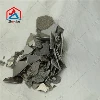
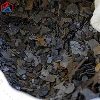
Ferrovanadium for energy applications is supplied in higher-vanadium grades, commonly in the FeV75 to FeV80 range, because electrolyte production benefits from a concentrated and consistent vanadium input. Purity and consistency matter: impurities carried into the electrolyte can affect its electrochemical performance, so the vanadium content, impurity limits and batch-to-batch stability should be specified carefully. As with all ferroalloys, the actual batch chemistry should be confirmed on the COA rather than assumed from the grade name.
Grid Stability and Power Applications
Beyond electrolyte production, ferrovanadium contributes to power-related infrastructure through vanadium-alloyed steels used in transformers, generators and structural components where strength and fatigue resistance are required. Vanadium microalloying improves the mechanical properties of the high-strength steels used in transmission towers, substations and power plant equipment. These applications follow the same selection logic as structural steel: the required vanadium addition and impurity tolerance determine the FeV grade.
Emerging Directions
Research continues into vanadium-based materials for emerging energy technologies, including catalyst applications in hydrogen production. These directions are at different stages of development, and procurement decisions should be based on demonstrated process requirements rather than projections. For industrial buyers, the practical questions are the same as for any FeV order: grade, vanadium range, impurity limits, particle size and batch documentation.
FAQ
Q: Why is ferrovanadium used for energy storage?
A: It is the main industrial source of vanadium used to produce the electrolyte for vanadium redox flow batteries.
Q: What is the advantage of a VRFB?
A: Long cycle life, deep discharge and scalable energy capacity because the active vanadium is stored in liquid electrolyte.
Q: Which FeV grade is used for electrolyte?
A: Higher-vanadium grades such as FeV75 to FeV80 are commonly preferred for a concentrated, consistent vanadium input.
Q: Does purity affect battery performance?
A: Yes, impurities carried into the electrolyte can affect its electrochemical behaviour, so purity and batch consistency should be specified.
Q: Where else is ferrovanadium used in power systems?
A> In vanadium-alloyed structural steels for transformers, substations and power plant equipment, where strength and fatigue resistance are required.