
Ferrosilicon 75 (FeSi 75) is a widely traded ferroalloy used mainly in steelmaking and foundry applications. Buyers searching "ferrosilicon 75 specification" typically want a structured overview of composition items, physical form, common sizes, and documentation used in international trade. This page summarizes the most commonly referenced specification elements and the checks buyers should make before confirming orders.
1) Typical Chemical Composition (Trade Reference)
Actual limits vary by producer and contract, so buyers should confirm the supplier's Certificate of Analysis (COA) for each lot.
| Item | Typical Requirement (Reference) |
|---|---|
| Silicon (Si) | 75 grade (by contract range) |
| Carbon (C) | Controlled (by contract) |
| Sulfur (S) | Controlled (by contract) |
| Phosphorus (P) | Controlled (by contract) |
| Aluminum (Al) | By agreement (standard vs low-Al) |
2) Physical Form and Handling (Practical Reference)
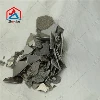
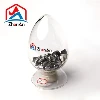
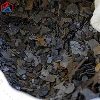
Appearance: metallic gray/silver, brittle
Forms: lumps, granules, fines
Handling: keep dry, avoid moisture contamination
3) Common Sizes in Trade
Lumps: 10–50 mm / 50–100 mm (bulk addition)
Granules/fines: 0–3 mm / 3–10 mm (special dosing needs)
4) Standards and Documentation
Even when contracts are "commercial spec," buyers usually request:
COA per batch (Si, C, S, P, Al as required)
batch traceability
packing list, invoice, bill of lading, origin documents
5) Applications (High-Level)
Steelmaking: deoxidation and alloying
Foundry: supporting stable casting performance
Other metallurgical uses requiring controlled silicon addition
6) Internal Link Suggestion (To Your Price News)
Add a sentence like: "See our latest Ferrosilicon 75 FOB Tianjin price update for current market indications."
FAQ (Ferrosilicon 75 Specification)
1) What does "ferrosilicon 75" mean?
It generally refers to ferrosilicon sold as a "75 grade," meaning silicon content is around 75% within a contract range, with impurities controlled by specification.
2) What impurities should be controlled in ferrosilicon 75?
Buyers typically control carbon, sulfur, phosphorus, and often aluminum, because these affect melting behavior, yield, and downstream steel/foundry performance.
3) What particle size is common for ferrosilicon 75 exports?
Lump sizes such as 10–50 mm or 50–100 mm are common for bulk addition. Smaller sizes are used when dosing control is needed.
4) What documents should suppliers provide for ferrosilicon 75?
A batch COA, packing list, invoice, bill of lading, and traceability information are commonly requested for international shipments.
5) Is ferrosilicon 75 used for steelmaking or foundry?
Both. It is widely used for steel deoxidation/alloying and for foundry use where stable silicon addition improves casting consistency.
6) Why does ferrosilicon 75 pricing differ between suppliers?
Differences often come from chemical limits, aluminum control, particle sizing, packaging quality, shipment readiness, and supplier consistency-not only the grade name.


Company Background
ZHEN AN INTERNATIONAL CO., LIMITED is located in Anyang City, Henan Province, China, supplying ferrosilicon, along with silicon metal, calcium silicon products, and electrolytic manganese flakes, to industrial customers worldwide. The company focuses on consistent quality, export-ready packaging, and reliable shipment coordination.