

Why Ferro Vanadium Prices Move
Ferro vanadium (FeV) is a small-volume alloy with an outsized influence on steel cost. Vanadium is added at very low levels, typically a few hundred grams per tonne of steel, so even modest changes in the alloy price shift the cost base of every high-strength heat. Prices are driven by three interacting forces: the availability of vanadium-bearing slag and vanadium pentoxide, the pace of steel output in Asia, and a new and rapidly growing demand stream from energy storage.
Because supply is concentrated in a handful of countries and demand is spread across thousands of steel plants, FeV is a market where a single disruption - a rail strike, an emissions inspection campaign or a power price spike - can move spot quotations within days.
The Supply Side: Concentrated Production
Roughly 90% of global vanadium output originates in China and South Africa, so supply diversification is structurally limited. Production comes from two main routes: vanadium-bearing titanomagnetite ore, which yields vanadium slag as a co-product of steelmaking, and primary vanadium deposits, where vanadium pentoxide is recovered directly.
Co-product supply tracks steel output. When Chinese steel production was cut by about 30 million tonnes in 2021, vanadium slag availability fell, FeV supply tightened and prices rose by roughly 25% year on year.
Primary projects are slow. Mine expansions face permitting, financing and infrastructure delays that can run into years, so they cannot respond quickly to a price spike.
Logistics risk is real. Rail disruptions in South Africa in 2023 blocked a large share of that country's vanadium exports, reported at around 40%, and forced buyers into alternative supply routes at premium freight rates.
Demand Drivers: Steel, Energy Storage and Aerospace
Steel remains the anchor of consumption. High-strength low-alloy (HSLA) steels account for roughly 45% of FeV use, because vanadium provides precipitation strengthening through vanadium carbonitride without the toughness penalty of higher carbon. Growth in automotive lightweighting, construction and pipelines supports steady demand in this segment, with Asia-Pacific taking about a 60% share of global consumption and Chinese infrastructure and electric vehicle policies driving consumption growth of roughly 6% a year.
The second driver is energy storage. Vanadium redox flow batteries (VRFBs) use vanadium electrolyte, and this application now absorbs about 10% of high-purity FeV demand. Analysts project continued double-digit growth in VRFB installations, with one widely cited estimate of a 42% compound annual growth rate through 2030. Because VRFB electrolyte requires high-purity vanadium, this demand competes directly with premium metallurgical grades.
Aerospace and tooling add a smaller but price-insensitive requirement. Vanadium-bearing alloys are used in turbine components, structural parts, spring steels and tool steels, where qualification cycles are long and material substitution is rare.
Regional Price Benchmarks
| Market | Reference level reported | Observed driver |
|---|---|---|
| Europe | About 26.3 USD/kg in Q4 2023 easing to about 25.75 USD/kg in Q4 2024 | Oversupply against weak construction demand |
| North America | Roughly 15.25 USD/lb in 2025, about 9% higher | Geopolitical uncertainty and import dependence |
| China | Approximately 14.5-15.1 USD/kg cash | Resilient domestic steel and storage demand |
Quotation bases differ between regions: North American assessments are commonly published per pound of contained vanadium while European and Chinese assessments are published per kilogram, and conversion is required before any comparison. European producers also face a cost structure problem - smelters saw electricity costs rise by about 140% in 2022, regional output fell by roughly 17% and buyers turned to imports, adding a logistics premium estimated at 8-10%.
Regulatory cost is the third lever. Emissions compliance programmes raise producer costs by an estimated 12-15%, and that cost is eventually reflected in the offer level rather than absorbed by the smelter.
Specification and Quality Control
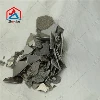
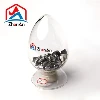
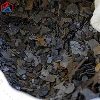
Standard traded grades include FeV50 and FeV80, with vanadium contents of about 50% and 78-82% respectively, supplied as crushed lump or powder. Beyond these grades, producers are frequently able to adjust vanadium content across a 35-85% window to suit a specific melt shop, but every non-standard chemistry needs a defined analysis window and a suitable order quantity.
Buyers should verify the following on each lot:
Vanadium content by certificate of analysis, with the testing method named.
Impurity levels - sulphur and phosphorus are normally held below 0.05% for metallurgical grades.
Aluminium and silicon content, which affect recovery and steel cleanliness.
Particle size distribution, especially for wire feeding, where oversize particles block the feeder.
Process control under a certified quality management system (ISO 9001) supports purity consistency of about plus or minus 0.1% on vanadium content, which is what allows a melt shop to fix its addition rate instead of re-calculating for every delivery.
FAQ
Q: What is ferro vanadium used for?
Ferro vanadium is used to add vanadium to steel. Its main applications are HSLA steels for automotive, construction and pipelines, spring and tool steels, aerospace alloys, and the electrolyte supply chain for vanadium redox flow batteries.
Q: What is the difference between FeV50 and FeV80?
Both are standard grades; FeV50 contains about 50% vanadium and FeV80 about 78-82%. The higher grade introduces less carrier material per unit of vanadium and is preferred where residual aluminium and silicon must stay low.
Q: How are ferro vanadium prices quoted?
Assessments are published per kilogram or per pound of contained vanadium, depending on the region. Always confirm the basis and the delivery terms before comparing two offers, because the unit and the delivery basis are not interchangeable.
Q: Why did European prices weaken while North American prices rose?
Europe worked through oversupply created by weak construction demand and high energy costs, while North America remained dependent on imports and faced tighter availability, so the two markets moved in opposite directions in the same period.
Q: Does vanadium demand from flow batteries affect steel grades?
Yes, indirectly. Flow battery electrolyte requires high-purity vanadium, so growth in that segment diverts purer material away from metallurgical supply and can tighten the market for standard grades.
Q: What should a procurement team monitor?
Chinese steel output and slag availability, South African export logistics, European power prices, vanadium pentoxide quotations, and VRFB installation announcements are the five signals that most reliably precede a change in ferro vanadium price.