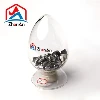


Q1: What do "99.7%" and "99.9%" mean for EMM flakes?
A: They refer to the minimum manganese (Mn) purity in electrolytic manganese metal flakes.
- 99.7% means Mn content is typically ≥ 99.70%.
- 99.9% means Mn content is typically ≥ 99.90%.
The difference looks small, but it usually comes with tighter impurity control in the 99.9% grade.
Q2: Is the real difference only 0.2% Mn?
A: Not really. In procurement, the main value of 99.9% is often the lower and more consistent impurities, not only the Mn number. Many buyers choose 99.9% when they need stricter control of elements that can impact downstream quality.
Q3: Which impurities matter most when comparing 99.7% vs 99.9%?
A: It depends on your application, but buyers commonly compare:
- Fe (iron): can affect alloy cleanliness and performance
- C (carbon) and S (sulfur): important for chemistry control in certain metallurgical uses
- P (phosphorus): often restricted for quality stability
- Optional controls: Si, Ni, Cu, Pb, As (requested when end-users have strict limits)
A 99.9% offer typically comes with lower max limits or tighter ranges on these items.
Q4: Which applications usually use 99.7% EMM flakes?
A: 99.7% is widely used when the process is tolerant to slightly higher impurity levels and the buyer is optimizing cost-performance. It is common for many general alloying and metallurgical additions where the key requirement is stable Mn content and practical impurity limits.
Q5: Which applications usually prefer 99.9% EMM flakes?
A: 99.9% is often selected when the buyer needs higher purity and tighter impurity control, such as:
- More sensitive alloy systems
- Strict downstream QC requirements
- Higher-end customers that require narrower impurity maxima
- In these cases, the cost premium can be justified by reduced quality risk.
Q6: How should buyers decide between 99.7% and 99.9%?
A: Use a simple decision rule:
- Choose 99.7% if your process accepts standard impurity limits and you want better cost efficiency.
-
Choose 99.9% if your product or customer specification demands tighter impurity maxima and you want lower risk of contamination.
If you are unsure, start by listing your required impurity maxima (Fe, C, S, P and any optional elements) and compare which grade consistently meets them.
Q7: What should I write in the purchase specification to avoid disputes?
A: Don't rely only on "99.7" or "99.9." Include:
- Mn minimum (99.70% or 99.90%)
- Impurity maxima for Fe, C, S, P (plus optional elements if required)
- Physical requirements (flakes form, size/thickness target, max fines)
- Packaging (moisture protection, bag type, labeling)
- Inspection (COA per lot, sampling method, dispute rule)

FAQ
Q1: Is 99.9% always better than 99.7%?
A: Not always. 99.9% can reduce impurity risk, but if your process does not need tighter limits, 99.7% may deliver better cost-performance.
Q2: Why is 99.9% usually more expensive?
A: Higher purity typically requires stricter production control, tighter sorting/quality management, and more consistent impurity limits, which raises cost.
Q3: Can I replace 99.9% with 99.7% to save cost?
A: Only if your downstream specification allows it. Confirm impurity maxima and trial performance before switching.
Q4: What is the biggest mistake when buying EMM flakes by purity?
A: Buying based only on "Mn %" and not defining impurity maxima, size/fines, and inspection terms.
Why Choose Us
- Stable supply for EMM flakes with consistent batch control
- Flexible impurity limits and packaging options based on buyer needs
- Clear COA support and defined inspection/sampling terms
- Export-ready documentation and reliable shipment execution
- Competitive pricing and responsive service for repeat orders
About Our Company
We are a factory-direct supplier with stable monthly capacity and an approximately 30,000 m² production footprint. We export to 100+ countries and regions and serve 5,000+ customers worldwide. Our market-savvy sales team supplies ferrosilicon, silicon metal, and other metallurgical products with consistent quality and reliable delivery.