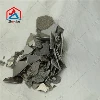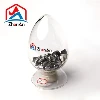

Electrolytic Manganese Plate is produced through electrolytic deposition and supplied in solid plate form. Electrolytic Manganese Flake is typically produced by further processing manganese plates into thinner, irregular flakes.
While both forms provide high-purity manganese, the choice between plate and flake affects melting behavior, dosing accuracy, handling efficiency, and process control.

Key Differences Between Electrolytic Manganese Plate and Flake
1. How Does Physical Form Affect Industrial Use?
Q: What is the main difference in physical form?
A: Electrolytic Manganese Plate is supplied as solid sheets or plates, while Electrolytic Manganese Flake consists of thinner, broken pieces with higher surface area.
Q: Why does this matter in production?
A: Physical form directly influences melting speed, oxidation exposure, and material handling, especially in high-temperature processes.
2. Which Offers Better Melting Performance?
Q: How does Electrolytic Manganese Plate behave during melting?
A: Electrolytic Manganese Plate generally melts more slowly but offers stable and controlled dissolution, making it suitable for processes requiring gradual addition.
Q: How does Electrolytic Manganese Flake compare?
A: Electrolytic Manganese Flake melts faster due to its higher surface area, enabling quicker dissolution and more responsive composition adjustment.

3. Does Form Affect Dosing Accuracy?
Q: Which form allows more precise dosing?
A: Electrolytic Manganese Flake typically allows more accurate small-batch dosing, especially in alloy production.
Q: When is Electrolytic Manganese Plate preferred?
A: Plate form is often preferred in large-scale or continuous processes where additions are made in larger, controlled quantities.
4. How Do Plate and Flake Compare in Oxidation Risk?
Q: Is oxidation risk different between the two forms?
A: Yes. Electrolytic Manganese Flake, with higher surface area, is generally more sensitive to oxidation than plate form.
Q: How is this managed in practice?
A: Proper packaging, storage conditions, and controlled handling are critical for both forms, with extra attention required for flake materials.

Application-Based Selection: Plate vs Flake
5. Which Applications Prefer Electrolytic Manganese Plate?
Q: Where is Electrolytic Manganese Plate commonly used?
A: Electrolytic Manganese Plate is often used in steelmaking, bulk alloy production, and applications requiring stable, gradual manganese addition.
Q: Why is plate form suitable here?
A: Its solid structure supports process stability and lower oxidation exposure during handling.
6. Which Applications Prefer Electrolytic Manganese Flake?
Q: Where is Electrolytic Manganese Flake more commonly used?
A: Electrolytic Manganese Flake is widely used in specialty alloys, welding materials, and applications requiring precise composition control.
Q: What makes flake form advantageous?
A: Faster melting and easier dosing allow fine-tuned control of manganese addition, especially in smaller or more complex systems.
Practical Factors Buyers Should Consider
Q: Is chemical purity the same for both forms?
A: When produced correctly, both Electrolytic Manganese Plate and Flake can meet high-purity specifications, but consistency depends on production control.
Q: What non-chemical factors influence selection?
A: Buyers should consider:
- Production scale and process type
- Required dosing accuracy
- Handling and storage conditions
- Oxidation sensitivity
- Cost-performance balance
About Our Electrolytic Manganese Flake Supply
Our company supplies both Electrolytic Manganese Plate and Electrolytic Manganese Flake, supporting a wide range of industrial applications. We focus on controlled production, consistent quality, and application-oriented supply, rather than offering a one-size-fits-all solution.
We operate with an integrated manufacturing and export model, covering production, processing, quality inspection, and international logistics. This allows us to support customers in selecting the most suitable manganese form for their specific processes.

How Do We Help Customers Choose Between Plate and Flake?
Q: How do we support material selection?[Contact Us]
A: We evaluate application requirements, melting methods, and process conditions to help customers determine whether Electrolytic Manganese Plate or Flake is more suitable.
Q: Can we provide technical guidance before purchasing?
A: Yes. We offer technical communication and specification support to help customers make informed and practical material choices.
For application-specific recommendations, contact us for support.
Supporting Long-Term Supply and Consistency
Q: Can we supply both forms consistently?
A: Yes. Our production planning ensures stable availability of both plate and flake forms, with controlled chemical composition.
Q: How do we ensure reliable delivery?
A: Through standardized packaging, export-ready logistics, and predictable lead times, we support long-term industrial supply programs.
If you are evaluating long-term sourcing options, feel free to contact us for supply information.
Conclusion
Choosing between Electrolytic Manganese Plate and Electrolytic Manganese Flake depends on application requirements, process behavior, and handling considerations rather than chemical composition alone.
Plate form offers stability and controlled addition, while flake form provides flexibility and precise dosing.
By understanding these differences and working with a supplier that offers both forms with consistent quality, manufacturers can select the most suitable option and achieve stable, reliable production results.