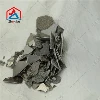


Electrolytic Manganese Flake is one of the most widely used manganese materials in steel and alloy production where controlled composition is required. In the steel production industry, Electrolytic Manganese Flake contributes to strength enhancement, deoxidation, and improved toughness by providing a stable and predictable manganese source - making electrolytic manganese flakes for steel production industry a critical material decision for mills worldwide.
The effectiveness of manganese addition in steel and alloy systems largely depends on the type and quality of the manganese material used. Electrolytic Manganese Flake is commonly selected when manufacturers require low impurity levels, consistent chemical composition, and predictable process behavior, especially in higher-grade steel and alloy production. Unlike traditional ferromanganese or silicomanganese, electrolytic manganese flakes offer superior purity control that directly impacts final product quality.
1. How Electrolytic Manganese Flakes Are Used in Steel Production

1.1 Why Is Electrolytic Manganese Flake Added During Steelmaking?
Q: What is the main function of Electrolytic Manganese Flake in steel production?
A: It acts as an alloying element and deoxidizer, helping reduce oxygen content in molten steel while simultaneously improving strength, hardness, and overall mechanical properties.
Q: Why not rely solely on manganese ore or ferromanganese?
A: Those materials often have broader impurity ranges and higher carbon content. Electrolytic Manganese Flake offers better chemical control - essential for steels with tight quality specifications in the steel production industry, including stainless steel grades and high-strength structural steels.
1.2 How Does Electrolytic Manganese Flake Improve Steel Quality?
Q: How does controlled manganese addition affect steel properties?
A: Proper manganese levels improve tensile strength, wear resistance, and impact toughness, especially in structural steels, carbon steels, and specialty grades used across the steel production industry.
Q: How does Electrolytic Manganese Flake support batch-to-batch consistency?
A: Its stable composition and high purity (Mn ≥99.7%) helps steel producers maintain repeatable results across production batches, reducing quality fluctuations and improving yield rates. Explore more about EMM purity standards.
2. Applications of Electrolytic Manganese Flakes in Alloy Production

2.1 Why Is Electrolytic Manganese Flake Used in Alloy Manufacturing?
Q: Which alloy systems commonly use Electrolytic Manganese Flake?
A: It is widely used in aluminum alloys, copper alloys, and specialty steel alloys where precise composition control is required. For example, manganese-aluminum alloys benefit from EMM's high purity for structural and automotive applications.
Q: What makes it suitable for these alloys?
A: Its high purity and controlled impurity levels (C ≤0.04%, P ≤0.002%) reduce the risk of unwanted intermetallic reactions and property variation, especially in high-performance alloy systems.
2.2 Does Flake Form Affect Alloy Processing?
Q: Why does physical form matter in alloy production?
A: The form of manganese directly affects melting speed, dissolution efficiency, and material yield - critical factors when calculating input costs for steel and alloy production.
Q: What advantage does the flake form provide?
A: Electrolytic Manganese Flake melts more evenly than lumps or briquettes, allowing accurate dosing and uniform alloy composition. This is particularly important for precision alloys and high-value steel grades where composition tolerances are narrow.
3. How EMM Flakes Improve Process Stability and Production Efficiency

3.1 How Does Electrolytic Manganese Flake Improve Process Control?
Q: Why is process stability important in steel and alloy plants?
A: Stable melting and alloying processes reduce downtime, minimize defect rates, and improve overall production throughput and cost efficiency - key metrics for any competitive steel production operation.
Q: How does Electrolytic Manganese Flake contribute?
A: Its predictable melting behavior and consistent chemistry support controlled production conditions. Operators can rely on consistent manganese recovery rates, reducing the need for mid-process adjustments. For end-to-end application guidance, see common EMM applications across industries.
3.2 Can Electrolytic Manganese Flake Help Reduce Defects?
Q: What defects can be linked to poor manganese quality?
A: Issues such as brittleness, hot cracking, or inconsistent mechanical properties can arise from uncontrolled impurities - particularly sulfur and phosphorus - in lower-grade manganese sources.
Q: How does high-purity material reduce these risks?
A: Lower impurity levels (S ≤0.05%, P ≤0.002% in Mn99.7 grade) help ensure more reliable alloy performance and fewer quality deviations, which translates directly to lower rejection rates and higher customer satisfaction.
4. How Steel and Alloy Producers Choose the Right Manganese Material
Q: Is Electrolytic Manganese Flake always required for steel production?
A: Not always. The choice depends on steel grade, end-use requirements, alloy complexity, and quality standards. For commodity-grade construction steel, ferromanganese may suffice; for high-value grades, EMM is often essential.
Q: What factors influence material selection?
A: Steel and alloy producers typically evaluate:
- Required manganese content - target Mn% in the final product
- Impurity tolerance levels - especially carbon, sulfur, and phosphorus limits
- Production scale and consistency needs - high-volume mills vs. specialty producers
- Cost-per-ton of usable manganese - factoring in recovery rates, not just purchase price
- Long-term supply reliability - consistent quality across shipments
For price trend analysis that affects material selection, check our EMM price factors guide.
5. About Our Electrolytic Manganese Flake for Steel and Alloy Production
Our company supplies Electrolytic Manganese Flake specifically for the steel production industry and alloy manufacturing, with a focus on chemical stability, batch-to-batch consistency, and reliable supply chains.
We operate with an integrated manufacturing and export model, covering production, processing, quality inspection, and international logistics. This vertical integration allows us to support steel mills and alloy producers with predictable quality and stable delivery schedules - critical for continuous production operations. Browse our full Electrolytic Manganese Flake product range.

6. How We Ensure Quality Consistency for Steel Mills
Q: How is consistency maintained across production batches?
A: Through standardized production control and routine chemical analysis for every batch, ensuring stable manganese content and controlled impurity levels that meet Mn99.7, Mn99.8, and Mn99.95 specifications. Contact us to request a sample COA.
Q: How do we support steel and alloy customers?
A: By providing clear Certificate of Analysis (COA) documentation and direct technical communication, we help customers integrate our materials smoothly into their steelmaking and alloying processes. For technical details or application discussions, contact us for engineering support.
7. Supporting Long-Term Steel and Alloy Production
Q: How do we manage packaging and transportation for industrial use?
A: Our electrolytic manganese flakes are packed using moisture-resistant and oxidation-control packaging - typically 1-ton big bags or customized options - suitable for bulk ocean transport and long-term warehouse storage at steel mills.
Q: Can we support continuous production programs?
A: Yes. Many steel mills and alloy producers rely on us for stable lead times, batch traceability, and long-term supply planning. If you are sourcing electrolytic manganese flakes for ongoing steel production, feel free to contact us for supply information and current availability.
8. Frequently Asked Questions About Electrolytic Manganese Flakes for Steel Production
Q: What purity grade of electrolytic manganese flakes do steel mills typically use?
A: Most steel mills use Mn99.7 (Mn ≥99.7%, C ≤0.04%) as the standard grade for carbon steel, structural steel, and stainless steel production. For specialty steels and high-performance alloys, Mn99.8 or Mn99.95 may be specified for tighter impurity control.
Q: How do electrolytic manganese flakes compare to ferromanganese for steelmaking?
A: The key difference is carbon content. High-carbon ferromanganese (HCFeMn) contains 6–8% carbon, while electrolytic manganese flakes contain ≤0.04% carbon. For steels requiring strict carbon control - especially stainless steel and HSLA grades - EMM flakes are the preferred manganese source to avoid chromium carbide formation and maintain corrosion resistance.
Q: How much electrolytic manganese flake does a steel mill consume per ton?
A: Typical consumption varies by steel grade: 5–10 kg/ton for standard carbon steel, 10–20 kg/ton for 200-series stainless steel, and up to 25 kg/ton for high-manganese specialty grades. The exact quantity depends on the target Mn specification and base scrap composition.
Q: What impurities matter most when sourcing electrolytic manganese flakes for steel?
A: The three most critical impurities are Carbon (C) - affects carbide formation and corrosion resistance; Sulfur (S) - impacts hot workability; and Phosphorus (P) - affects low-temperature toughness. Mn99.7 specification guarantees C ≤0.04%, S ≤0.05%, and P ≤0.002%.
9. Conclusion: Why Steel Producers Rely on Electrolytic Manganese Flakes
Summary
Electrolytic Manganese Flake plays a vital role in the steel production industry by enabling controlled manganese addition, improved process stability, and consistent material performance across production batches.
Key takeaways for steel and alloy producers:
- Versatile application - covers carbon steel, stainless steel, specialty alloys, and non-ferrous alloy manufacturing
- Superior impurity control - C ≤0.04%, S ≤0.05%, P ≤0.002% in standard Mn99.7 grade
- Process efficiency - predictable melting behavior reduces quality fluctuations and defect rates
- Batch consistency - stable composition enables repeatable production results
For manufacturers aiming to produce high-quality steels and alloys with predictable results, selecting the right manganese source is essential. By working with a supplier focused on controlled production and long-term reliability, steel mills and alloy producers can achieve stable output and consistent product quality - whether for structural steel, stainless steel, or precision alloys.
To discuss your specific electrolytic manganese flake requirements for steel production, contact our technical team for a tailored supply proposal.