
What Customization Means in Ferro Silicon Supply
Ferro silicon is a bulk ferroalloy, but the grade that performs best in a given process is rarely a generic one. Steelmakers, foundries and alloy producers care about silicon content, aluminium and calcium levels, and the particle size that matches their feeding or charging system. A customized ferro silicon supply therefore combines a chemical specification with a granulometric specification, and both have to remain stable from lot to lot. Ferrosilicon is specified internationally under ISO 5445 and in China under the GB/T 2272 ferrosilicon standard, which together define the main grades and the delivery condition of the alloy.
Particle Size Distribution as a Process Variable
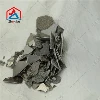
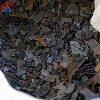
The physical form of ferro silicon controls how quickly silicon enters the melt and how evenly it is distributed. Suppliers therefore offer a range of graded cuts, commonly based on the size series used in GB/T 2272 such as 0 to 3 mm, 3 to 10 mm, 10 to 50 mm and 50 to 100 mm, with narrower custom cuts produced on request.
| Form | Typical size range | Where it is used |
|---|---|---|
| Lump | 5 to 50 mm, or 10 to 50 mm | Furnace charging and high-temperature melts where a slow, sustained silicon release is wanted |
| Granular | 1 to 10 mm, or 3 to 10 mm | Induction furnaces, continuous casting and ladle additions needing uniform deoxidation |
| Powder | Below 1 mm, including fine and ultra-fine cuts | Powder injection, vacuum treatment, welding consumables and magnesium or titanium reduction |
By matching the size cut to the feeding method, a plant can improve reaction kinetics, reduce the amount of material that is lost to dust or entrained in slag, and lower energy consumption per tonne of steel. Fines are not automatically a penalty: for injection processes they are the required feed, whereas in a furnace charged from the top an excessive fines fraction causes losses and unstable charging.
Chemistry Grades: Low-Aluminium and High-Calcium Ferro Silicon
Aluminium is the impurity that most often limits the use of a standard ferro silicon grade, because residual aluminium in steel can promote brittleness and reduce toughness in critical components. Low-aluminium ferro silicon is produced by refining the melt so that the aluminium content is held at or below about 0.5 percent, and these grades are specified where cleanliness and toughness matter, for example in high-strength structural steels, pipeline and pressure-vessel steels, and precision castings where graphite morphology must be closely controlled.
Calcium acts in the opposite direction: it improves deoxidation efficiency and gives the alloy extra flexibility as a treatment agent. High-calcium ferro silicon, typically with calcium at or above about 1.2 percent, is used in aluminium-killed steels, where it improves fluidity and helps to modify and remove inclusions during continuous casting, and in non-ferrous metallurgy as a reducing agent in magnesium and titanium production.
Production Route and Process Control
Smelting: quartz and carbonaceous reductants are smelted in a submerged arc furnace, with the charge mix and power profile controlling the silicon recovery.
Multi-stage melting and refining: the melt is adjusted through flux injection and temperature control so that silicon, aluminium and calcium all land inside the specified window rather than merely inside a broad commercial range.
Casting and cooling: the alloy is cast into a controlled layer thickness so that cooling rate, and therefore structure and subsequent crushability, stay consistent.
Crushing, screening and agglomeration: crushing, sieving and, where required, briquetting or agglomeration produce the ordered particle size cut with limited undersize and oversize.
Sampling and verification: each lot is sampled for chemical composition and size distribution before packing, so that a certificate reflects the material actually shipped.
Quality Verification and Documentation
Chemical verification of ferro silicon relies on instrumental analysis, and optical emission or inductively coupled plasma methods are used for the main elements, while X-ray fluorescence supports rapid screening and X-ray diffraction is useful when the form of a phase, such as silicon carbide or free silica, has to be identified. For a customized order the practical deliverables are a lot-level chemical certificate covering silicon, aluminium, calcium, carbon, sulfur and phosphorus, a sieve analysis for the ordered size cut, and a stated packing and moisture protection method. Size verification is as important as chemistry for injection and continuous casting duties, because a distribution that drifts towards fines changes feeding behaviour even when the analysis is unchanged.
Matching Customized Ferro Silicon to the Application
Electric arc furnace steelmaking: lump cuts for deoxidation and alloying, sized to the charging system.
Induction furnace and foundry practice: granular cuts for uniform dissolution and predictable recovery; ferro silicon is also used as an inoculant base in cast iron.
Continuous casting of aluminium-killed steel: high-calcium grades to improve fluidity and inclusion control.
Magnesium and titanium production: fine and powdered grades acting as a reducing agent.
Welding consumables: controlled low-aluminium fines for electrode coating formulations.
High-strength and pressure-vessel steels: low-aluminium grades where residual aluminium must stay low.
Ordering Checklist for a Customized Grade
Specify the silicon grade and the maximum aluminium content, not just a generic ferro silicon designation.
State the calcium level where deoxidation behaviour or inclusion control is critical.
Define the particle size cut with a permitted oversize and undersize allowance, and the sieve method used to check it.
Agree the packing, moisture protection and unit weight, particularly for powder grades.
Require a lot-level chemical certificate plus a size analysis, and agree the sampling method in advance.
Confirm whether the alloy must be dry and free of fines for injection or ladle addition duties.
Frequently Asked Questions
Q: What does low-aluminium ferro silicon mean in practice?
It is a refined grade in which aluminium is held at or below roughly 0.5 percent, so that the alloy can be used where residual aluminium would harm toughness or cleanliness.
Q: Why is particle size specified as strictly as chemistry?
Dissolution rate, dust losses and feeding stability all depend on the size cut. A drift towards fines or oversize changes recovery even when the chemical analysis is correct.
Q: Which ferro silicon grade suits continuous casting of aluminium-killed steel?
High-calcium grades, typically with calcium at or above about 1.2 percent, are used because they improve fluidity and assist inclusion modification.
Q: How is ferro silicon weight calculated for a furnace addition?
The addition is calculated from the required silicon pick-up, the silicon content of the grade and the expected recovery for the charging method, which is why consistent grades and sizes matter more than a single high analysis.
Q: Is powder ferro silicon lower in quality than lump?
No. Powder is a different product form intended for injection, reduction and coating uses. Quality depends on chemistry and on the accuracy of the size cut, not on the particle size itself.
Q: Which standards cover ferrosilicon specification and delivery?
ISO 5445 covers ferrosilicon specification and conditions of delivery, while GB/T 2272 defines the Chinese ferrosilicon grades and size series used for ordering and inspection.
Q: How should a customized ferro silicon order be verified on arrival?
Check the lot certificate against the ordered specification, take a sample for chemical analysis and run a sieve analysis on the delivered size cut before releasing the material to production.