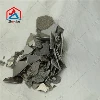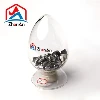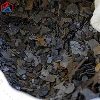

Ferrovanadium 50 and ferrovanadium 80 are both vanadium-bearing ferroalloys used to introduce vanadium into steel and certain alloys. The core difference is vanadium concentration, but the consequences are operational: addition weight, dosing precision, logistics efficiency, and sometimes dissolution sensitivity under constrained furnace conditions. For "real production use," the correct choice is the grade that delivers your target vanadium units with stable recovery and acceptable total cost.
A useful selection method is to evaluate four practical dimensions: unit economics, dosing control, process window, and specification discipline.


1) Start with unit economics: compare vanadium units, not ton price
The academically correct comparison is to convert both grades into cost per effective vanadium unit delivered. Price per ton alone is misleading, because FeV80 delivers more vanadium per ton than FeV50.
In practice, you calculate:
- Target vanadium addition in the melt
- Required addition weight for FeV50 and FeV80
- Expected recovery under your melt practice
- Effective cost per vanadium unit delivered
This method avoids false savings and makes supplier comparisons fair.
2) Dosing control: which grade fits your operational behavior
FeV80 reduces addition mass for the same vanadium target. This is beneficial when your addition system is designed for smaller weights or when logistics efficiency matters. However, because additions are smaller, weighing and charging discipline must be good. Small errors can translate into larger chemistry shifts.
FeV50 requires higher addition mass. Some plants prefer this because adjustments feel more controllable in incremental steps. If your operation frequently makes fine chemistry trims, FeV50 can be operationally forgiving.
3) Process window: temperature margin and mixing
In well-controlled conditions, both grades can perform reliably. In constrained conditions (limited superheat, weak stirring, short mixing time), higher vanadium concentration grades can feel more sensitive. The difference is not that FeV80 is "bad," but that your process must support reliable dissolution and mixing.
If you have repeated recovery variability issues, the best approach is to align grade choice with your real operating window and ensure your supplier provides tight size distribution and low fines.
4) Specification discipline: what you must control for either grade
Grade selection does not replace specification. For both FeV50 and FeV80, you should control:
- Vanadium content range
- Critical impurity limits for your steel grade
- Lump size range and fines tolerance
- Batch-linked COA traceability
Without these, two lots of the same grade can behave differently.
5) A simple decision rule
Choose FeV80 if you want higher vanadium density and your shop has strong dosing control and a supportive melt window. Choose FeV50 if dosing control benefits from larger addition weight or your process prefers more incremental adjustments. Then validate with unit economics and enforceable specifications.
FAQ
Q1: Is FeV80 always better?
A: Not necessarily. The best grade depends on dosing control, melt practice, and cost per effective vanadium unit delivered.
Q2: How do I compare FeV50 and FeV80 fairly?
A: Compare cost per effective vanadium unit delivered, considering your expected recovery.
Q3: What operational factor changes the decision most?
A: Your addition method and how sensitive your process is to weighing and dissolution variability.
Q4: What should be on the COA for either grade?
A: Vanadium content, relevant impurities, and batch linkage to packing marks and shipment documents.
Q5: What physical property should I specify?
A: Lump size range and fines tolerance, because they affect loss and dissolution.
About Our Company
We are a factory direct supply partner with stable monthly supply capacity and a factory area of about 30,000 m². Our products are exported to 100+ countries and regions, and we have served 5,000+ customers. Our sales team understands industry dynamics and market trends, and we supply ferrosilicon, silicon metal, and other metallurgical products.