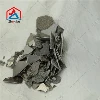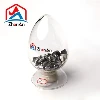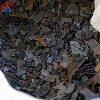

Electrolytic manganese sheets are high-purity manganese metal products produced through electrolytic refining. They are critical materials in various industrial applications due to their excellent physical and chemical properties. Below is an overview of their fundamentals:
1. Definition and Production
What is Electrolytic Manganese?
Electrolytic manganese (EMM) refers to manganese metal with a purity of ≥99.9%, produced via electrolysis of manganese sulfate (MnSO₄) solution.
Production Process:
Electrolysis: Manganese sulfate solution is electrolyzed in tanks with lead-based anodes and steel cathodes. Manganese metal deposits on the cathode.
Refining: The deposited manganese is stripped, washed, and rolled into sheets or plates.
2. Physical and Chemical Properties
Appearance: Silver-gray metallic luster, ductile, and easy to process.
High Purity: Minimal impurities (e.g., Fe, Si, S), ensuring consistent performance.
Density: ~7.21–7.44 g/cm³.
Melting Point: ~1,246°C.
Conductivity: Excellent electrical and thermal conductivity.
Chemical Stability: Resistant to corrosion in dry environments but oxidizes in humid air.
3. Applications
Batteries:
Key component in alkaline batteries (e.g., zinc-manganese batteries) and lithium-ion battery electrodes.
Alloys:
Used in steel alloys (e.g., Hadfield steel for railway tracks) and non-ferrous alloys (e.g., aluminum-manganese alloys).
Chemical Industry:
Catalyst for organic synthesis (e.g., formaldehyde production).
Electronics:
Electrodes in electrolytic capacitors and semiconductors.
4. Key Advantages
High Purity: Ensures reliability in sensitive applications (e.g., batteries).
Ductility: Easy to roll into thin sheets or wires.
Cost-Effective: Electrolytic refining is efficient for large-scale production.
5. Storage and Handling
Moisture Protection: Store in dry, airtight containers to prevent oxidation.
Avoid Contamination: Keep away from acids, halogens, or reactive metals.
Safety:
Manganese dust is flammable and toxic if inhaled. Use PPE (gloves, masks) during handling.
Follow regulations for hazardous material storage (e.g., ATEX for dust explosion risks).